
TL;DR
Learning how to help dog with weak hind legs starts with understanding that weakness can have several causes. Arthritis, aging, muscle loss, nerve problems, and mobility decline are some of the most common reasons a dog may struggle to stand, walk, or climb stairs. Owners wondering why their dog is struggling to stand up may also find it helpful to learn about the conditions that affect strength, balance, and mobility.
This weakness can come from ongoing pain that limits movement, or from true muscle and nerve weakness that affects a dog’s ability to control its legs — recognizing which pattern is present can help guide the right kind of support.
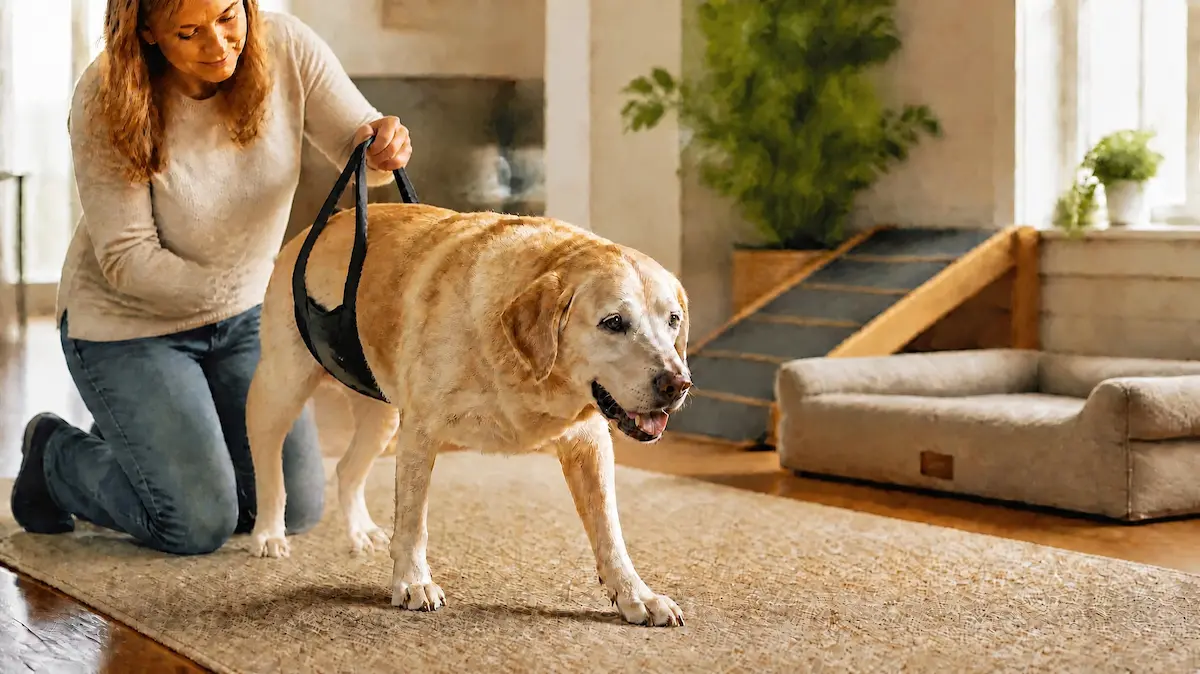
Home support should focus on safer movement and preserving daily function. Many dogs benefit from non-slip flooring, short controlled walks, support harnesses, orthopedic bedding, weight management, and simple low-impact activities that help maintain muscle strength and confidence.
When arthritis is contributing to hind-leg weakness, adjusting exercise duration can be just as important as choosing the right activities. Understanding how long to walk a dog with arthritis can help owners support mobility while avoiding overexertion and next-day soreness.
A common pattern is:
Weakness or joint pain → less movement → muscle loss → worsening weakness
Because of this, gentle activity is often safer than complete inactivity. The goal is to support mobility without causing overexertion.
To help reduce falls and discomfort:
- Improve traction with rugs, runners, or other non-slip surfaces
- Use ramps instead of allowing jumping onto furniture or into vehicles
- Keep walks short, slow, and controlled
- Provide supportive bedding and easy access to food, water, and resting areas
- Monitor changes in balance, strength, and mobility
Avoid activities that place extra stress on weak hind legs, including:
- Jumping
- Rough play
- Sprinting
- Long, intense walks
- Slippery floors
- Forced exercise
A veterinary visit should be scheduled if weakness lasts more than 24–48 hours, stumbling or falls become frequent, or difficulty rising continues to get worse. Some signs require immediate veterinary attention. Seek emergency care if a dog develops:
- Sudden inability to stand
- Hind-leg paralysis
- Dragging hind legs
- Severe pain
- Loss of bladder control
- Loss of bowel control
Early support can help many dogs stay safer, more comfortable, and more confident as mobility changes over time.
Quick Answer
How to Help a Dog With Weak Hind Legs
If a dog has weak hind legs, the goal is to make movement safer, reduce the risk of falls, and help preserve strength for as long as possible. Most dogs benefit from a combination of home mobility support, gentle activity, and environmental changes.
Helpful steps include:
- Improve traction with rugs, carpet runners, or other non-slip flooring
- Use short, controlled walks on flat surfaces
- Support standing and lifting with a rear-support harness or a sling under the lower belly (ask a veterinarian first)
- Provide an orthopedic dog bed for comfort and easier rising
- Maintain a healthy weight to reduce stress on joints and muscles
- Use ramps instead of allowing jumping onto furniture or into vehicles
- Perform simple vet-approved exercises to help maintain mobility
- Monitor for signs that weakness is getting worse
Weak hind legs often follow a pattern such as:
Arthritis, aging, or nerve problems → reduced movement → muscle loss → worsening weakness
Arthritis is one of the most common reasons mobility declines in dogs. Learn more about the causes, symptoms, and management options in the Dog Joint Pain Relief Guide.
This is why complete rest is usually not the best solution. Safe movement helps maintain muscle activity, mobility, and daily function without placing too much strain on weak hind legs.
Good home support can create a more positive cycle:
Support → safer movement → more confidence → better mobility preservation
Many dogs move more comfortably when slipping is reduced, daily activities are easier, and support is available when standing, walking, or changing positions.
If weakness suddenly becomes much worse, or a dog develops dragging legs, severe pain, or loss of bladder control, veterinary care should be sought immediately. Weakness that appears suddenly can have different causes than gradual mobility decline. Learn more in What Causes Sudden Hind Leg Weakness in Dogs?
Table of Contents
When to Worry
Mild Weakness That May Be Monitored
Some cases of weak hind legs in dogs may be mild and temporary. A dog can sometimes show slight mobility changes without needing urgent care.
Examples include:
- Mild wobbling without falling
- Slight stiffness after rest
- Slower walking than usual
- Temporary difficulty standing that improves quickly
These signs may be monitored for a short period if the dog remains comfortable, alert, and able to move around normally. Reducing strenuous activity and watching for changes can help determine whether the weakness improves or continues.
Signs a Vet Visit Is Needed Soon
A veterinary appointment should be scheduled if weakness is becoming more noticeable or starts affecting daily activities.
Signs that should not be ignored include:
- Difficulty rising that worsens over time
- Frequent stumbling or loss of balance
- Reduced interest in walks or normal activities
- Occasional falls
- Increased weakness lasting longer than 24–48 hours
A dog having trouble getting up, struggling during walks, or showing worsening hind leg weakness may have an underlying problem that requires veterinary evaluation. Early assessment can help identify the cause and guide safe long-term management.
Emergency Signs That Need Immediate Veterinary Care
Some mobility changes require urgent attention because they may signal a serious neurologic, spinal, or painful condition.
Seek immediate veterinary care if a dog develops:
- Sudden inability to stand
- Hind-leg paralysis
- Dragging hind legs
- Severe pain
- Loss of bladder control
- Loss of bowel control
According to PetMD, loss of bladder or bowel control in dogs is often linked to spinal cord or nerve dysfunction and should always be evaluated by a veterinarian promptly.
These signs should not be monitored at home. If a dog suddenly cannot stand, begins dragging the rear legs, or loses control of urination or bowel movements, emergency veterinary care is needed as soon as possible.
Dogs that begin dragging their back feet or hind legs may be showing signs of an underlying mobility or neurologic problem. Learn more in Why Is My Dog Dragging His Back Legs? What It Could Mean and When to Act.
Quick Reference: When to Monitor, Schedule a Vet Visit, or Seek Emergency Care
| Situation | What to Do |
| Mild wobbling that is not worsening | Monitor closely |
| Slight stiffness after rest | Monitor closely |
| Temporary difficulty standing that improves | Monitor closely |
| Weakness lasting more than 24–48 hours | Schedule a vet visit |
| Frequent stumbling or falls | Schedule a vet visit |
| Reduced interest in walks or activity | Schedule a vet visit |
| Difficulty rising that is getting worse | Schedule a vet visit |
| Sudden inability to stand | Emergency care |
| Hind-leg paralysis | Emergency care |
| Dragging hind legs | Emergency care |
| Loss of bladder control | Emergency care |
| Loss of bowel control | Emergency care |
| Severe pain | Emergency care |
Symptoms and Signs of Weak Hind Legs in Dogs
Weak hind legs can affect daily movement in different ways. Some dogs show subtle changes at first, while others develop more obvious mobility problems. Recognizing these signs early may help owners notice when weakness is affecting comfort, balance, and daily function.
Common Movement Changes
One of the earliest signs of hind leg weakness in dogs is a change in normal movement. A dog may seem slower, less active, or reluctant to perform activities that were once easy.
Common movement changes include:
- Trouble getting up after resting
- Trouble climbing stairs
- Slower walking speed
- Taking shorter walks than usual
- Fatigue after activity
Some dogs may pause before standing or need extra time to get moving after sleep. Others may begin avoiding stairs, long walks, or uneven surfaces because movement feels more difficult.
These changes usually develop gradually. If a dog suddenly stops using a back leg entirely rather than just moving more slowly, that’s a different and more urgent situation — see what a sudden refusal to bear weight can mean.
Balance and Coordination Problems
As weakness progresses, balance and coordination may become less reliable. The rear legs may not provide the same level of support and stability during movement.
Signs of balance and coordination problems include:
- Wobbling while walking
- Shaking or trembling in the hind legs
- Instability during movement
- Poor balance
- Unsteady rear legs
A dog with weak hind legs may sway when standing, struggle during turns, or appear unsure when walking across slippery surfaces. These signs often indicate reduced strength, reduced stability, or declining mobility control.
Signs Weakness May Be Getting Worse
Progressive weakness can lead to more noticeable changes in the way a dog walks and uses the hind legs. In senior dogs, repeated episodes where the rear legs suddenly give out may point to a broader mobility problem. Owners can learn more about old dog back legs collapsing and the common conditions behind it.
Warning signs that weakness may be worsening include:
- Crossing the hind legs while walking
- Scuffing paws on the ground
- Back legs giving out unexpectedly
- Increased slipping on smooth floors
- Loss of confidence during movement
Many dogs become more cautious when mobility declines. Fear of falling may cause hesitation around stairs, doorways, or unfamiliar surfaces. A dog that once moved confidently may begin stopping more often, walking carefully, or avoiding activities that require balance and coordination.
What Can Cause Weak Hind Legs in Dogs?
Learning how to help a dog with weak hind legs often starts with understanding what is causing the weakness. Hind leg weakness can develop from joint disease, muscle loss, nerve problems, age-related changes, or reduced physical activity. While the symptoms may look similar, the underlying cause can be very different.
Arthritis and Joint Degeneration
Arthritis is one of the most common reasons a dog develops weak hind legs. Conditions such as osteoarthritis, degenerative joint disease, and hip dysplasia can make movement painful and difficult.
Over time, many dogs follow a pattern like this:
Arthritis → pain → reduced movement → muscle loss → weakness
When movement becomes uncomfortable, a dog often walks less, exercises less, and uses the hind legs less. This gradual loss of activity can reduce muscle support around the joints and contribute to worsening mobility problems.
Age-Related Muscle Loss
Some senior dogs develop weakness even without a major injury or disease. A common reason is sarcopenia, which is the gradual loss of muscle mass and muscle tone that occurs with aging. Veterinary sources such as Haven Lake Animal Hospital note that this gradual muscle loss is one of the most common contributors to hind-end weakness in older dogs, since reduced muscle mass means less support around the joints.
As muscle strength decreases, a dog may:
- Have trouble getting up
- Walk more slowly
- Tire more easily during activity
- Show reduced stability in the rear legs
This type of senior dog mobility decline often develops gradually and may become more noticeable over months or years.
Nerve and Spinal Conditions
Not all hind leg weakness comes from joint pain. Some dogs develop weakness because of nerve or spinal problems.
Examples include:
- Degenerative myelopathy
- Intervertebral disc disease (IVDD)
- Other forms of neurologic decline
These conditions can affect communication between the brain, spinal cord, and hind legs. As a result, a dog may show instability, poor coordination, dragging paws, or difficulty controlling normal movement. Conditions such as IVDD can compress the spinal cord and directly affect hind-leg strength and coordination, according to Austin Canine Rehab & Wellness Center.
Weight Gain and Physical Deconditioning
Excess weight places additional stress on the hips, knees, joints, and supporting muscles. At the same time, reduced activity can cause important muscle groups to become weaker.
A common pattern is:
Reduced activity → weaker support muscles → less stability → worsening mobility
Dogs that gain weight or become less active may experience increasing difficulty walking, climbing stairs, or standing up. Maintaining a healthy weight and regular movement can play an important role in preserving strength and daily function.
What Weak Hind Legs Can Indicate
Weak hind legs do not always mean the same thing. In some dogs, the problem is mainly pain that limits movement. In others, the issue is true weakness that affects strength, balance, and coordination. Understanding the difference can help owners better recognize what their dog may be experiencing.
Pain Avoidance vs True Weakness
Pain avoidance and true weakness can sometimes look similar, but they often show different movement patterns.
Pain avoidance may include:
- Moving carefully
- Avoiding stairs
- Avoiding jumping
- Taking shorter walks
- Hesitating before certain movements
A dog with joint pain or stiffness may still have reasonable strength but chooses to limit movement because it feels uncomfortable.
True weakness may include:
- Buckling of the hind legs
- Trembling or shaking
- Dragging paws or legs
- Instability while standing or walking
- Difficulty supporting body weight
True weakness often affects the dog’s ability to control normal movement. The hind legs may not respond as reliably, even during simple activities.
Why Mobility Often Declines Gradually
Many mobility problems follow a gradual cycle rather than appearing all at once.
A common pattern is:
Weakness → less activity → muscle loss → less support → worsening weakness
As a dog moves less, the muscles that help support the hips, knees, and hindquarters may become weaker. Reduced muscle support can make walking, standing, and balancing more difficult. Over time, this can contribute to further mobility decline.
This cycle is one reason some dogs seem to lose strength slowly over months rather than days. Some dogs first show this change by slowing down during walks or daily activities before obvious weakness develops. Learn more in Why Is My Dog Walking Slow All of a Sudden?
Why Early Support Matters
Early support can help slow the effects of mobility decline and make daily life easier for a dog with weak hind legs.
Potential benefits include:
- Maintaining mobility confidence
- Preserving daily function
- Helping prevent slips and falls
- Supporting safer movement around the home
- Encouraging continued activity when appropriate
Many dogs become less confident after repeated slips, stumbles, or balance problems. Providing support early may help reduce fear of falling and allow the dog to stay more comfortable and active for longer.
How to Build Confidence in a Dog With Weak Hind Legs
Why Weak Hind Legs Can Lead to Fear of Movement
Weak hind legs do not affect only strength and balance. They can also affect how confident a dog feels while moving.
Many dogs experience slips, stumbles, or near falls as weakness progresses. Over time, these experiences can make movement feel less predictable. A dog that once walked confidently may start hesitating before standing, climbing stairs, or crossing smooth floors.
A common pattern can develop:
Weakness → instability → slipping or falling → fear of movement → less activity → worsening weakness
This cycle can become a problem because reduced movement often leads to further muscle loss and declining mobility. In some cases, confidence declines faster than physical ability.
Fear-based movement avoidance is also different from true weakness. A dog may still have enough strength to walk but choose to move less because previous experiences have created uncertainty or anxiety.
Signs a Dog Has Lost Confidence During Movement
Loss of confidence often appears as behavior changes rather than obvious physical decline.
Some dogs become hesitant on tile, hardwood, or other slippery surfaces. Others may stop before stairs, doorways, ramps, or uneven ground. A dog that previously moved through the home without difficulty may begin pausing and looking for reassurance.
Other signs can include:
- Refusing to walk in areas where previous slips occurred
- Taking unusually slow or careful steps
- Spending more time lying down
- Turning back early during walks
- Looking nervous before standing up
- Moving more comfortably when support is provided
Many dogs move better when traction improves or a support harness is used. This may suggest that reduced confidence is contributing to the problem alongside the underlying weakness.
Simple Ways to Rebuild Confidence Safely
Confidence is usually rebuilt through repeated safe movement experiences rather than encouragement alone.
Improving traction is often one of the most effective first steps. Rugs, runners, and other non-slip surfaces can help reduce uncertainty and allow a dog to move more comfortably throughout the home.
Gentle support may also help. Rear-support harnesses, lifting harnesses, or slings can provide extra stability during standing and walking. When a dog feels more secure, movement often becomes less stressful.
It is also helpful to focus on small successes. Short walks on stable surfaces, controlled movement around the house, and simple daily activities can help reinforce positive experiences without causing fatigue.
Avoid rushing, pulling, or forcing movement. Pressure can increase anxiety when a dog already feels unsteady. A calm approach usually helps build trust and encourages more natural movement.
Over time, successful movement experiences can create a more positive cycle:
Safer movement → improved confidence → more activity → better mobility maintenance
While confidence-building does not replace treatment for the underlying cause of weakness, it can help a dog stay active, comfortable, and engaged in daily life.
What to Do for a Dog With Weak Hind Legs at Home
For many owners, learning how to help a dog with weak hind legs involves making daily life safer, more comfortable, and easier to navigate. The goal is not to force activity but to support movement, reduce fall risk, and help preserve mobility for as long as possible.
Improve Traction Throughout the House
Slippery floors can make weakness worse by increasing instability and reducing confidence.
Helpful options include:
- Rugs
- Carpet runners
- Yoga mats
- Stair treads
These surfaces provide better grip and can help reduce slipping in common walking areas. Non-slip flooring is especially helpful near beds, food bowls, doorways, and stairs.
If slipping is becoming a frequent problem, Why Is My Dog Slipping on the Floor? explains common causes and ways to improve traction at home.
Use Short Controlled Walks
Regular movement helps maintain muscle activity and joint motion. However, long or intense exercise can sometimes increase fatigue.
For many dogs, the safest approach is:
- Frequent short walks
- Flat walking surfaces
- Slow, controlled pacing
- Rest before exhaustion develops
Several short walks are often easier on weak hind legs than one long outing.
Help Your Dog Stand and Move Safely
Some dogs need extra support during standing, walking, or bathroom trips.
Helpful mobility aids include:
- Rear-support harnesses
- Lifting harnesses
- Towel slings placed under the abdomen
These tools can reduce strain on weak hind legs and make movement safer for both the dog and owner.
How to Lift and Support a Dog With Weak Hind Legs Safely
The safest way to help a dog with weak hind legs is to support the hindquarters with a rear-support harness or a sling under the lower belly, while the dog uses its front legs and carries as much weight as it can.
- Ask a veterinarian first, especially if the weakness is new or sudden.
- Use a rear-support harness if one is available. Otherwise, fold a towel lengthwise and slide it under the lower belly: (see MSPCA-Angell’s sling guide), in front of the back legs. Keep the towel away from sensitive areas, especially in male dogs.
- Hold the ends like handles and lift with the legs, not the back.
- Take only as much weight as the dog needs, so the hind legs keep working.
- Stop if the dog cries out, pulls away, or the towel slips. A harness is safer than a towel for anything beyond very short use.
Never lift a dog by pulling on the legs, tail, or collar. Large dogs often need a second person to help. If a dog suddenly cannot stand, drags the hind legs, or loses bladder or bowel control, seek emergency veterinary care.
Helping Large Dogs With Weak Hind Legs Safely
Common Challenges With Larger Dogs
Weak hind legs can create additional challenges for larger dogs because more body weight must be supported during standing, walking, and turning.
Even mild weakness can make daily activities more difficult when a dog is large and heavy. Tasks such as getting up from the floor, climbing a small step, or getting into a vehicle may require much more effort than they once did.
A common pattern can develop:
Hind leg weakness → reduced stability → greater effort to move body weight → faster fatigue
As mobility declines, larger dogs may also have a higher risk of slipping during weight shifts. This can make them more cautious and less willing to move without assistance.
Safer Ways to Assist Standing and Walking
Providing support is often easier and safer when it helps the dog maintain as much independence as possible.
Many large dogs benefit from assistance during transitions, such as moving from lying down to standing or walking across challenging surfaces. Gentle support can help improve stability while reducing the effort required from the hind legs.
Supportive equipment may also help some dogs move more comfortably. Rear-support harnesses and mobility slings can provide additional stability during standing and walking while allowing the dog to continue using the hind legs.
It is usually safer to assist movement in a controlled manner rather than attempting to lift most of the dog’s weight. Allowing the dog to contribute to movement can help maintain muscle use and confidence.
A helpful approach often follows this pattern:
Support when needed → safer movement → increased confidence → better daily mobility
Protecting Both the Dog and the Owner
Helping a large dog move safely is important for both the dog and the owner.
Sudden lifting, awkward pulling, or supporting too much weight can increase the risk of injury. This is especially true when a dog loses balance unexpectedly or struggles during movement.
Whenever possible, the environment should do some of the work. Non-slip flooring, ramps, clear walking paths, and easy access to frequently used areas can reduce the need for physical lifting.
Planning ahead can also help. Keeping food, water, bedding, and outdoor access easy to reach may reduce unnecessary strain throughout the day.
If a dog’s size or mobility challenges make assistance difficult, a veterinarian or canine rehabilitation professional can help identify safer mobility-support options that match the dog’s needs and physical limitations.
For dogs with more significant or long-term weakness, a wheelchair or mobility cart can support the rear end during walks, and a hock or knee brace may help with specific joint instability. If the front legs are weakening too, a full-support cart can hold up both ends of the body. A veterinarian or canine rehabilitation professional can help determine whether either option is appropriate for a dog’s condition.
Best Mobility Aids and When They Help
| Aid | Best For | Main Benefit |
| Rear-support harness | Dogs with hind leg weakness | Assists standing and walking |
| Lifting harness | Dogs needing extra support | Helps with transfers and stairs |
| Towel sling | Temporary support needs | Low-cost movement assistance |
| Orthopedic bed | Dogs with stiffness or arthritis | Improves comfort during rest |
| Ramp | Difficulty with stairs or jumping | Reduces joint strain |
| Non-slip rugs or runners | Slippery flooring | Improves traction and confidence |
| Stair treads | Stair safety | Reduces slipping risk |
| Wheelchair / mobility cart | Dogs with significant or long-term hind-leg weakness | Supports the rear end so the dog can keep walking |
| Leg brace (hock or knee) | Dogs with specific joint instability | Provides targeted support during standing and walking |
Create a Joint-Friendly Living Space
Small changes around the home can make daily activities easier.
Helpful adjustments include:
- Keeping important areas on one floor when possible
- Providing raised food and water bowls
- Creating easy bathroom access
- Reducing unnecessary stair use
A joint-friendly home helps reduce physical stress during routine activities.
Add Supportive Bedding
Dogs with mobility issues often spend more time resting. Supportive bedding can make lying down and getting back up more comfortable.
Good options include:
- Orthopedic dog beds
- Memory foam beds
- Warm resting areas away from drafts
Supportive bedding may improve comfort and help reduce stiffness after rest. For additional ways to make daily life easier, see How to Help a Dog With Arthritis at Home, which covers home modifications, comfort measures, and mobility support strategies.
Morning Mobility Tips for Dogs With Weak Hind Legs
Why Movement May Be Harder After Sleeping
Many dogs with weak hind legs move more slowly after sleeping or resting for a long time. This pattern is similar to what owners notice when a dog is stiff after lying down. The first few minutes of movement are often the most difficult part of the day.
A common pattern can occur:
Long period of rest → increased stiffness → slower movement → gradual improvement after activity begins
During rest, joints and muscles remain inactive for several hours. When a dog stands up again, the hind legs may feel less stable and less prepared for movement. This can make standing, walking, and turning more difficult at first.
Owners often notice that a dog takes shorter steps, rises more slowly, or seems less confident immediately after getting up. In many cases, movement becomes easier once the dog has been active for a short period.
Helping a Dog Stand More Comfortably
The way a dog starts the day can affect mobility throughout the morning. Creating a calm environment often makes standing easier and safer.
Allowing a dog extra time to get up can help reduce rushing and instability. Some dogs benefit from gentle support while moving from a lying position to a standing position, especially if balance is limited.
Safe footing is also important. A dog that slips while trying to stand may become more hesitant to move and less confident during the rest of the morning.
A common cycle can develop:
Difficulty standing → slipping or instability → reduced confidence → reluctance to move
Reducing the risk of slips can help interrupt this cycle and make movement feel more comfortable.
Creating a Safer Morning Routine
Simple adjustments can help mornings go more smoothly for dogs with weak hind legs.
Keeping non-slip surfaces near sleeping areas allows a dog to gain better footing immediately after standing. Clear walking paths can also reduce the need for sudden turns or awkward movements when mobility is at its lowest.
Many dogs benefit from beginning the day with gentle, controlled movement rather than immediately facing stairs, uneven terrain, or longer periods of activity. A gradual start often gives the hind legs time to loosen up and adapt to movement.
A supportive morning routine may look like this:
Safe standing → gentle movement → improved mobility → greater confidence throughout the day
As mobility changes over time, morning routines may need occasional adjustments. Observing how easily a dog stands, walks, and recovers after waking can help owners identify what support is most helpful.
Keep Weight Under Control
Extra body weight places additional stress on joints, muscles, and supporting structures.
Benefits of maintaining a healthy weight include:
- Reduced joint stress
- Improved mobility
- Easier movement
- Better daily function
Weight management is one of the most effective long-term ways to support mobility.
Use Safe Home Exercises
Gentle exercises may help maintain strength, balance, and mobility when approved by a veterinarian.
Sit-to-Stand Exercises
This simple exercise encourages a dog to move from a sitting position to standing in a slow, controlled manner.
Assisted Standing
Providing light support while a dog stands can help activate postural muscles and improve stability.
Weight Shifting
Gently encouraging a dog to shift weight from side to side may help activate balance and support muscles.
Passive Range of Motion (PROM)
PROM involves slowly moving a joint through a comfortable range of motion while the dog remains relaxed.
All exercises should remain pain-free and stop if discomfort or resistance occurs. Owners looking for additional low-impact activity ideas can also read How to Choose the Best Exercises for Dogs With Arthritis.
Good Days vs Bad Days With Hind Leg Weakness
Why Mobility Can Vary From Day to Day
Dogs with weak hind legs do not always move the same way every day. Some days they appear stronger, more stable, and more willing to stay active. On other days, movement may seem slower and more difficult.
Several factors can influence daily mobility. Activity levels, rest periods, fatigue, stiffness, and overall comfort can all affect how the hind legs perform. This is why a dog may seem relatively comfortable one day and noticeably weaker the next.
A common pattern may look like this:
Extra activity → temporary soreness or fatigue → slower movement the next day
In many cases, these short-term changes improve after rest and recovery. Temporary fluctuations do not always mean the underlying condition is getting worse.
Common Reasons a Dog May Seem Weaker Today
One of the most common reasons for a bad mobility day is overexertion. A dog that walked farther than usual, spent extra time playing, or navigated more stairs may feel less comfortable afterward.
Long periods of rest can also contribute to temporary mobility changes. Some dogs appear weaker after sleeping because stiffness makes the first movements of the day more difficult. This pattern is similar to what owners notice when a dog is walking slow after rest. Mobility often improves gradually once movement begins.
Environmental conditions may also play a role. Cold, damp weather or slippery surfaces can make movement feel less comfortable for some dogs with existing mobility problems.
In some cases, temporary mobility changes may also be related to different types of discomfort. Understanding the difference between joint pain versus muscle pain can help owners better interpret changes in movement patterns and recovery after activity.
Owners may notice signs such as:
- Slower walking than usual
- Increased hesitation during movement
- More frequent slipping
- Turning back earlier during walks
- Longer recovery after activity
- Less interest in physical activity
Looking at recent activity patterns can often provide useful clues about why mobility seems different from one day to the next.
When a Bad Day May Signal a Bigger Problem
While occasional fluctuations can be expected, some changes deserve closer attention.
A bad day may be more concerning when weakness becomes noticeably worse and does not improve after rest. In some dogs, a temporary increase in discomfort may occur during a dog arthritis flare-up, which can make movement seem more difficult than usual. Repeated declines over time may suggest that mobility needs are changing and additional support may be needed.
A common pattern to watch for is:
Increasing weakness → reduced activity → greater muscle loss → further mobility decline
Tracking mobility trends can help owners identify whether changes are temporary or becoming more consistent. Observing walking ability, standing ability, balance, and recovery patterns over several days often provides a clearer picture than focusing on a single difficult day.
If weakness suddenly becomes severe, a dog cannot stand, begins dragging the hind legs, or develops other major mobility changes, veterinary evaluation should be sought promptly.
Walking vs Swimming for Weak Hind Legs
Both walking and hydrotherapy can support mobility, but each has different advantages.
Walking vs Swimming/Hydrotherapy
| Walking | Swimming / Hydrotherapy |
| Easy for most owners to provide | Often requires specialized facilities |
| Helps maintain normal movement patterns | Low-impact activity |
| Weight-bearing exercise | Reduced stress on joints |
| Useful for daily mobility | Useful for muscle conditioning |
| Surface traction affects stability | Water helps support body weight |
Both activities can be useful depending on the dog’s condition, comfort level, and veterinary recommendations.
How to Adjust Daily Activities as Weakness Progresses
Signs Current Activities May Be Too Demanding
As hind leg weakness progresses, activities that were once manageable may become more difficult. This change is often gradual, which can make it harder to recognize when a routine needs adjustment.
One of the most useful indicators is recovery. A dog may still complete an activity but take longer to recover afterward. Mobility may seem worse later that day or the following morning.
Some signs that current activities may be too demanding include:
- Slowing down earlier during walks
- Frequent stopping or sitting down
- Increased wobbling or instability
- More difficulty standing after activity
- Longer recovery periods
- Reduced interest in future activity
A common pattern can develop:
Activity exceeds tolerance → fatigue increases → mobility declines → recovery becomes slower
Watching how a dog recovers is often more useful than focusing only on how much activity was completed.
When Shorter and Simpler Activities Make More Sense
As mobility changes, activity does not always need to stop. In many cases, adjusting the routine is more helpful than removing movement completely.
Shorter activity sessions can place less stress on weak hind legs while still helping maintain mobility and muscle use. Several brief periods of movement throughout the day are often easier to manage than one long activity session.
Simplifying daily activities may also help. Flat walking surfaces, shorter routes, easier access to outdoor areas, and fewer obstacles can reduce physical demands while allowing a dog to remain active.
A common progression may look like this:
Increasing weakness → reduced endurance → activity modification → improved tolerance and recovery
The goal is to help a dog stay comfortably active without creating unnecessary fatigue.
How to Balance Activity and Rest Safely
Activity and rest work together to support mobility. Too little movement can contribute to muscle loss and declining function. Too much activity can increase fatigue and make movement more difficult.
Finding the right balance often requires ongoing observation. Some dogs benefit from regular activity spaced throughout the day, while others need additional recovery time between activity sessions.
Rest periods should allow recovery without leading to long stretches of inactivity. Gentle daily movement helps maintain circulation, supports joint function, and encourages continued use of the hind legs.
A balanced routine often follows this pattern:
Comfortable activity → adequate recovery → maintained mobility → improved daily function
As weakness progresses, routine adjustments may become necessary over time. Monitoring endurance, recovery, and overall comfort can help owners make changes that support mobility while preserving quality of life.
What Activities Should Be Avoided?
Some activities increase stress on weak hind legs and may worsen mobility problems.
A common pattern is:
Overexercise → inflammation → soreness → movement avoidance → more weakness
The goal is to encourage safe movement without overloading the body.
The following table compares activities that may support mobility with activities that may place additional strain on weak hind legs.
Activities to Encourage vs Activities to Avoid
| Activities to Encourage | Activities to Avoid |
| Short controlled walks | Jumping |
| Slow movement on flat surfaces | Rough play |
| Sit-to-stand exercises | Sprinting |
| Assisted standing | Long hikes |
| Weight shifting exercises | Slippery surfaces |
| Passive range of motion (PROM) | Forced exercise |
| Veterinarian-approved rehabilitation | High-impact activities |
How to Tell if Home Support Is Working
Positive changes may appear gradually over time.
The following comparison can help owners track progress at home.
Signs Home Support Is Helping vs Signs Weakness Is Worsening
| Signs Home Support Is Helping | Signs Weakness Is Worsening |
| Easier rising | More limping |
| Less wobbling | Increased stumbling |
| Smoother walking | More slipping |
| Better balance | Trembling hind legs |
| Improved mobility confidence | Back legs giving out |
| Greater activity tolerance | Longer recovery after activity |
| More willingness to walk | Collapsing episodes |
If mobility continues to decline despite support, a veterinary evaluation is recommended.
FAQ
How can I help a dog with weak back legs at home?
A dog with weak back legs often benefits from safer flooring, short controlled walks, supportive bedding, weight management, and mobility aids such as a rear-support harness. The goal is to make movement safer, reduce fall risk, and help preserve daily function.
How do you lift a dog with weak hind legs safely?
Support the hindquarters with a rear-support harness or a sling under the lower belly, and let the dog carry as much weight as it can. Lift with the legs, not the back, and never pull on the dog’s legs, tail, or collar. A veterinarian should approve any sling use, especially if the weakness is new.
Is walking good for a dog with weak hind legs?
Walking is often one of the most practical ways to maintain mobility. Short walks on flat, non-slip surfaces can help support circulation, muscle activity, and confidence without placing excessive stress on weak hind legs.
How often should I walk a dog with weak hind legs?
Many dogs do better with several short walks throughout the day rather than one long walk. The ideal frequency depends on the dog’s condition, stamina, and mobility level. Walks should stop before exhaustion or worsening weakness occurs.
What are safe exercises for dogs with weak back legs?
Safe exercises for dogs with weak back legs may include sit-to-stand exercises, assisted standing, weight-shifting exercises, and passive range-of-motion (PROM) movements. These activities can help support muscle strength, balance, and joint mobility. Exercises should be performed slowly and comfortably, and a veterinarian should be consulted before starting a new exercise program.
How can I strengthen my dog’s hind legs safely?
Strengthening usually focuses on consistent low-impact activity rather than intense exercise. Short walks, controlled rehabilitation exercises, maintaining a healthy weight, and preventing long periods of inactivity can help preserve muscle function and stability.
Can dogs recover from hind leg weakness?
Recovery depends on the underlying cause. Some dogs improve when pain, inflammation, injury, or deconditioning is addressed. Other conditions, such as progressive neurologic diseases, may focus more on long-term mobility support rather than full recovery. A veterinarian can help determine the most appropriate expectations.
When should I take my dog to the vet for weak hind legs?
A veterinary visit is recommended if weakness is worsening, lasting more than 24–48 hours, causing frequent stumbling or falls, or affecting daily activities. Immediate veterinary care is needed if a dog suddenly cannot stand, develops hind-leg paralysis, drags the legs, or loses bladder or bowel control.
Should dogs with weak hind legs still exercise?
In many cases, yes. Gentle low-impact exercise can help maintain muscle strength, joint mobility, and overall function. However, activity should remain controlled and should not cause excessive fatigue, limping, or discomfort.
Why is my dog afraid to walk after slipping?
Some dogs lose confidence after a slip or fall. A frightening experience can make a dog more cautious, especially on slippery floors or uneven surfaces.
This can create a cycle where fear leads to less movement, less movement leads to muscle loss, and reduced strength makes movement feel even less secure.
Improving traction, providing gentle support, and creating positive movement experiences can help many dogs feel more comfortable moving again.
Why are my dog’s back legs worse today?
Temporary worsening can happen after increased activity, longer walks, poor footing, or extended periods of rest. Some dogs also move more slowly during cold or damp weather.
Looking for patterns over time often provides more useful information than focusing on a single day.
Is this a bad day or a serious problem?
A temporary bad day often improves with rest and routine support. However, sudden severe weakness, inability to stand, dragging of the hind legs, or loss of bladder or bowel control should never be considered a normal bad day.
Any sudden or significant change in mobility should be evaluated by a veterinarian.
How can owners tell routines are too demanding?
A routine may be too demanding if a dog shows worsening weakness, increased wobbling, longer recovery periods, reduced interest in activity, or more difficulty standing after exercise.
These signs suggest the body may need shorter activities, additional support, or more recovery time.
Why is my dog worse in the morning?
Many dogs experience stiffness after sleeping or spending long periods at rest. Joints and muscles may need time to loosen up before movement becomes easier.
As circulation increases and the body warms up, mobility often improves.
How can I help a large dog stand safely?
Large dogs often need more physical support because of their size and weight. Support harnesses, slings, and stable flooring can help reduce strain during standing and walking.
Providing support from underneath the body is generally safer than pulling on the legs, neck, or tail.
When are two people needed?
Two people may be helpful when a dog is too large for one person to assist safely, cannot support enough body weight independently, or needs help navigating stairs, vehicles, or other difficult transitions.
The goal is to protect both the dog and the owner from injury.
Can improper lifting worsen weakness?
Improper lifting can increase discomfort and make movement more difficult. Pulling on the hind legs alone may place uneven stress on joints, muscles, and the spine.
Using proper support techniques and mobility aids can help make movement safer and more comfortable.
Do support harnesses help dogs with weak back legs?
Yes. Rear-support harnesses and lifting harnesses can help some dogs stand, walk, navigate stairs, and go outside more safely. They may also reduce the risk of slips and falls while providing additional support.
Can an orthopedic bed help a dog with weak hind legs?
An orthopedic dog bed may improve comfort, reduce pressure on joints, and make it easier for a dog to stand after resting. Memory foam beds are commonly used for dogs with mobility problems or arthritis-related stiffness.
Are ramps or stairs better for dogs with weak hind legs?
Ramps are often easier because they reduce the need for climbing and jumping. A stable ramp with a non-slip surface may help dogs access vehicles, furniture, or elevated areas more safely than stairs.
What do you do when an old dog’s back legs give out?
If an old dog’s back legs give out, focus on preventing falls and making movement safer. Helpful measures may include non-slip flooring, support harnesses, ramps, orthopedic bedding, and veterinary evaluation to identify the underlying cause.
Sources & References
- Rivergate Veterinary Clinic — Tips on How To Strengthen Old Dogs’ Hind Legs
- Canada West Veterinary Specialists — Neurological Rehabilitation Exercises for Large Dogs
- Haven Lake Animal Hospital — Managing Hind End Weakness in the Geriatric Dog
- Austin Canine Rehab & Wellness Center — What Causes Sudden Hind Leg Weakness in Dogs?
- Zoetis Petcare — How to Create an Arthritis-Friendly Home for Your Dog
- NMS Pet Emergency — How to Care & Treat Dogs With Arthritis in Back Legs
- FitPaws — Top 5 Exercises to Strengthen Your Dog’s Back Legs
- The Veterinary Journal — Mobility, Functionality and Functional Mobility: A Review and Application for Canine Veterinary Patients
- PubMed Central — Physiotherapeutic Strategies for Osteoarthritic Dogs: A Review
- Thonglor Pet Hospital — Weak Hind Legs in Dogs: Causes, Symptoms and Treatment
- Whole Dog Journal — What Causes Hind-Leg Weakness in Dogs?
- Vital Vet — Hind End Weakness in Dogs: A Practical Guide to Assistive Devices
- Vetster — Weak Hind Legs in Senior Dogs: Causes and Treatment Options
- Vetnique Labs — How to Safely Lift Your Dog and Protect Their Joints
- Whole Dog Journal — How to Safely Lift and Carry a Dog
- PetMD — Bowel Incontinence in Dogs
- MSPCA-Angell — How to Make a Supportive Dog Sling
Soft CTA
Weak hind legs can affect a dog’s comfort, confidence, and daily mobility. Small changes made early often have the biggest impact over time.
Continue to monitor mobility changes such as difficulty getting up, increased wobbling, slipping, shorter walks, or reduced activity. Even gradual changes can provide important clues about how well a dog is coping.
Creating a safer home environment with better traction, supportive bedding, and easier access to daily necessities may help reduce fall risk and support independence.
If weakness is worsening, new symptoms appear, or mobility continues to decline despite home support, seek veterinary guidance. Identifying the underlying cause early can help create the safest long-term plan for maintaining comfort, mobility, and quality of life.
Update Note
Last reviewed and updated: October 6, 2026
This update added step-by-step guidance on how to lift and support a dog with weak hind legs safely, and a related FAQ. Earlier, on July 15, 2026, the opening summary was strengthened to clarify the difference between pain-related movement avoidance and true muscle or nerve weakness.
Educational content only. This article is not a substitute for professional veterinary advice, diagnosis, or treatment. Any dog experiencing worsening weakness, mobility decline, sudden paralysis, severe pain, or loss of bladder or bowel control should be evaluated by a veterinarian as soon as possible.