
TL;DR
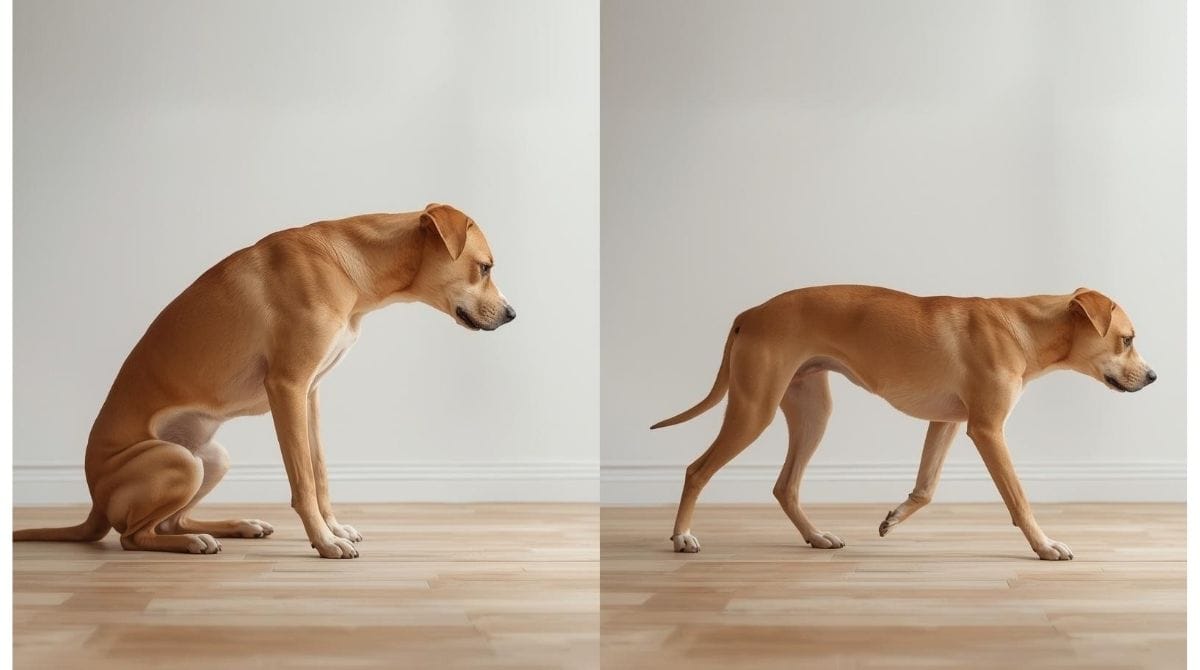
If you’re wondering why is my dog walking slow after rest, mild stiffness can happen after sleep, a nap, or hard activity. In many dogs, rest → stiff joints or sore muscles → slow first steps → easier movement after warming up.
This can be less concerning when the dog loosens up within a few minutes, keeps eating, and still enjoys normal activities. Mild post-rest stiffness is more common in older dogs and after extra exercise.
It becomes more concerning when the dog stays stiff, starts limping, seems weak, or acts sick. Slow walking after rest that does not improve may point to joint problems, nerve issues, injury, illness, or in some cases anxiety rather than physical pain.
It also helps to tell reluctance apart from true inability: a dog that simply doesn’t want to keep walking usually still moves normally in other situations, like heading to the food bowl, while a dog that truly cannot walk properly struggles the same way no matter the motivation offered.
Seek veterinary care right away if the dog cannot stand, drags the legs, collapses, has breathing trouble, or has seizures.
Quick Answer Box
Why is my dog walking slow after rest?
Mild post-rest stiffness can happen when joints or muscles feel tight after lying down. This is more common in older dogs, after cold rest periods, or after extra activity.
A simple pattern often looks like this:
rest → stiffness or soreness → slow first steps → easier movement after warming up
This may be less serious when the dog starts moving better within a few minutes and still acts normal.
It is more concerning when the dog stays stiff, limps, seems weak, has low energy, or shows other signs of illness. In some cases, it also helps to understand the bigger movement picture behind why is my dog limping.
Urgent veterinary care is needed if the dog cannot stand, drags the legs, collapses, or has breathing trouble or seizures.
Table of Contents
When Should You Worry About a Dog Walking Slow After Rest?
When to Monitor vs Call the Vet
This table helps you decide when to monitor at home and when to contact a veterinarian.
| Situation | Monitor at home | Vet soon / emergency |
| Mild stiffness after rest | yes | No |
| Improves within minutes | yes | No |
| No limp or pain signs | Yes | No |
| Stiffness not improving | No | Vet Soon |
| Repeated limping | No | Vet Soon |
| Trouble getting up | No | Vet Soon |
| Cannot stand or walk | No | Emergency |
| Dragging legs | No | Emergency |
| Collapse or breathing trouble | No | Emergency |
Slow movement after rest is not always serious. But the key question is simple: does your dog improve after a few minutes, or not?
If the pattern changes or worsens, it needs attention.
Emergency Warning Signs
These signs need urgent veterinary care.
They often follow this pattern:
severe problem → loss of control or strength → sudden movement failure
- Cannot stand or walk
- Dragging legs on the ground
- Severe pain, crying, or panic behavior
- Breathing difficulty or sudden collapse
- Seizures or sudden loss of balance
These signs may point to serious nerve, spine, or whole-body problems.
Signs That Need a Vet Soon
These are not emergencies, but they should not be ignored.
They often follow this pattern:
ongoing issue → no improvement after rest → repeated stress on body
- Stiffness that does not improve after warming up
- Repeated limping after rest periods
- Trouble standing, climbing, or getting up
- Mild pain when touched or handled
- Low energy that continues beyond rest time
These signs suggest the problem is not just simple stiffness.
When It May Be Okay to Monitor at Home
Some dogs show mild changes that stay stable and improve quickly.
This usually follows:
rest → brief stiffness → normal movement returns
- Mild stiffness only after sleep or a nap
- Movement improves within a few minutes
- No limping, no yelping, no weakness
- Eating, drinking, and behaving normally
In these cases, careful monitoring is reasonable. But if the pattern changes, it should be rechecked.
What Does Normal Stiffness After Rest Look Like?
Normal Stiffness After Rest vs Concerning Signs
This table helps compare normal post-rest stiffness with signs that may need attention.
| Pattern | What owners may see | What it may suggest |
| Mild post-rest stiffness | Slow first steps, then normal walking returns | Common in older dogs or after rest |
| Warms up quickly | Dog moves better within a few minutes | Usually mild and less concerning |
| No other symptoms | Eating, playing, acting normal | Likely simple stiffness |
| Lasts through activity | Dog stays slow during the whole walk | May suggest pain or joint problem |
| Limping present | Uneven steps or favoring a leg | Possible injury or joint issue |
| Getting worse over time | More stiffness each day | Underlying condition may be developing |
| Behavior changes | Low energy or acting unusual | Possible illness or discomfort |
Not every slow start means a serious problem. Some dogs, especially senior dogs, may look stiff for a short time after lying down. PDSA’s guidance on limping and stiffness in dogs notes this same pattern — mild post-rest stiffness that eases with movement is common and not automatically a cause for concern.
The main clue is what happens next. If movement improves quickly, the pattern is usually milder.
Mild Stiffness That Warms Up Quickly
A mild post-rest pattern often looks like this:
- Slight hesitation when standing up
- Slow first steps, then a more normal pace
- No obvious limping
- Normal interest in walks, food, and play
A simple cause chain may look like this:
rest → brief joint stiffness → slow first steps → easier movement after warming up
This kind of change is easier to monitor when the dog’s behavior stays normal.
Why Older Dogs May Slow Down After Rest
Older dogs may need a little more time to loosen up. Joints can feel stiff after lying still for a while.
Once the dog starts moving, the body may warm up and walking may look smoother. Mild patterns like this can stay fairly stable for some time.
This is why some older dogs seem slow at first but do better a few minutes later.
What Is Not Normal After Rest
Some patterns are more concerning because they do not fade as the dog moves.
Watch more closely if the slow walking:
- Lasts through the whole walk
- Comes with limping or weakness
- Gets worse over days or weeks
- Comes with behavior change or illness signs
When stiffness does not improve, it may point to pain, injury, or a dog arthritis flare up rather than simple warming up.
How Long Should Slow Walking Last After Rest?
A Simple Timing Framework
Not all post-rest stiffness means the same thing, and timing is one of the clearest ways to tell mild from concerning. A dog that looks stiff for a few seconds up to two or three minutes, then moves normally, usually fits a mild pattern. This still deserves a mention to the vet if it happens often, but it isn’t cause for alarm on its own. A dog that stays slow or limps for several minutes, or through the entire walk, points toward something more significant, especially if this timing is new.
mild stiffness or early arthritis → joints feel tight after inactivity → brief slow walking for a few seconds to a few minutes → visibly improved gait
more advanced arthritis or injury → pain persists despite movement → slow or limping gait continues throughout the walk, sometimes getting worse with more activity
Morning stiffness follows a similar pattern for a simple reason. Sedentary time reduces circulation, which tightens muscle fibers and leaves joints less flexible until the dog starts moving again. That’s part of why a short warm-up period on its own isn’t unusual.
Neurologic issues behave differently from both of these. Instead of easing with movement, the gait stays off no matter how long the dog walks. Crossing legs, ongoing weakness, or unsteadiness that doesn’t improve with warm-up suggests the problem isn’t about needing more time to loosen up. Timing simply doesn’t change the pattern the way it does with joint-related stiffness.
When Timing Signals a Trend
A single slow start matters less than how that timing changes over weeks. A warm-up period that used to last thirty seconds and now stretches past five minutes is a meaningful shift, separate from how any one walk looks. Tracking rest duration and gait alongside the timing itself, the same way described earlier for logging slow-walking episodes, makes this kind of gradual change easier to notice than trying to remember it from memory alone.
Consistently resolving within a few minutes fits a stable, mild pattern worth simply watching. It’s worth checking in with the vet sooner if the slow walking regularly lasts longer than a few minutes, keeps coming back, or the warm-up period has been gradually stretching out over weeks. A sudden change that doesn’t ease up, especially with real pain, an inability to bear weight, or any neurologic sign, needs same-day veterinary attention rather than more time to see if it passes.
How long is it normal for my dog to walk slowly after resting?
A few seconds up to about two or three minutes is typical for mild post-rest stiffness. Slow walking that lasts longer than that, or continues through the whole walk, points toward something more significant.
What does it mean if the slow walking doesn’t improve within a few minutes?
It suggests the cause may be more than simple warm-up stiffness — possibly more advanced joint pain or a neurologic issue, since those patterns don’t ease the same way with movement. It’s worth mentioning to a vet, especially if this timing is new.
What Signs Come With Slow Walking After Rest?
Slow walking after rest often comes with other visible signs. These extra clues can help show whether the problem is mild stiffness, pain, weakness, or something affecting the whole body.
Joint and Movement Signs
These signs often point to stiffness, sore joints, or trouble with movement.
- Short, stiff steps
- Trouble getting up
- Trouble climbing stairs or jumping
- Limping or uneven walking
- Dog walking slower than usual
A common pattern looks like this:
joint discomfort → harder movement after rest → slow and careful walking
These signs often show up most clearly in the first few minutes after getting up. If these patterns keep showing up, it may help to learn how to tell if your dog has joint pain.
Weakness and Nerve-Related Signs
Some dogs do not just move slowly. They also lose balance or control.
- Wobbling or unsteady walking
- Dragging nails or knuckling
- Head tilt or circling
- Sudden weakness in the back legs
This may follow a different chain:
nerve problem → weak signals to limbs → poor coordination → slow or unstable walking
When these signs appear, the issue may be more than simple joint stiffness. Dogs that show weakness, balance problems, or reduced coordination may also benefit from learning how to help a dog with weak hind legs at home to improve daily mobility and make movement safer.
Whole-Body Illness Signs
Sometimes the body is tired or unwell, not just stiff.
- Low energy all day
- Reduced appetite
- Vomiting or breathing changes
- Pale gums
This pattern often looks like:
illness → low energy or weakness → slower rising and slower walking
ToeGrips’ veterinary guide on lethargic dogs lists these same signs — reduced appetite, pale gums, and breathing changes — as key indicators that a dog’s slowdown may be whole-body rather than joint-related.
In these cases, the dog may seem off all day, not only after rest.
Environment and Activity Patterns
Outside factors can also change how a dog moves after lying down.
- Worse on cold mornings
- Worse on slippery floors
- Sore the day after heavy exercise
These patterns can follow:
cold, poor grip, or overuse → body discomfort → slower movement after rest
This helps explain why some dogs look worse in certain places or at certain times.
Head-Down Posture and Crossing Legs: Extra Signs Worth Noticing
Some dogs show a different kind of clue after rest. Instead of just walking slowly, they walk with the head held low and the back a little rounded.
What Head-Down Walking After Rest May Mean
Owners often ask why is my dog walking slow with head down, especially when the change feels new. A dog walking with head down after rest is often trying to protect a sore spot in the neck, shoulders, spine, or front legs.
neck or shoulder pain → dog protects the area → head held low, shorter steps, reluctance to lift the head
This posture can also show up with plain stiffness. The dog feels sore when it first moves, so it walks with a lowered head and a stiff, rounded back. As the body warms up, the head usually comes back up and the walk looks more normal within a few minutes.
Sometimes a lowered head means something bigger than sore joints. Low energy, a slower pace, and a head that stays down together can point to a whole-body illness rather than simple muscle stiffness.
illness → reduced stamina and energy → head stays down, movement stays slow, less interest in normal activities
A dog that briefly holds its head low right after waking, with nothing else off, is usually just working out mild stiffness. This deserves more attention when the head-down walking keeps coming back, especially alongside stiffness or a new reluctance to jump.
It becomes more urgent if the dog cries out when moving, refuses to lift its head at all, holds the neck stiff, or yelps when touched near the neck or back. Severe tiredness, trouble breathing, or pale gums alongside head-down walking need same-day veterinary care.
Crossing or Scissoring Back Legs (Brief Mention Only)
A dog crossing back legs when walking or standing may be showing a coordination or nerve problem rather than simple stiffness. This pattern is often tied to nerve or spinal issues and is worth a closer look on its own rather than being treated as ordinary post-rest stiffness.
Why is my dog walking slow with his head down?
A lowered head during slow walking usually means the dog is guarding a sore spot in the neck, shoulders, spine, or front legs. It can also show up with plain stiffness or low energy, so it’s worth noting whether the posture clears up within a few minutes of movement.
Is head-down posture after rest something to worry about?
On its own, a brief head-down stretch right after waking is usually mild and nothing to worry about. It becomes more concerning if it keeps coming back, lasts longer than a few minutes, or shows up alongside stiffness, reluctance to jump, or signs of pain when touched near the neck or back.
Why are my dog’s back legs crossing when he walks?
Crossing or scissoring the back legs while standing or walking often points to a coordination or nerve issue rather than simple stiffness. This pattern deserves its own closer look — the full explanation is covered in the guide on dragging back legs.
Why Is My Dog Walking Slow After Rest? (Main Causes)
Common Causes of Slow Walking After Rest in Dogs
The table below shows common causes of slow walking after rest and what owners may notice.
| Cause category | Examples | What owners may notice |
| Joint problems | Osteoarthritis, dysplasia | Stiff after rest, improves slowly |
| Neurological issues | Nerve disease, spinal problems | Wobbling, dragging feet |
| Injury or trauma | Muscle strain, ligament tear | Careful walking, avoiding movement |
| Illness or infection | Tick disease, anemia | Low energy, slow movement all day |
| Environmental factors | Cold weather, slippery floors | Worse in certain conditions |
| Lifestyle factors | Over-exercise, poor fitness | Soreness after activity |
| Other factors | Obesity, internal pain | Slower movement, difficulty rising |
Slow walking after rest can happen for different reasons. Some causes affect the joints. Others affect the nerves, muscles, or the whole body.
The cause matters because slow movement after lying down can come from stiffness, pain, weakness, or low energy.
Joint and Orthopedic Causes
Joint problems are one of the most common reasons for this pattern.
- Osteoarthritis can make joints stiff and sore after rest.
- Hip or elbow dysplasia can make movement uncomfortable.
- Joint inflammation can make the first steps feel harder.
- Cruciate ligament injury can make the knee unstable and painful.
- Spinal arthritis or disc disease can make the back stiff and guarded.
A simple pattern often looks like this:
joint problem → pain or stiffness → harder to rise → slow walking after rest
These causes are often more noticeable in older dogs or dogs with existing mobility issues. Many of these long-term joint changes are linked to what causes arthritis in dogs and how it affects movement after rest.
Neurological Causes
Some dogs walk slowly after rest because the problem affects the nerves or spinal cord.
- Nerve disease can weaken movement.
- Spinal cord disease can affect balance and control.
- Degenerative conditions can slowly reduce coordination.
- Poor coordination problems can make the dog look unsure or unstable.
Here, the body may not send strong signals to the legs after getting up.
This often follows:
nerve problem → weak signals → poor control → slow or uneven walking
Injury and Trauma Causes
Recent injury can also make a dog slow after lying down.
- Muscle strain or sprain can cause soreness after activity.
- Ligament tear can make movement unstable.
- Fracture can cause severe pain and poor weight bearing.
- Paw injury can make a dog step carefully.
These causes often become more obvious after rest because the sore area stiffens while the dog is still.
Infection and Systemic Illness Causes
Sometimes the legs are not the main problem. The whole body may be affected.
- Infection or fever can lower energy and make movement slow.
- Tick-borne disease can cause joint pain and fatigue.
- Anemia can reduce oxygen in the body and cause weakness.
- Heart or lung disease can reduce stamina and make walking harder.
This kind of slow walking often comes with lethargy or other signs that go beyond simple stiffness.
Environmental and Lifestyle Causes
The surroundings and daily routine can also affect how a dog moves after rest.
- Cold or damp weather can make joints feel stiffer.
- Slippery floors can make dogs move more carefully.
- Over-exercise can leave muscles sore the next day.
- Poor conditioning can make even normal activity feel harder.
These causes do not always mean disease, but they can still make the dog move slowly after lying down.
Other Medical Causes
A few other problems can also make this pattern worse.
- Pain elsewhere in the body can make a dog rise and walk carefully.
- Obesity puts more stress on joints and muscles during movement.
When extra body weight is present, even mild stiffness can look worse after rest.
Obesity is more common than many owners realize. Studies estimate that roughly 59% of dogs seen by U.S. veterinary professionals are classified as overweight or obese. This figure comes from the Association for Pet Obesity Prevention’s national survey data. That extra weight adds strain to already-stressed joints, which can make stiffness after rest more noticeable, especially in older dogs. A stocky or overweight dog often shows more stiffness after lying down than a leaner dog of the same age, even when both dogs have similar joint health otherwise. It helps to think of extra weight as something that compounds an existing problem rather than a cause on its own.
How common is joint strain from excess weight in dogs?
It’s very common — national veterinary survey data puts the figure at nearly 6 in 10 dogs, and that extra weight adds real strain to already-stressed joints.
Can obesity cause arthritis in dogs?
Excess weight is more of an amplifying factor than a standalone cause — it adds load to joints that are already under strain, which can make existing stiffness more noticeable. A vet can help assess how much of a role weight is playing in a specific dog’s case.
Could Anxiety or Discomfort Elsewhere Be the Cause?
Not every slow walk after rest comes from a sore joint. Sometimes the cause is fear, stress, or discomfort in a part of the body that has nothing to do with the legs.
Anxiety and Fear-Driven Slow Walking
An anxious dog may walk slowly because he feels unsafe, not because he hurts. Loud noises, unfamiliar places, or busy streets can make a dog tense up and move with caution.
noise or unfamiliar surroundings → dog feels unsafe → slower, cautious walking, sticking close to the owner, head and tail lowered, ears back
This pattern often looks different from place to place. A dog may walk slowly near traffic or in a crowded park, then move normally once back home. That contrast is a useful clue, since joint pain does not usually improve just because the setting changes.
Separation stress or social anxiety can create a similar pattern. A dog that feels uneasy leaving home, or nervous around other dogs, may pause often, hang back, or plant its feet and refuse to keep going. An owner might read this as the dog simply not wanting to walk, when fear is actually driving the behavior. For dogs with ongoing anxiety-related slow walking, a veterinarian can advise on calming aids or behavioral strategies that may help alongside the environmental changes described here.
Owners may notice ears pinned back, a tucked tail, or a dog that stays pressed against their side instead of moving ahead. There is often no clear limp. The dog just seems worried rather than physically stiff. Some anxious dogs also avoid stairs or jumping, not from pain, but from uncertainty after a past slip or a startling experience.
Discomfort Elsewhere in the Body
Slower walking can also come from discomfort that has nothing to do with the joints. An ear infection, dental pain, an upset stomach, or a heart or lung problem can all make a dog less willing to move at a normal pace.
internal discomfort → movement or exertion feels harder → dog slows down, avoids running, resists longer walks despite normal-looking legs
This pattern is easy to miss because the legs themselves look fine. The dog may still walk without limping, yet still choose to slow down or cut a walk short. Watching for panting, coughing, or reduced interest in food alongside the slower pace can help point toward a whole-body cause rather than a joint problem.
Telling anxiety or non-joint discomfort apart from stiffness matters because the next steps are different. Anxiety-driven slow walking is often tied to specific places or situations and comes with tense body language, while joint-related stiffness tends to show up consistently no matter where the dog is. Discomfort from the abdomen, heart, or lungs needs a different kind of veterinary attention than a sore hip or knee.
In mild cases, this pattern shows up only in certain situations, movement at home stays normal, and there are no pain signs. Occasional lip-licking or ear-scratching without a real change in energy also tends to fall into this milder category.
It is worth a vet visit sooner when anxious body language shows up on most walks and starts to affect the dog’s quality of life, even if the legs move normally. The same is true when slow walking comes with a smaller appetite, some weight loss, increased resting, a mild cough, or breathing that sounds slightly different than usual.
Same-day veterinary care is needed if a dog suddenly becomes severely anxious or refuses to move along with signs like heavy panting at rest, real trouble breathing, collapse, or abdominal pain with restlessness, crying, or repeated unproductive vomiting. A dog that was confident before and suddenly becomes withdrawn or hides, especially alongside other illness signs, also needs prompt attention.
Could my dog be walking slow because of anxiety, not pain?
Yes. An anxious dog may move slowly and cautiously simply because he feels unsafe, especially in specific places like busy streets or unfamiliar areas. The same dog often walks normally again once back in a comfortable setting, which points to fear rather than physical pain.
How do I tell if my dog is scared versus stiff?
A scared dog tends to slow down only in certain places or situations, with tense body language like pinned ears, a tucked tail, or sticking close to the owner. A stiff dog, by contrast, usually moves the same way regardless of location, since joint pain doesn’t change with the setting.
Can discomfort somewhere other than the joints cause slow walking?
Yes. Discomfort from an ear infection, dental pain, an upset stomach, or a heart or lung issue can all make a dog less willing to move at a normal pace, even when the legs themselves look completely normal.
Is My Dog Reluctant to Walk, or Unable To?
Not every slow start means the dog is hurting. Sometimes the real question is whether the dog won’t walk or can’t walk, and those two situations call for very different responses.
Signs of Reluctance (“Won’t”)
A dog reluctant to walk often stands normally but simply refuses to move forward. He may plant his feet, turn back toward home, or dig in at the end of the leash.
mild soreness or fatigue → dog wants to avoid extra effort → reluctant start, shorter distance chosen, but still moves when encouraged
This pattern usually shows up only at certain points on the route. The same dog that stalls halfway through a walk may trot happily to the food bowl or greet a visitor at the door without any hesitation. That contrast is a useful clue. A dog refuses to walk in one spot but moves normally in another because the resistance is coming from choice, not from physical limitation.
Fear plays a role too. A dog that had a bad fall, heard a loud noise, or had another negative experience may connect that memory to a specific place. He stops at that exact spot, digs in, and resists the leash, then walks normally again once past it. Owners often describe this simply as their dog doesn’t want to walk, without realizing a single bad memory can be the whole explanation.
Signs of True Inability (“Can’t”)
Inability looks different. This dog struggles to rise or cannot stand at all without help. The hind legs may buckle, cross, or slide out when he tries to walk.
significant joint disease or nerve problem → body cannot bear weight or coordinate the limbs properly → difficulty standing, falling, dragging toes, or collapsing
Weakness here is obvious and consistent. The dog may drag his toes, collapse after only a few steps, or show real distress, sometimes vocalizing while trying to move. This is not a dog choosing to stop. This is a dog trying and failing.
The core difference comes down to context. Reluctance is behavioral. It happens for a reason tied to comfort, fear, or motivation, and the dog is still physically capable everywhere else. Inability is physical. The problem shows up no matter the setting or the motivation offered, because the body itself cannot perform the task.
A simple home check can clarify which one you are seeing. Offer something the dog usually loves, like a favorite treat or a familiar person at the door, a short distance away. A dog that can walk well toward that reward, then resists again later in the walk, is showing reluctance. A dog that struggles across every situation, reward or not, is showing a real physical limit.
Mild reluctance with normal strength and coordination everywhere else, no obvious pain, and no change over several days is usually fine to watch at home. It becomes worth a vet visit sooner when the reluctance continues, starts limiting the dog’s normal activity or quality of life despite him seeming physically able, or shows up alongside early stiffness, mild weakness, or a subtle change in gait.
Sudden inability to stand or walk, collapse, major limb weakness, severe pain, or gait that worsens within hours are emergencies. The same is true for any suspected injury to the spinal cord. These situations need same-day veterinary care rather than home monitoring.
Why doesn’t my dog want to walk, even though he seems physically fine?
Reluctance often comes from mild soreness, fatigue, or a past bad experience tied to a specific spot on the route rather than a physical inability to move. A dog who is reluctant will usually still walk normally in other situations, like heading straight to the food bowl.
Is my dog refusing to walk or physically unable to?
A simple home check can help: offer a favorite treat or a familiar person a short distance away. A dog that walks toward the reward is showing reluctance, while a dog that struggles no matter the motivation is showing a real physical limit.
Should reluctance to walk be treated the same as inability to walk?
No. Reluctance is behavioral and tied to comfort, fear, or motivation, while inability is physical and shows up consistently no matter the setting. Ongoing reluctance still deserves a vet visit if it affects daily life, but true inability — especially sudden inability — needs prompt veterinary attention.
What Could Slow Walking After Rest Mean? (Cause → Effect Explained)
Slow walking after rest is a sign, not the problem itself. What it means depends on what happens after the dog starts moving.
Some dogs warm up and improve. Others stay stiff, weak, or unstable.
Normal Aging-Type Stiffness Pattern
This is one of the more common mild patterns in older dogs.
Rest → joints stiffen → slow first steps → improves with movement
The dog may look stiff at first, then walk better after a few minutes. This pattern often stays mild and predictable.
Joint Pain Pattern
Joint pain can make getting up feel harder.
Joint problem → pain and stiffness → harder to rise → slower walking after rest
The dog may move slowly to avoid discomfort. This often shows up with short steps, hesitation, or trouble climbing.
Injury Pattern
A sore area often feels tighter after lying still.
Recent strain or trauma → sore area protected → slow or careful steps after getting up
The dog may walk carefully to avoid putting pressure on the painful spot. This can happen after rough play, jumping, or slipping.
Nerve Problem Pattern
Some patterns come more from weakness than pain.
Weak nerve signals → poor coordination → slow, unstable, or dragging movement
In these cases, the dog may wobble, drag nails, or look unsure on the legs. This is more concerning than simple stiffness.
Illness Pattern
Sometimes the body feels weak all over.
Whole-body illness → low energy → slow rising and slow walking, even after rest
The dog may seem tired, off, or less interested in normal activities. This pattern often comes with appetite or breathing changes.
Day-After Soreness Pattern
Hard activity can lead to soreness later, not always right away.
Hard activity → muscle soreness later → stiff after rest → improves over the day
This can happen after a long walk, play session, or unusual exercise. If it keeps happening, the dog may need a closer check.
How Slow Walking After Rest Can Change Over Time
A General Progression Pattern
Slow walking after rest doesn’t always stay the same. For some dogs, it shifts gradually, starting small and becoming more noticeable over weeks or months. Recognizing that shift early makes a real difference in how manageable it stays.
early joint wear or mild arthritis → occasional stiffness after long rests → brief slow-walking episodes that improve quickly → owner assumes normal aging and delays a vet visit
progressing joint changes → more inflammation and discomfort → slow walking after most rest periods, longer warm-up time, new difficulty with stairs or jumping → owner starts noticing real changes to daily life
advanced disease → nearly constant gait change → ongoing fatigue and weakness → owner faces decisions about long-term treatment and comfort
At first, this often looks like nothing more than an occasional off morning, usually after a more active day. Over time, that pattern shifts. Stiffness starts showing up most days instead of occasionally, and it takes longer to fade. A dog may begin hesitating at the bottom of the stairs, skip jumping into the car without help, or play with less enthusiasm than before. Persistent limping, real trouble with stairs, or visible muscle loss in the hind legs are physical signs worth mentioning to a vet rather than waiting out.
It helps to think of this as three different points along one path rather than three separate problems. Occasional slow starts sit at one end. Slow walking most days, with a longer warm-up, sits in the middle. Constant gait changes with fatigue and weakness sit at the far end. A dog can move along that path slowly, and where they currently sit says more than any single day does.
One distinction matters here. A rough morning after an unusually active day is not the same as true progression. The first is temporary and tied to a specific cause. The second builds gradually and doesn’t fully resolve, even after rest.
Occasional episodes with long stretches of normal walking in between, with little effect on daily life, are fine to simply keep watching. It’s worth checking in with the vet sooner if the pattern trends toward more frequent or longer episodes, especially alongside early stair or jumping difficulty. A sudden, rapid change over just a few days is different from gradual progression and may point to an acute injury rather than a slow decline, which calls for prompt veterinary attention.
For dogs with diagnosed arthritis, this pattern can sometimes look different from a flare-up, and that distinction is covered in more depth in the arthritis flare-up guide.
Can slow walking after rest get worse over time?
Yes, for some dogs it can shift gradually — starting as occasional slow mornings and slowly becoming a daily pattern with a longer warm-up time. Recognizing that shift early makes it easier to manage.
What are signs that this is progressing rather than staying the same?
Watch for stiffness showing up most days instead of occasionally, a warm-up period that keeps stretching out, and new difficulty with stairs or jumping. These trends, tracked over weeks, point to progression rather than a single rough day.
What Should You Do If Your Dog Is Walking Slow After Rest?
Once the pattern is noticed, the next step is to keep the dog safe and avoid making the problem worse.
Mild cases may settle with simple support, but ongoing signs need veterinary care.
Supportive Care for Mild Cases
If the dog is still alert and the stiffness is mild, simple care may help.
- Rest and reduce activity
- Use short controlled walks
- Avoid jumping
- Avoid slippery floors
- Provide soft bedding
If the dog consistently walks more slowly after rest because of arthritis, exercise duration may also need adjustment. Understanding how long to walk a dog with arthritis can help owners balance activity and recovery while reducing the risk of next-day soreness or stiffness.
This often follows a simple goal:
less strain → more comfort → easier movement
These steps do not fix the cause, but they can reduce stress on sore joints or muscles.
Comfort and Home Support
The home setup can make a big difference after rest.
- Keep walking areas safe
- Help with stairs if needed
- Make getting up easier
- Keep the environment warm and steady
This is especially helpful for older dogs, dogs with joint stiffness, or dogs that slip on smooth floors.
Weight and Fitness Support
Body weight and daily movement also affect mobility.
- Maintain a healthy weight
- Use regular gentle movement
- Avoid “weekend warrior” activity patterns
A steady routine often works better than long bursts of activity. Too much rest can weaken the body, but too much effort can also make soreness worse.
When Veterinary Evaluation Is the Best Next Step
Home care is not enough when the pattern does not improve.
A veterinarian should check the dog when:
- Signs do not improve
- Pain or limping is present
- Mobility keeps declining
- The dog seems unwell
These changes suggest the issue may be more than simple post-rest stiffness.
How to Track Slow Walking After Rest at Home
A Simple Log Owners Can Use
Slow walking after rest often looks different from one day to the next, which makes it hard to remember details when the vet asks about it. A simple log helps fill in that gap.
Each entry only needs a few details:
- Date and time
- How long the dog rested before getting up
- What the dog did the day before, such as a long hike, a normal day, or a quiet one
- How the dog moved for the first one to five minutes, including whether he was slow, stiff, head-down, or limping
- How long it took the dog to look normal
- Any new signs, like trouble on the stairs, avoiding a jump, or a change in mood
Keeping this over several weeks reveals a pattern.
inconsistent, mild stiffness tracked over weeks → brief, stable slow starts that don’t get longer → a reassuring sign of manageable stiffness
worsening joint or spinal disease → episodes become more frequent or last longer → the log shows longer warm-up time, more reluctance to move, and new signs like trouble with stairs
That second pattern is exactly what a vet needs to see. It points toward real progression rather than an isolated bad day, and it can prompt earlier imaging or a change in treatment.
Why Video Matters Before a Vet Visit
A short video adds something a written log cannot. A 30 to 60 second clip, filmed from the side and from behind right after the dog gets up, shows the vet exactly how the legs move, how the dog carries its posture, and how it places its feet.
This matters because many dogs look fine during a short clinic visit. The exam often happens during a “good” stretch, so the vet never sees the actual slow walking after rest that prompted the appointment. A video closes that gap. It lets the vet see the real pattern instead of relying only on a description.
Symptoms showing up clearly at home but disappearing in the clinic is not proof the problem isn’t real. It’s simply a timing mismatch, and video is one of the easiest ways to solve it.
A log that stays brief and stable over several weeks, with no new warning signs, is usually fine to keep monitoring at home. It’s worth checking in with the vet sooner if the records start showing more frequent episodes, a longer warm-up time, or new signs like difficulty with stairs, especially if it’s unclear whether the change is just normal aging. If a log or video ever captures something sudden, like a collapse, severe limping, or clear neurologic signs, that’s a different situation entirely and calls for prompt veterinary attention rather than continued tracking.
How can I track whether my dog’s slow walking is getting better or worse?
A simple log works well: note the date, how long the dog rested, the previous day’s activity level, and how the dog moved for the first few minutes after getting up. Reviewed over several weeks, this shows whether episodes are staying stable or becoming more frequent.
Should I record a video before my vet visit?
Yes, a short 30 to 60 second video filmed right after the dog gets up can be very useful. Many dogs look fine during a short clinic exam, so a video helps the vet see the actual pattern that prompted the visit.
What should I write down to help my vet understand the pattern?
Note the date and time, how long the dog rested beforehand, what the dog did the day before, how the gait looked for the first few minutes, and any new signs like trouble with stairs or a change in mood. Consistent notes over a few weeks give the clearest picture.
How Vets Check a Dog That Walks Slow After Rest
When slow walking after rest does not improve, a vet visit helps look for the real cause. The goal is not just to see that the dog is slow. It is to find out why.
What the Vet Will Ask
The first step is getting a clear history.
The vet may ask:
- When it happens
- How long warming up takes
- Whether it improves with movement
- Whether there was hard activity or injury
- Whether other symptoms are present
These details matter because the pattern gives clues.
For example, rest → stiffness → quick improvement suggests something different from rest → slow walking → no improvement.
What the Physical Exam Looks For
Next, the vet checks how the dog stands, walks, and reacts to touch.
The exam may look for:
- Joint pain
- Spine pain
- Balance changes
- Weakness
- Muscle condition
- Weight-bearing problems
This helps show whether the problem is more likely in the joints, muscles, nerves, or another part of the body.
Tests a Vet May Recommend
If the cause is still not clear, tests may help narrow it down.
These may include:
- X-rays
- Lab tests
- Further imaging when needed
These tests help the vet look for joint changes, injury, illness, or other underlying problems that cannot be seen just by watching the dog walk.
Situational Patterns to Understand
Not every dog shows the same pattern after rest. The timing and the way the dog moves can give useful clues.
Dog Stiff After Sleeping but Fine Later
This pattern often fits mild post-rest stiffness.
A common chain looks like this:
sleep or long rest → body stiffens → slow first steps → movement improves
The key clue is improvement. If the dog walks more normally after a few minutes, the pattern is often less concerning.
Dog Walking Slow After Rest and Not Wanting to Jump
This pattern may point more toward joint pain or strain.
A simple chain may look like this:
rest → stiffness or soreness → harder movement → avoids jumping or climbing
Jumping takes more effort than normal walking. So a dog that avoids jumping may be showing discomfort even if the slow walking is mild at first.
Dog Dragging Back Feet After Rest
This pattern is more concerning because it can suggest nerve or spinal problems.
It may follow this chain:
weak nerve signals → poor foot control → dragging or scuffing after rising
This is different from simple stiffness. Dragging feet usually means the dog is not placing the legs normally.
Young Dog Slow After Rest
In a young dog, slow movement after rest should be watched more closely.
Young dogs are less likely to have age-related stiffness. So this pattern may raise more concern for injury, strain, or unusual weakness.
Older Dog Slow After Rest
Mild stiffness can happen more often in older dogs.
Aging may make joints less flexible, so the dog may take slower first steps after lying down. But persistent limping, repeated struggling, or worsening movement is not normal aging.
Why Walking Pace After Rest Can Vary From Day to Day
Previous-Day Activity and Muscle Condition
Some mornings a dog stands up and walks like normal right away. Other mornings, the same dog looks stiffer for the first few minutes. That kind of change from one day to the next usually has less to do with the joint itself and more to do with what happened the day before, and how much muscle support the joint currently has.
higher activity the previous day → temporary muscle soreness on top of any existing joint changes → slower, stiffer walking after rest the following day
A long hike, an extra-active play session, or a day that was more physical than usual can leave muscles sore by the next rest period. That soreness stacks on top of whatever joint stiffness is already there, so the slow start looks more noticeable than it would after a quieter day. Owners often notice this connection directly. A big outing tends to be followed by a rougher morning.
Muscle condition plays a role too, separate from activity level.
lower general fitness or muscle loss → less support around the joint → more frequent slow starts and a longer warm-up
As a dog loses muscle tone, whether from age, less daily movement, or reduced overall fitness, the joints get less cushioning from the muscles around them. That can make slow starts show up more often, not just after unusually active days.
This kind of variation is usually nothing to worry about on its own. A slow start that clearly follows a long walk or an active day, and then resolves quickly with movement, fits a pattern that’s expected in a dog with some baseline joint stiffness. It becomes more worth watching if the slow starts increase in frequency or duration even without an obvious activity trigger behind them, since that kind of shift points toward a genuine change rather than everyday variation. If tracking the pattern over time would help clarify which one is happening, a simple log of rest duration and previous-day activity can make that distinction easier to see.
Some of this daily variation also lines up with weather changes, which is a pattern covered in more depth in the flare-up guidance for dogs with diagnosed arthritis.
Why is my dog slower some days after resting than others?
Day-to-day variation is often tied to what the dog did the day before. A more active day, like a long hike, can leave muscles sore on top of any existing joint stiffness, making the next rest period’s slow start more noticeable.
Does what my dog did yesterday affect how he walks today?
Yes. Extra activity the previous day can add temporary muscle soreness to any baseline joint stiffness, which often shows up as a slower, stiffer start the next time the dog gets up from rest.
Can a Dog’s Leg Fall Asleep After Rest?
What Temporary “Asleep Leg” Looks Like
Some owners wonder can dogs legs fall asleep, or whether a dog’s paw can fall asleep the same way, especially after watching their dog get up and walk oddly on one leg for just a moment. The short answer is yes. Lying in one position for a while can put steady pressure on a limb. That pressure slows blood flow and can briefly affect the nerves too. During rest, a dog’s heart rate naturally drops and blood flow slows down, which can tighten muscle fibers even more. Once the dog stands and starts moving, circulation returns to normal fairly fast, and the odd walking usually clears up within a minute or two.
prolonged pressure on a limb during sleep → temporary reduced blood flow or nerve compression → brief awkward walking, slight limp, or a shaky leg right after rising → improves quickly as circulation normalizes
This tends to show up after a dog wakes from a tight, curled-up position. The dog may step oddly on one leg for a few seconds, or shake and stretch that leg right after standing. It doesn’t happen every time the dog rests, and it often shows up more with certain sleeping positions or surfaces than others.
do dogs get pins and needles is really the same question in different words, and the honest answer is that something similar likely happens, even if a dog can’t describe the sensation the way a person would.
When It’s More Than a Sleeping Leg
A true asleep leg is brief and tied to a specific position. It fades on its own within a couple of minutes. If a dog’s limp lasts through the whole walk, or comes back after every single rest period, that’s a different pattern. Ongoing weakness, dragging toes, or crossing legs point toward joint disease or a nerve problem rather than simple pressure-related numbness.
The core difference is timing and consistency. A temporary asleep leg resolves in minutes and only shows up occasionally, tied to how the dog was lying down. Persistent stiffness or a real nerve issue lasts longer, keeps coming back, and often gets worse with activity instead of fading.
A short-lived, occasional odd gait after certain sleeping positions is fine to simply watch. If those “asleep-like” episodes start happening more often or last longer each time, and it’s unclear whether that’s still benign, it’s worth mentioning to the vet at the next visit. A sudden limp that doesn’t go away, clear weakness, or any neurologic sign that sticks around needs same-day veterinary attention rather than waiting it out.
Can a dog’s leg fall asleep after lying down?
Yes. Lying in one position for a while can put steady pressure on a limb and briefly slow blood flow, similar to what happens in people. It usually clears up within a minute or two of the dog standing and moving around.
How is that different from stiffness or a real problem?
A true “asleep leg” is brief, tied to a specific sleeping position, and fades within minutes. Ongoing weakness, dragging toes, or a limp that lasts through the whole walk points to a joint or nerve issue instead.
How long does it take for that feeling to go away?
Typically just a minute or two once the dog starts moving and circulation returns to normal. If it lasts noticeably longer or happens with every rest period, that’s worth mentioning to a vet.
How to tell if your dog’s leg is asleep?
Look for a brief odd walk or a shake and stretch of one leg right after the dog gets up from a tightly curled position, especially if it clears up quickly and doesn’t happen every time. A limp that sticks around or returns after every rest period points to something other than a simple “asleep” leg.
Slow Walking After Rest vs Stiffness After Lying Down vs Limping After Sleeping
How These Three Patterns Differ
Dogs show mobility changes in more than one way, and these three patterns often get mixed up because they can look similar at first glance.
Slow walking after rest is about overall pace. A dog moves more slowly than usual after resting, with or without an obvious stiffness or limp. The main sign is a general sense of hesitancy or low energy in how the dog carries itself, not necessarily a specific joint problem.
Stiffness after lying down is different. Here, the focus is on how the joints move rather than how fast the dog walks. A dog may look rusty or creaky when first getting up, take shorter strides, or struggle to rise smoothly. Once moving, that stiffness often eases and the dog’s pace can return to normal, even though the initial movement looked stiff.
Limping after sleeping points to something more specific: one leg clearly getting less weight than the others. A dog with this pattern noticeably favors a single leg for a period after waking, which usually signals localized pain or injury in that limb rather than a general slowdown.
These patterns aren’t always separate in real life. A dog can show more than one at once, moving slowly, looking stiff on rising, and favoring one leg all at the same time. When that happens, it helps to think about which sign stands out the most. A dog that’s mainly slow overall, without favoring one leg or showing obvious joint stiffness, fits this article’s pattern most closely. A dog whose main issue is difficulty getting up smoothly, even if the pace picks back up afterward, points more toward stiffness after lying down. A dog clearly limping on one leg after sleeping fits that pattern instead.
What’s the difference between slow walking after rest and general stiffness after lying down?
Slow walking after rest is mainly about overall pace — the dog moves more slowly in general. Stiffness after lying down is more about how the joints move, like a rusty or creaky rise, and that stiffness often eases once the dog is up and moving.
How is this different from limping after sleeping?
Limping after sleeping points to one specific leg getting less weight than the others, usually from localized pain or injury. Slow walking after rest is a broader, overall pace change that isn’t necessarily tied to one leg.
Which article should I read if my dog is slow, stiff, and limping?
If the main issue is overall pace, this article fits best. If getting up smoothly is the bigger problem, the stiffness-after-lying-down guide is more specific, and if one leg is clearly being favored, the limping-after-sleeping guide covers that pattern directly.
FAQs
Is it normal for my dog to walk slow after sleep?
It can be normal if the stiffness is mild and improves quickly. This is more common in older dogs or after extra activity.
A mild pattern often looks like this:
sleep → brief stiffness → slow first steps → better movement within minutes
If the dog does not improve, the pattern is less likely to be normal.
How do I know if it is aging or a real problem?
Aging may cause mild stiffness, but it should not cause ongoing limping or repeated struggling. A real problem is more likely when the dog keeps getting worse or seems uncomfortable.
Aging usually looks mild and stable. Pain or disease usually brings changes that last longer or keep returning.
Should I worry if my dog is slow but not limping?
Yes, sometimes. A dog can move slowly from stiffness, weakness, or illness without showing a clear limp.
This matters more when the change is new, more obvious than usual, or comes with low energy, poor appetite, or unusual behavior.
When should I see a vet?
A vet visit is a good idea when the dog does not improve after warming up. It is also important when pain, limping, weakness, or illness signs appear.
Urgent care is needed if the dog cannot stand, drags the legs, collapses, or has breathing trouble or seizures.
Can rest fix the problem?
Rest can help mild soreness or a small strain. But rest alone does not fix every cause.
A simple pattern may look like this:
minor strain → rest → less stress on body → easier movement
If the problem keeps returning, there may be an underlying issue that needs a closer look.
Why is my dog stiff and not moving after lying down?
This can happen when joints or muscles tighten during rest. It can also happen when pain or weakness makes rising harder.
A common pattern is:
lying still → stiffness builds → movement feels harder at first
If the dog stays stiff and does not loosen up, the problem may be more than simple post-rest stiffness.
Why does my dog stop walking after getting up?
Some dogs stop because movement feels uncomfortable. Others stop because they feel weak, sore, or unsure on the legs.
This may follow:
rest → stiffness or weakness → hard first steps → pauses or stops walking
The reason depends on whether the dog improves, stays the same, or gets worse.
Why is my dog walking slow and acting weird?
Slow walking with odd behavior can suggest more than stiffness. It may happen with pain, illness, balance problems, or nerve-related issues.
Examples include wobbling, confusion, low energy, or acting less interested in normal activities. That combination deserves closer attention.
What causes sudden hind leg weakness in dogs?
Sudden hind leg weakness can be linked to nerve, spinal, injury, or whole-body problems. It is more concerning than mild stiffness after rest.
A simple chain may look like this:
nerve or spinal problem → poor signals to back legs → weakness or dragging
This should be taken seriously, especially if the dog cannot stand well.
What causes a dog to suddenly not be able to walk?
This usually points to a serious problem. Possible causes include major pain, injury, severe weakness, or nerve-related loss of control.
A severe pattern may look like this:
sudden body problem → loss of strength or control → inability to walk
This is an urgent situation and needs immediate veterinary care.
Sources & References
- Great Pet Care — Why Is My Dog Walking Slow?
- Chewy Pet Central — Why Is My Dog Limping? Possible Causes and Treatments
- PetHelpful — Causes of Dog Limping After Sleeping
- Wag! (WagWalking) — Moving Slowly in Dogs
- ToeGrips Veterinary Blog (Dr. Julie Buzby) — Lethargic Dog: Possible Causes and When to See the Vet
- Gumtree Vet Q&A — Why Is My Dog Walking Slowly? Causes and When to See a Vet
- PDSA — Limping and stiffness in dogs
- Association for Pet Obesity Prevention — 2022 Pet Obesity Survey Results
- Schoolcraft Veterinary Clinic — Why is my dog slowing down? Understanding mobility changes in dogs and cats
Soft CTA
Small movement changes can be easy to miss at first. Learning the difference between mild stiffness and warning signs can make decisions clearer.
Explore more guides on dog mobility, stiffness, and joint pain to better understand what changes may be mild, what signs are more concerning, and when a veterinarian should step in.
Update Note
Last reviewed and updated: July 16, 2026
This update added a clearer way to tell reluctance apart from true inability to walk right in the opening summary, named the specific categories behind slow walking after rest rather than describing them generally, connected the obesity statistic and two other key claims to their supporting veterinary sources, and added a brief mention of calming aids as an option for anxiety-related slow walking.
This article is for general educational purposes only and is not a substitute for professional veterinary advice. If your dog’s slow walking after rest does not improve, worsens, or comes with other concerning signs, please consult a veterinarian for a full evaluation.