
TL;DR
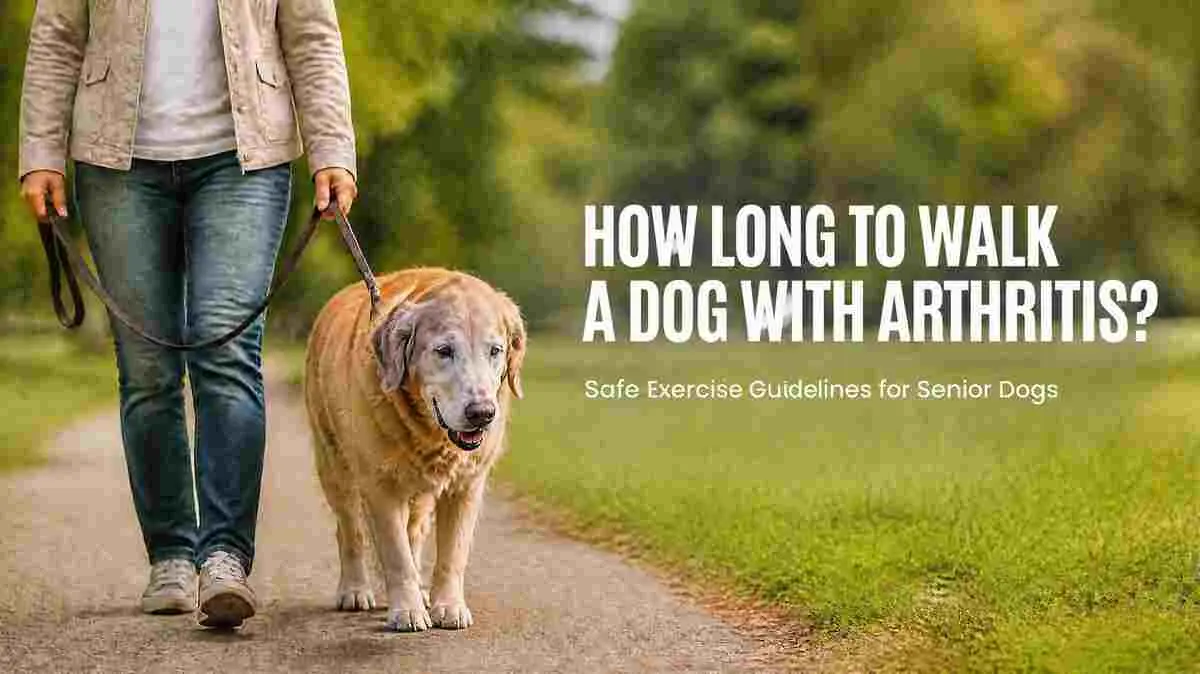
Most dogs with arthritis do best with short, frequent walks rather than one long outing. For many arthritic dogs, a reasonable starting point is about 5–15 minutes per walk, repeated 2–4 times throughout the day. This approach helps support mobility while reducing the risk of overexertion.
When deciding how long to walk a dog with arthritis, there is no single number that works for every dog. The best walking duration is the amount of activity that keeps the dog comfortable without causing limping, excessive fatigue, soreness later in the day, or increased stiffness the next morning. The right duration also depends on the dog’s arthritis severity, pain level, age, and body weight — for example, dogs with mild arthritis often tolerate 10–15 minute walks, while dogs with severe arthritis usually do better with 5–10 minute sessions.
In general:
- Start with short walks and monitor recovery
- Multiple short walks are usually better than one long walk
- Reduce activity if stiffness or limping increases afterward
- Adjust walking time based on the dog’s comfort and mobility level
- Keep walks low impact and consistent
Common signs that a walk was too long include:
- Limping during or after the walk
- Lagging behind on familiar routes
- Heavy panting or fatigue
- Refusing to continue walking
- Increased stiffness the following day
- Slower rising after rest
A veterinarian should be consulted if mobility continues to decline, flare-ups become frequent, the dog has difficulty standing, or new pain develops. Sudden inability to stand, collapse, severe pain, or inability to bear weight on a leg requires urgent veterinary attention.
Quick Answer
For most dogs with arthritis, a good starting point is 5–15 minutes of walking per session, repeated 2–4 times per day. Many veterinarians commonly recommend about 10 minutes of walking, three times daily, then adjusting based on how the dog responds. This guidance is consistent with recommendations from VCA Animal Hospitals on exercising dogs with osteoarthritis.
When considering how long to walk a dog with arthritis, comfort matters more than a fixed number. Some dogs with mild arthritis may comfortably tolerate longer walks, while dogs with more advanced mobility problems may need shorter sessions. The goal is to maintain movement without triggering soreness, limping, or increased stiffness afterward.
Walking a dog with arthritis should focus on consistency rather than distance. Frequent short walks are usually better than one long walk because they help support mobility, muscle strength, balance, and daily function while placing less stress on painful joints.
A dog’s exercise tolerance is the amount of activity it can handle without discomfort during recovery. If the dog remains comfortable later that day and moves normally the next morning, the walking routine is likely appropriate. If limping, fatigue, reluctance to walk, or increased stiffness develops, the walking duration may need adjustment.
Table of Contents
When to Worry
Even when walking is part of managing arthritis in dogs, it is important to watch how the dog responds during and after exercise. Owners who want a broader understanding of joint pain, arthritis, limping, stiffness, and mobility decline can also read our Dog Joint Pain Relief Guide.
The answer to how long to walk a dog with arthritis often depends on whether the dog remains comfortable afterward. Warning signs can indicate that walks are too long, too intense, or that mobility problems are worsening.
Signs a Walk May Be Too Long
A dog with arthritis that is walking comfortably should be able to finish the walk without obvious signs of distress. If any of the following develop, the activity may exceed the dog’s exercise tolerance:
- Limping during or after the walk
- Lagging behind on familiar routes
- Excessive panting that seems unusual for the activity level
- Refusing to continue walking
- Lying down during the walk
- Reluctance to walk again later in the day
These signs may occur when painful joints become irritated or inflammation increases after activity. Continuing to push through these warning signs can make recovery more difficult. If the limping specifically affects a front leg, see why is my dog limping front leg for causes and signs particular to that limb.
Signs the Dog Is Sore the Next Day
Some dogs appear comfortable during a walk but show signs of soreness afterward. This delayed response is often one of the most useful ways to judge whether a walking routine is appropriate.
Watch for:
- Increased stiffness after resting or sleeping
- Difficulty getting up from a lying position
- Slower walking than usual
- Reduced interest in normal activities
- Longer recovery after exercise
Dogs that consistently appear stiffer or slower after resting may be showing signs of reduced mobility beyond normal post-exercise soreness. Owners who notice these patterns regularly may also find helpful information in Why Is My Dog Walking Slow After Rest?
A simple cause-and-effect pattern can occur:
Too much exercise → inflammation → next-day stiffness → more discomfort → reluctance to move
When a Vet Visit Is Recommended
A veterinary visit is recommended if mobility problems are becoming more frequent or more severe. While occasional mild stiffness may occur, ongoing changes should not be ignored.
Schedule a veterinary examination if the dog develops:
- Repeated arthritis flare-ups
- Difficulty rising from the floor
- New or worsening mobility decline
- Pain when touched
- Limping that lasts longer than 24–48 hours
- Increasing difficulty with everyday movement
These changes may indicate that the current management plan needs adjustment or that another problem is affecting mobility.
Emergency Signs
Some symptoms require urgent veterinary attention and should not be assumed to be routine arthritis.
Seek emergency care if the dog develops:
- Sudden inability to stand
- Sudden inability to walk
- Collapse
- Severe pain
- Non-weight-bearing lameness
- Obvious injury or trauma associated with the symptoms
These signs can occur with conditions other than arthritis, including serious injuries, spinal problems, or neurologic emergencies. Prompt veterinary evaluation is important.
Signs That a Dog’s Walking Routine Is Appropriate
Not every walking routine is right for every dog. When deciding how long to walk a dog with arthritis, the most useful clues often come from how the dog moves and feels during the hours and days after exercise. A suitable routine should support mobility without causing increased soreness or fatigue.
Signs Movement Is Helping
Regular, controlled movement can help many arthritic dogs stay active and maintain daily function. Positive changes often appear gradually rather than overnight.
Signs that a walking routine is helping include:
- Easier standing after resting
- A looser, smoother gait
- Better overall mobility
- Increased willingness to go for walks
- More confidence during daily movement
- Better participation in family activities
- Easier lying down and getting back up
These improvements may occur because regular movement helps maintain muscle strength, supports balance, and keeps dogs more comfortable during everyday activities. Many of these positive changes are the opposite of the subtle mobility problems discussed in Early Signs of Arthritis in Dogs, where stiffness, reluctance to move, and reduced activity often appear before more obvious symptoms develop.
A helpful pattern often looks like this:
Controlled movement → improved mobility → easier daily activities → greater willingness to stay active
Signs Exercise May Be Too Intense
Even low-impact exercise can become too much if it exceeds the dog’s current exercise tolerance. Watching for delayed reactions is especially important because some dogs do not show discomfort until hours later.
Warning signs include:
- Next-day soreness
- Longer recovery periods after walks
- Increased stiffness after resting
- Less enthusiasm for future walks
- Exercise avoidance
- Reduced daily activity levels
When these signs appear consistently, the dog may need shorter walks, additional recovery time, or a reassessment of the current routine.
Signs the Walk Length Is Appropriate vs Too Long
| Appropriate | Too Long |
| Easier standing after rest | Limping during or after the walk |
| Comfortable walking pace | Lagging behind |
| Willingness to go for future walks | Refusing to continue walking |
| Normal activity later in the day | Lying down during the walk |
| Minimal next-day stiffness | Increased stiffness the next day |
| Good recovery within 24 hours | Prolonged soreness or fatigue |
Checklist: Signs Movement Is Helping
- Easier standing after rest
- Less stiffness
- Better balance
- More willingness to walk
- Better participation in daily activities
- Improved confidence during movement
- Comfortable recovery after walks
Checklist: Warning Signs After Exercise
- Limping
- Lagging behind
- Heavy or unusual panting
- Next-day soreness
- Increased stiffness
- Difficulty getting up
- Refusal to walk
- Reduced activity after exercise
- Longer recovery periods than usual
A common overexercise pattern is:
Too much exercise → inflammation → stiffness and soreness → reluctance to move → worsening mobility
What Recovery After a Walk Should Look Like
Signs Recovery Is Going Well
Recovery is often one of the most useful ways to judge whether a walking routine is appropriate. A successful walk should support mobility without creating lasting discomfort afterward.
Many dogs show positive recovery signs within the hours after activity. They rest comfortably, move normally around the house, and remain willing to get up when needed.
A common pattern looks like this:
Appropriate walk → mild tiredness → comfortable rest → normal mobility later → normal movement the next day
When this pattern occurs consistently, the current walking duration is usually within the dog’s exercise tolerance.
Signs the Walk May Have Been Too Long
Not all signs of overexertion appear during the walk itself. Some dogs seem comfortable while walking but develop problems later as
joint irritation and fatigue increase.
Recovery may suggest the walk was too long when a dog needs noticeably longer to return to normal activity. Owners may also notice that mobility drops below the dog’s usual baseline for part of the day.
In some cases, post-exercise discomfort can be difficult to interpret because both muscles and joints may become sore after activity. Understanding the differences between joint pain versus muscle pain can help owners better evaluate recovery patterns and mobility changes.
A common progression may look like this:
Walk exceeds tolerance → fatigue increases → joint irritation develops → recovery slows → mobility declines temporarily
When similar recovery problems happen after the same type of walk, the current activity level may be more than the dog can comfortably handle.
Why Next-Day Mobility Matters More Than Distance
Distance alone does not determine whether a walk was successful. Two dogs can complete the same walk and recover very differently.
This is why next-day mobility is often a better guide than the number of minutes walked. A dog that moves comfortably the following morning is usually tolerating the routine better than a dog that struggles after a shorter outing.
A useful question is not simply, “How far did the dog walk?” Instead, it is, “How well did the dog recover?”
Recovery quality → maintained mobility → consistent activity → better long-term walking tolerance
Monitoring next-day movement helps identify patterns that may otherwise be missed. Over time, these observations can help owners adjust walking duration more accurately than distance or time alone.
What Causes Changes in How Long to Walk a Dog With Arthritis?
There is no single answer to how long to walk a dog with arthritis because every dog has different mobility needs. Walking tolerance can change based on arthritis severity, pain levels, age, body condition, and overall physical function. A routine that works well for one dog may be too much or too little for another.
Arthritis Severity
The severity of arthritis is one of the biggest factors affecting walking duration.
Dogs with mild arthritis often have only minor stiffness and remain eager to walk. They can usually tolerate more activity because joint damage and mobility loss are less advanced.
Dogs with moderate arthritis commonly walk more slowly and need additional recovery time. They may still benefit from regular walks, but their exercise tolerance is often lower than it is in the early stages of arthritis.
Dogs with severe arthritis frequently have significant mobility limitations, weakness, fatigue, and difficulty standing. These dogs often require shorter walking sessions focused on comfort and daily function rather than exercise goals.
Pain and Inflammation Levels
Pain and inflammation can change from day to day. When arthritic joints become more painful, many dogs naturally reduce their activity.
A common progression looks like this:
Pain → activity avoidance → muscle loss → worsening mobility
As muscles become weaker, joints receive less support during movement. This can make walking more difficult and may reduce how much exercise the dog can comfortably handle.
Age and Overall Mobility
Older dogs often need more recovery time than younger dogs. Age alone does not determine walking duration, but senior dogs may have reduced stamina, slower movement, and additional mobility challenges.
Dogs with weak hind legs may tire more quickly because standing, turning, and walking require greater effort. Similarly, dogs with balance problems or gait changes may need shorter, more controlled activity sessions to remain comfortable and safe. Dogs that struggle with stairs often show similar mobility limitations. See Why Is My Dog Having Trouble Climbing Stairs?
Body Weight and Physical Condition
Body weight has a direct effect on arthritic joints. Excess weight increases pressure on painful joints and can make movement more difficult. Weight management is therefore an important part of managing arthritis in dogs and maintaining mobility.
Physical condition also matters. Dogs with better muscle strength often support their joints more effectively and may tolerate activity better than dogs that have already experienced muscle loss.
This is why exercise tolerance varies between dogs. The ideal walking duration depends on how the dog’s body responds to activity, recovery, and daily movement demands.
Canine Arthritis Management’s guidance on modifying exercise routines follows a similar severity-based approach to walking duration.
Arthritis Stage vs Recommended Walking Duration
| Arthritis Level | Typical Walk Length | Daily Frequency |
| Mild Arthritis | 10–15 minutes | 2–3 walks per day |
| Moderate Arthritis | About 10 minutes | 3 walks per day |
| Severe Arthritis | 5–10 minutes | 2–3 short walks per day |
| Arthritis Flare-Up | Reduce normal duration by about 50% | As tolerated, including potty-only walks if needed |
How to Adjust Walks on Good Days and Bad Days
Why Walking Tolerance Can Change From Day to Day
Many dogs with arthritis do not move exactly the same way every day. A dog that walks comfortably today may seem slower or stiffer tomorrow, even when the walking routine has not changed.
Several factors can influence walking tolerance. Previous-day activity, weather changes, recovery quality, and rest periods can all affect how comfortable movement feels.
Previous-day activity, weather changes, recovery quality, and rest periods can all affect how comfortable movement feels. This is one reason a dog may tolerate a longer walk on one day but need a shorter walk the next.
A common pattern may look like this:
More activity one day → mild fatigue develops → recovery takes longer → walking feels harder the next day
Temporary changes like these do not always mean arthritis is worsening. Day-to-day variation is common, which is why walking decisions are often best based on current mobility rather than a fixed schedule.
Signs a Dog May Need a Shorter Walk Today
Some days provide early clues that a dog may benefit from a shorter or easier walk. Recognizing these signs can help prevent overexertion before it occurs.
A dog may need a shorter walk when there is:
- More stiffness after resting than usual
- Slower movement at the start of the walk
- Earlier fatigue on familiar routes
- More frequent stopping during walks
- Increased hesitation on stairs or uneven ground
- Less enthusiasm for normal activity
Cold or damp weather can sometimes contribute to this pattern:
Weather change → increased stiffness → reduced walking tolerance → earlier fatigue during activity
When these signs appear, adjusting the walk for that day is often easier on the joints than pushing through the discomfort.
How to Adjust Activity Without Stopping Movement Completely
When mobility is reduced, activity usually does not need to stop completely. Gentle movement often remains important because prolonged inactivity can contribute to stiffness and muscle loss.
A practical adjustment may include shorter walking sessions, flatter routes, slower pacing, or additional rest breaks during the day.
The goal is to reduce joint stress while maintaining regular movement.
A simple progression often looks like this:
Temporary soreness or stiffness → shorter controlled walks → continued mobility → improved recovery → return toward normal activity
Large increases on unusually good days can also create problems. Consistent daily movement is often more helpful than alternating between very active days and very inactive days. Watching recovery and adjusting gradually helps many dogs maintain steadier mobility over time.
What Does Walking Tolerance Indicate?
Walking tolerance is a practical way to measure how well a dog is coping with arthritis and daily activity. Rather than focusing only on distance or time, walking tolerance reflects how comfortably the dog moves, recovers, and functions after exercise. It helps show whether the current activity level is supporting mobility or creating additional strain.
Why Controlled Walking Helps Arthritic Dogs
Controlled walking is one of the most useful forms of low-impact exercise for many dogs with arthritis. Walking is only one part of a complete mobility plan, and some dogs may also benefit from other safe, low-impact activities. Owners interested in expanding their dog’s exercise routine can learn more in How to Choose the Best Exercises for Dogs With Arthritis.
Regular movement helps keep joints moving and supports overall function.
Benefits of controlled walking include:
- Supporting natural joint lubrication
- Helping maintain muscle strength
- Improving balance and stability
- Preserving mobility
- Supporting everyday activities such as standing, walking, and turning
When dogs move regularly, muscles continue to support the joints. This can help them stay active and maintain independence for longer.
Why Too Much Exercise Can Backfire
While movement is important, more exercise is not always better. Overexertion can irritate arthritic joints and reduce a dog’s willingness to stay active.
A common progression looks like this:
Overexercise → inflammation → soreness → reluctance to walk → muscle loss → worsening mobility.
This cycle can gradually reduce exercise tolerance and make daily movement more difficult. That is why activity should be adjusted to the dog’s comfort level rather than pushed beyond its limits.
Why Complete Rest Is Usually Not the Answer
Many owners assume that rest alone is the safest option for arthritis. However, complete inactivity can create new problems.
Without regular movement, muscles become weaker and joints often become stiffer. Over time, this process, known as deconditioning, can make it harder for dogs to stand, walk, and perform normal daily activities. Research on non-pharmaceutical treatments for canine osteoarthritis, published in the Journal of Small Animal Practice, supports regular controlled movement over prolonged rest for maintaining function.
The goal is usually to find a balance between rest and movement. Frequent gentle activity combined with appropriate recovery periods helps many dogs maintain function, mobility, and quality of life more effectively than complete rest alone.
Walking vs Swimming vs Rest
| Activity | Benefits | Limitations |
| Walking | Supports mobility, muscle maintenance, balance, and daily function | May aggravate joints if duration is excessive |
| Swimming | Low-impact movement with less joint loading | Not practical or suitable for every dog |
| Rest | Helps recovery during flare-ups | Too much rest can lead to stiffness, muscle loss, and deconditioning |
What to Do
Start With Short, Frequent Walks
For most arthritic dogs, the safest approach is to start with short, frequent walks rather than long exercise sessions. This helps support mobility while reducing stress on painful joints.
A common starting point is:
- 5–15 minutes per walk
- 2–4 walks per day
- Consistent daily activity rather than occasional long outings
Many dogs do better when activity is spread throughout the day rather than concentrated into a single exercise session.
Several Short Walks vs One Long Walk
Why Frequent Movement Is Often Easier on Arthritic Joints
For many dogs with arthritis, several short walks are easier to tolerate than one long outing. Frequent movement helps keep joints active throughout the day without placing prolonged stress on painful areas.
A simple pattern often occurs:
Short, regular movement → less joint stiffness → more comfortable mobility → better daily function
This approach also supports movement consistency. Instead of asking the joints to handle a large amount of activity at once, walking opportunities are spread throughout the day. Many dogs remain more comfortable when activity is divided into smaller sessions.
How Long Walks Can Lead to Fatigue and Increased Stiffness
Long walks may seem manageable at first because some dogs continue moving even when their joints are becoming tired. However, fatigue can gradually change the way a dog walks.
A common progression looks like this:
Long continuous walk → fatigue develops → gait changes → joint stress increases → stiffness or limping later
In some dogs, the effects do not appear until several hours later or the following morning. Owners may notice slower rising after rest, increased hesitation on stairs, or reduced willingness to move after a long outing.
This is one reason why a dog that appears comfortable during a walk may still experience an arthritis flare-up or increased stiffness afterward. Recovery often provides a more accurate picture than the walk itself.
Why Recovery Is Often Better With Multiple Short Walks
Multiple short walks usually allow recovery periods between activity sessions. These breaks help reduce fatigue while still providing the benefits of regular movement.
Several short walks → lower peak joint loading → less fatigue → better post-walk recovery → more consistent mobility
Many dogs also experience fewer dramatic ups and downs in their mobility when exercise is spread throughout the day. Instead of one demanding activity period followed by prolonged recovery, they receive gentle movement at regular intervals.
When deciding between one long walk or several short walks, recovery quality is often the best guide. If a dog remains comfortable later that day and moves normally the next morning, the walking structure is more likely to match the dog’s current exercise tolerance.
Walking Guidelines for Mild Arthritis
Dogs with mild arthritis often remain interested in walks and daily activities. Many can comfortably handle:
- 10–15 minute walks
- 2–3 times daily
- Controlled leash walking on safe surfaces
The goal is to maintain activity while avoiding overexertion. Monitoring the dog’s response after walks remains important, even in the early stages of arthritis.
Walking Guidelines for Moderate Arthritis
Dogs with moderate arthritis often show more noticeable stiffness and mobility decline. A practical starting routine is:
- About 10 minutes per walk
- Three walks daily
- Consistent walking routes and schedules
Recovery should be monitored closely. If stiffness, limping, or soreness increases after activity, the routine may need adjustment.
Walking Guidelines for Severe Arthritis
Dogs with severe arthritis usually benefit from shorter activity sessions focused on maintaining function and comfort.
A typical approach includes:
- 5–10 minute walks
- 2–3 times daily
- Frequent rest periods as needed
For these dogs, the priority is often helping them move comfortably rather than increasing exercise levels. Activities such as walking to food, water, and toileting areas may become the primary focus.
When to Temporarily Reduce Walking
Signs a Dog May Need Easier Walks for a Few Days
Walking routines do not always need to stay the same. Temporary adjustments are sometimes helpful when a dog shows signs that recovery is taking longer than usual.
A dog may benefit from easier walks for a few days when normal activity seems harder to handle. This often happens after overexertion, increased soreness, or a temporary arthritis flare-up.
Some dogs may show:
- More fatigue after routine walks
- Slower recovery than usual
- Increased hesitation during movement
- Greater difficulty with activities that are normally comfortable
- Reduced confidence on slippery surfaces
- More effort when standing up after resting
A common pattern may look like this:
Too much activity → joint irritation increases → mobility becomes harder → temporary reduction in activity helps recovery
Why Reducing Activity Is Different From Stopping Activity
Reducing activity does not mean complete rest. These are two different approaches.
When activity is reduced, the goal is to lower strain while still encouraging gentle movement. Complete inactivity can create a different problem because muscles gradually become weaker when they are not used.
A simple progression can occur:
Too little movement → muscle loss develops → joint support decreases → mobility becomes more difficult
For many dogs, shorter controlled walks are easier on the body than remaining inactive for several days. Maintaining some movement can help preserve walking tolerance while allowing irritated joints time to settle.
Returning to Normal Walking After Recovery
Once mobility begins to improve, activity is usually best increased gradually rather than all at once. Returning immediately to a previous walking routine can sometimes recreate the same problem that caused the setback.
A practical approach is to monitor recovery first. If the dog is moving comfortably, recovering normally, and returning to usual daily activities, walking duration can slowly move back toward its previous level.
A common recovery pattern looks like this:
Temporary reduction → improved recovery → better mobility → gradual return to normal walks
Recovery quality remains the most useful guide during this process. A dog that continues to recover comfortably after each walk is often ready to resume a more typical routine than a dog that is still showing signs of fatigue or reduced mobility afterward.
Once recovery becomes consistent again, owners can consider whether small increases in walking time are appropriate.
How to Increase Walking Time Safely
Signs Current Walking Time Is Well Tolerated
Before increasing walking time, it helps to establish a comfortable baseline. A dog should consistently handle the current routine without showing signs that recovery is becoming more difficult.
Good tolerance is usually reflected in stable mobility rather than enthusiasm alone. Some dogs remain eager to walk even when the previous activity level was slightly too much.
A walking routine is often being tolerated well when:
- Recovery remains consistent from day to day
- Mobility stays close to the dog’s normal baseline
- Daily activities remain comfortable
- Walking confidence remains steady
- Recovery does not become slower after routine walks
A common pattern looks like this:
Comfortable activity → normal recovery → stable mobility → consistent walking tolerance
How to Make Small Increases Safely
Once a dog is consistently tolerating the current routine, small increases are generally safer than large changes.
The goal is to allow the body time to adapt to the additional workload. Sudden increases can place more stress on painful joints and supporting muscles than expected.
A gradual approach often follows this pattern:
Small increase in activity → adaptation occurs → recovery remains comfortable → walking tolerance improves
When evaluating a change, it is important to consider the entire workload. Longer routes, hills, uneven terrain, and additional play sessions can all add to the physical demands of the day.
Warning Signs Progression Is Happening Too Quickly
Not every increase in walking time is successful. Some dogs show signs that progression is moving faster than their current mobility allows.
Warning signs often appear during recovery rather than during the walk itself. A dog may complete the activity but struggle with the increased workload afterward.
Progression may be happening too quickly when there is:
- Slower recovery after walks
- Reduced willingness to continue familiar routes
- Increased fatigue following activity
- Temporary mobility decline after longer walks
- Difficulty returning to the previous recovery pattern
A common progression can occur:
Activity increases too quickly → fatigue develops → recovery worsens → mobility declines → walking tolerance decreases
When these patterns appear, returning to the previous comfortable level is often easier on the joints than continuing to increase activity. Recovery quality remains one of the most reliable guides when deciding whether a dog is ready for longer walks.
Choose the Best Walking Surfaces
Walking surfaces can affect comfort and stability.
Many dogs do best on:
- Grass
- Packed dirt
- Smooth pavement
- Flat terrain
These surfaces generally provide better footing and place less strain on joints than slippery or uneven ground.
Walking Pace and Routine
A predictable routine is often easier on arthritic joints than sudden bursts of activity.
A simple structure includes:
- Gentle warm-up movement
- Controlled leash walking at a comfortable pace
- Slow cool-down before returning indoors
This approach helps dogs transition into and out of activity more comfortably.
Activities to Avoid
Some activities place excessive stress on joints and can increase the risk of flare-ups.
Activities commonly avoided include:
- Repetitive ball chasing
- Hard-stop fetch
- Jumping on or off furniture
- Jumping into vehicles
- Long-distance running
- Jogging with owners
- Intense weekend exercise after several inactive days
A common pattern is:
Rest all week → intense activity → flare-up → stiffness → reduced mobility
Best Activities vs Activities to Avoid
| Recommended | Avoid |
| Short leash walks | Ball chasing |
| Controlled daily movement | Hard-stop fetch |
| Walking on flat terrain | Repetitive jumping |
| Gentle mobility exercises | Jumping into vehicles |
| Swimming or hydrotherapy (if appropriate) | Long-distance running |
| Consistent exercise routine | Weekend warrior exercise |
Helpful Home Support
Home modifications can make walking and daily movement safer. Additional strategies for improving comfort and mobility are discussed in How to Help a Dog With Arthritis at Home.
Helpful options include:
- Non-slip flooring, rugs, or runners
- Ramps instead of jumping
- Orthopedic beds
- Support harnesses or slings
- Toe grips or traction aids
These changes can improve confidence, reduce slips, and support mobility throughout the day.
Keep a Mobility Diary
A mobility diary can help identify patterns that are easy to miss.
Consider tracking:
- Walk duration
- Walking surface
- During-walk response
- 12-hour response
- 24-hour response
Over time, these notes can help determine whether the current routine is helping, needs adjustment, or should be discussed with a veterinarian.
FAQ
How long should I walk my arthritic dog?
Many arthritic dogs do best with 5–15 minute walks, 2–4 times per day. Some dogs may start around 10 minutes, three times daily, then adjust based on comfort and recovery. The safest answer depends on the dog’s arthritis severity, mobility, and response after walking. If limping, soreness, or next-day stiffness increases, the walk may be too long.
Is walking good for dogs with arthritis?
Yes. Controlled walking is often good for dogs with arthritis because it helps maintain mobility, muscle strength, balance, and daily function. Walks should stay short, steady, and low impact. Long or intense walks can irritate painful joints and trigger soreness.
Should I walk my dog with arthritis every day?
Many dogs with arthritis benefit from daily gentle walks, as long as they remain comfortable afterward. Frequent short walks are usually better than one long walk. During flare-ups, daily activity may need to be reduced. Some dogs may need potty-only walks until soreness improves.
How many walks a day should a dog with arthritis have?
Many dogs with arthritis do well with 2–4 short walks per day. A common routine is about 10 minutes, three times daily. The number of walks should depend on recovery. If the dog becomes stiff, sore, or reluctant to move, fewer or shorter walks may be needed.
How do I know if the walk was too long?
A walk may be too long if the dog limps, lags behind, pants heavily, refuses to continue, or lies down during the walk. It may also be too long if the dog is stiffer the next morning, rises more slowly, hesitates before standing, or avoids walking later in the day. Watching the dog’s recovery is often more useful than focusing on the walk itself.
My dog is sore after a short walk. Should I worry?
A dog that becomes sore after a short walk may be experiencing a flare-up, worsening arthritis, or reduced exercise tolerance. Occasional soreness can happen, but repeated discomfort after brief activity may indicate the dog needs shorter walks or a modified exercise routine. Veterinary advice is recommended if soreness occurs regularly or mobility continues to decline.
Is one long walk or several short walks better for a dog with arthritis?
For most dogs with arthritis, several short walks are usually better than one long walk. Shorter sessions provide regular movement while reducing fatigue and prolonged stress on painful joints. Many dogs recover more comfortably when activity is spread throughout the day.
Why can my dog walk farther some days?
Walking tolerance often changes from day to day. Recovery from previous activity, weather conditions, rest periods, and temporary changes in joint comfort can all affect how much activity a dog can comfortably handle.
Is it normal for arthritis to have good days and bad days?
Yes. Many dogs with arthritis have periods when movement seems easier and other days when mobility is more limited. Looking for long-term patterns is usually more helpful than focusing on a single difficult day.
What should recovery look like after a walk?
A dog that tolerated a walk well should recover comfortably. Mobility should remain close to normal, and the dog should not show prolonged difficulty with everyday movement later that day or the next morning.
How do owners know it is safe to increase walking time?
A dog is often ready for a small increase when the current routine is being tolerated consistently. Comfortable recovery, stable mobility, and the absence of delayed stiffness are positive signs.
Does walking help dogs with arthritis?
Walking can help dogs with arthritis when it is gentle and matched to the dog’s tolerance. Regular movement can support joint lubrication, reduce stiffness, and help preserve muscle. The goal is not to tire the dog out. The goal is to keep the dog moving comfortably.
Is exercise good for dogs with arthritis?
Yes. Exercise is often beneficial for dogs with arthritis when it is low impact, controlled, and matched to the dog’s abilities. Regular movement helps maintain muscle strength, supports joint function, and can improve overall mobility.
High-impact activities, such as repetitive jumping, hard-stop fetch, or long-distance running, are generally harder on arthritic joints and may increase soreness.
Walking or swimming: which is better for dogs with arthritis?
Walking and swimming can both benefit dogs with arthritis, but they serve slightly different purposes. Walking helps maintain everyday mobility, balance, coordination, and normal movement patterns. It is also the most practical form of daily exercise for most dogs.
Swimming and hydrotherapy reduce weight-bearing stress on the joints while still allowing movement and muscle activity. Some dogs benefit from a combination of walking and swimming as part of a broader mobility plan.
What is the best exercise for an old dog with arthritis?
For many older dogs with arthritis, short controlled leash walks are one of the safest and most practical forms of exercise.
The best exercise is usually one that:
- Can be performed consistently
- Does not increase soreness afterward
- Supports normal daily movement
- Matches the dog’s current mobility level
For some dogs, additional low-impact activities such as hydrotherapy or professionally guided therapeutic exercise may also be helpful.
My dog is stiff after exercise. What does that mean?
Stiffness after exercise may indicate that the activity level exceeded the dog’s current tolerance. This can happen when walks are too long, too fast, or too intense.
Occasional mild stiffness that resolves quickly may simply mean the routine needs small adjustments. However, repeated stiffness, worsening mobility, or ongoing discomfort suggests the exercise plan may need modification.
Sources & References
- VCA Animal Hospitals – Exercising Dogs with Osteoarthritis
- Canine Arthritis Management – Modifying Exercise Routines
- Canine Arthritis Resources & Education (CARE) – Therapeutic Exercise: Key Principles
- Canine Arthritis Resources & Education (CARE) – Lifestyle Modifications for Dogs with Osteoarthritis
- PetMD – Dog Arthritis Treatment: How To Help a Dog With Arthritis
- PetMD – Exercising Your Senior Dog
- Physiotherapeutic Strategies and Their Current Evidence for Canine Osteoarthritis
- Journal of Small Animal Practice – Current Evidence for Non-pharmaceutical, Non-surgical Treatments for Canine Osteoarthritis
- Clinician’s Brief – Essential Therapeutic Exercises for Dogs with Osteoarthritis
- Physical Therapy Exercises for Dogs With Arthritis (Veterinary Rehabilitation Handout)
- Anderson Moores Veterinary Specialists – Managing the Arthritic Pet (PDF)
- PDSA – Arthritis in Dogs
- Canine Arthritis CARE – Ways to Exercise a Dog With Osteoarthritis
- BC SPCA – Is Your Dog Getting Too Much Exercise?
- Canine Arthritis Management – Good Day / Bad Day Diary (PDF)
- Colorado State University Veterinary Health – Arthritis Management and Prevention
Soft CTA
Finding the right answer to how long to walk a dog with arthritis often involves careful observation and small adjustments over time. Every dog responds differently, and the best walking routine is usually the one that supports mobility without causing increased soreness or fatigue.
Monitoring changes in walking speed, stiffness, recovery, and willingness to move can help owners identify patterns early. These observations can also provide valuable information during veterinary visits.
Along with appropriate exercise, proactive mobility support can help many dogs stay comfortable for longer. Weight management, safe walking surfaces, supportive home modifications, and consistent low-impact activity all play important roles in helping dogs maintain function and quality of life.
Owners interested in helping dogs stay active may also benefit from learning more about arthritis-friendly exercise, mobility support strategies, and practical home adjustments that make everyday movement easier.
Update Note
Last reviewed and updated: July 15, 2026
This update connected the article’s exercise duration guidance to its supporting veterinary sources — including recommendations from VCA Animal Hospitals, Canine Arthritis Management, and research published in the Journal of Small Animal Practice — placed directly alongside the relevant walking-duration and rest guidance rather than only listed at the bottom of the page.
Educational content only. This article is not a substitute for professional veterinary advice, diagnosis, or treatment. Any dog showing worsening mobility, increasing pain, or new or severe symptoms should be evaluated by a veterinarian.