
TL;DR
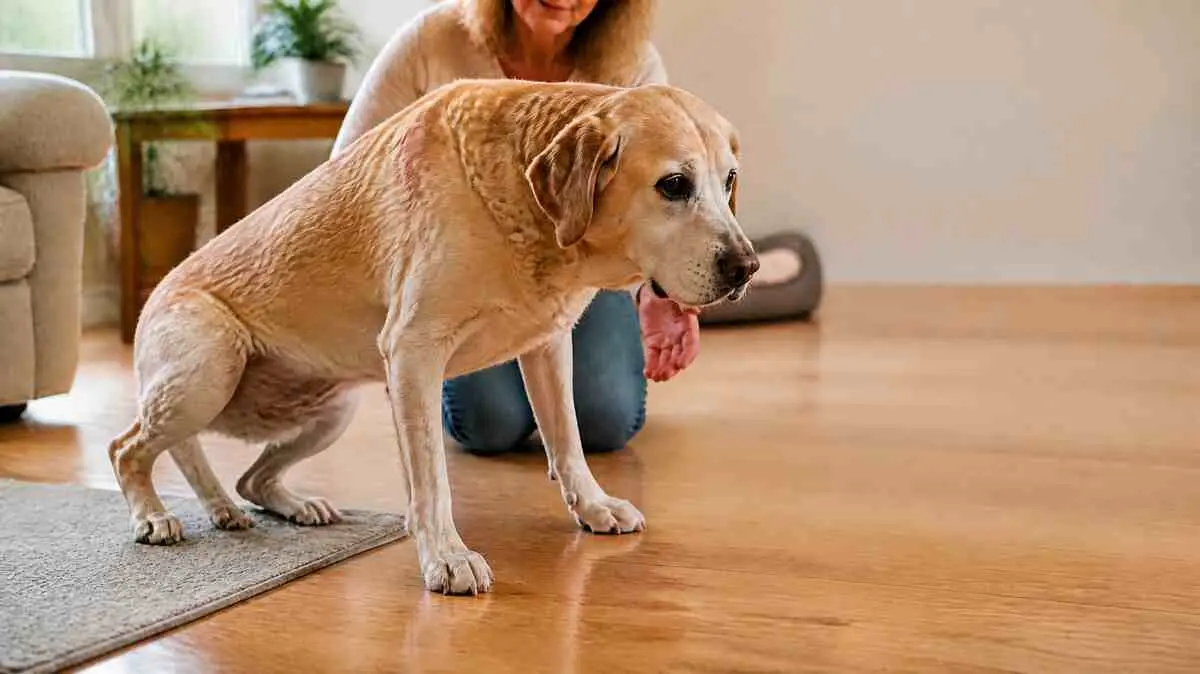
If an owner is asking, “why is my dog struggling to stand up?”, the most common reasons are pain, stiffness, weakness, poor balance, or coordination problems. A dog’s ability to stand depends on healthy joints, muscles, nerves, and balance. When one or more of these systems is affected, standing up can become difficult.
Many dogs become slow to rise because of arthritis, joint pain, weak back legs, muscle loss, or age-related mobility problems. Mild stiffness after rest may improve once the dog starts moving and “warms up” after a few steps.
For dogs struggling to stand because of arthritis or mobility decline, exercise often needs to be adjusted carefully. Learning how long to walk a dog with arthritis can help owners balance activity and recovery without placing too much strain on painful joints.
Difficulty standing should not be ignored if it is becoming more frequent. A dog that needs multiple attempts to rise, keeps falling over, appears weak in the back legs, or is having trouble standing and walking should be examined by a veterinarian.
Sudden changes are more concerning. A dog that suddenly cannot stand or walk, collapses, or develops paralysis needs immediate veterinary attention.
Quick Answer
Why is my dog struggling to stand up? In short, it almost always comes down to a problem affecting the joints, muscles, nerves, balance, or coordination. Standing up requires strength, stability, and the ability to bear weight normally, so when any of these systems is affected, a dog may have trouble getting up or staying steady after rising.
The three most common reasons are:
Joint pain and arthritis – Painful or stiff joints can make it difficult for a dog to push up from a lying or sitting position. Many dogs are slow to get up after resting and may move more comfortably after a few steps. Owners who are new to mobility problems may also find this Dog Joint Pain Relief Guide helpful for understanding joint pain, stiffness, and movement changes.
Weak back legs and muscle loss – A dog with weak back legs may wobble, slip, or need several attempts to stand. Senior dog mobility issues, reduced activity, and muscle weakness can gradually make standing more difficult. If an older dog’s back legs also give out, see Why Are My Old Dog’s Back Legs Collapsing? Common Causes and What to Do.
Neurological problems affecting balance and coordination – Conditions that affect the spinal cord, nerves, or nervous system can interfere with normal movement. Dogs may appear unsteady, lose balance, stumble, or have trouble controlling their back legs.
Owners should seek veterinary help immediately if a dog suddenly cannot stand, suddenly cannot walk, collapses, develops paralysis, loses bladder or bowel control, or shows severe weakness. These signs can indicate a serious medical emergency that requires prompt veterinary attention.
Table of Contents
When to Worry
Difficulty standing can range from mild stiffness to a serious emergency. The signs below can help owners decide whether to monitor the situation, schedule a veterinary visit, or seek immediate care.
Difficulty Standing vs Emergency Signs
| Sign | Monitor | Vet Soon | Emergency |
| Mild stiffness after rest | Yes | ||
| Slow rise that improves with movement | Yes | ||
| Occasional difficulty getting up | Yes | ||
| Frequent difficulty standing | Yes | ||
| Increasing weakness | Yes | ||
| Repeated stumbling or wobbling | Yes | ||
| Trouble standing and walking for several days | Yes | ||
| Sudden inability to stand | Yes | ||
| Sudden inability to walk | Yes | ||
| Sudden paralysis | Yes | ||
| Loss of bladder or bowel control | Yes | ||
| Collapse or severe weakness | Yes |
Monitor at Home
Some dogs have mild mobility problems that can be monitored while owners watch closely for changes.
Signs that are often less urgent include:
- Mild stiffness after rest
- A dog that is slow to get up but improves after a short walk
- Occasional difficulty getting up without worsening symptoms
- Temporary stiffness that returns to normal within the day
For example, a dog may struggle to stand up after a nap and then move more comfortably after a few minutes of walking. This pattern is closely related to why a dog may be stiff after lying down, especially when joint stiffness appears after rest.
Even mild problems should be discussed with a veterinarian if they begin happening more often.
Schedule a Vet Visit Soon
A veterinary evaluation is recommended when difficulty standing is becoming more frequent or noticeable.
Warning signs include:
- A dog having trouble standing up more often than before
- Increasing weakness in the hind legs or back legs
- More stumbling, wobbling, or slipping
- Trouble standing and walking that continues for days or weeks
- A dog that needs multiple attempts to rise
- New loss of confidence during normal movement
A gradual decline may suggest an underlying condition affecting the joints, muscles, or nervous system. Early veterinary attention can help identify the cause before mobility problems become more severe.
Emergency Warning Signs
Some mobility changes require immediate veterinary attention.
Seek emergency care if a dog develops:
- Sudden inability to stand
- Sudden inability to walk
- Sudden hind-leg paralysis
- Loss of bladder control or bowel control
- Collapse or repeated falling
- Severe pain or extreme weakness
A dog that was walking normally and suddenly cannot get up
These signs can be associated with serious neurological disorders, spinal cord problems, severe injuries, or other urgent medical conditions, and VCA Animal Hospitals identifies sudden collapse and loss of bladder or bowel control as signs that warrant immediate veterinary attention. A dog that suddenly cannot stand or walk should be treated as an emergency until a veterinarian determines the cause.
What to Do Right Now if a Dog Cannot Stand
If a dog suddenly cannot stand, the first priority is safety, not diagnosis. Knowing what to do in the first few minutes can prevent further injury while a veterinarian is reached.
Keep the Dog Still and Prevent Another Fall
Block off stairs and any slippery flooring right away. If trauma, a possible fracture, a spinal injury, or a sudden neurologic problem seems possible, keep the dog as quiet and still as it can safely be. Movement can turn a stable injury into a worse one, so the goal is to limit activity rather than encourage it.
It can be tempting to check again and again whether the dog can walk. This urge is understandable, but repeated attempts to stand can lead to more stumbling or additional falls on a dog that already cannot support its own weight. The safer approach is to assess the situation once, confirm the dog cannot stand safely, and then stop testing and call for help.
Move the Dog Safely, Without Pulling
If the dog needs to be moved before help arrives, support the whole body rather than pulling on any one part. A blanket or a rigid, flat surface can work as a makeshift stretcher for larger dogs, since it distributes weight evenly and limits twisting. A small dog can often be placed into a carrier with the top removed, which avoids having to push or bend the dog through a narrow opening.
A folded towel placed under the abdomen can offer some short-distance support for a dog that is conscious, calm, and only needs to move a few steps, such as from one room to a waiting car. This is a temporary aid, not a way to get the dog walking again. Never pull a dog up by the collar or by its legs. Pulling on these areas can add strain to an already painful joint, twist the neck, or worsen a spinal problem that has not yet been diagnosed.
Do Not Give Human Pain Medicine
Even when a dog is clearly in pain, human pain relievers should stay out of reach. Ibuprofen, naproxen, aspirin, acetaminophen, and combination cold or flu medicines are not safe for dogs. Dogs process these drugs very differently than people do. A dose that feels reasonable for a person can lead to stomach damage, kidney or liver injury, or dangerous changes in the blood. The Merck Veterinary Manual confirms that even small amounts of common human pain relievers can cause serious poisoning in dogs. If pain relief is needed, it has to come from a veterinarian who can choose something formulated and dosed for a dog.
What to Tell the Vet When You Call
Calling ahead helps the clinic prepare and can speed up care once the dog arrives. Useful details to share include when the problem started, whether the dog is conscious and responding normally, whether a fall, accident, or possible toxin exposure took place, and whether the dog can move any of its legs at all. It also helps to mention any changes in breathing, gum color, vomiting, or seizure activity, since these details can shape how urgently the clinic responds and what to prepare before the dog arrives.
Symptoms and Signs of a Dog Struggling to Stand Up
Early Signs Owners Often Notice
Many owners first notice subtle changes before a dog develops major mobility problems. If someone is asking, “why is my dog struggling to stand up?”, the earliest clues often appear during everyday activities.
A dog may become slow to get up after resting. Instead of standing immediately, the dog may pause for a few seconds before attempting to rise. Some dogs hesitate before standing, especially after sleeping or spending a long time lying down.
Stiffness after lying down is another common sign. A dog may look uncomfortable during the first few steps and then move more normally once the body loosens up.
Some dogs also need multiple attempts to rise. They may push up partway, sink back down, and then try again before successfully standing.
Mobility Changes That Often Appear
As mobility problems progress, owners may notice changes in the way the dog stands and moves.
Common signs include:
- Wobbling when standing
- Slipping during the push-up movement
- Taking shorter or more careful steps
- Shifting weight awkwardly from one leg to another
- Using the front legs more than usual to help stand up
A dog with mobility issues may also appear less confident during movement. Some dogs pause before walking, move more slowly, or avoid activities that require extra effort.
These changes often suggest that standing up requires more strength, stability, or balance than it once did.
Signs the Problem May Be More Serious
Certain signs can indicate that the problem involves more than simple stiffness or mild weakness.
Owners should pay close attention to:
- Falling over
- Knuckling, where the paw folds under instead of placing normally
- Crossing the back legs while walking or standing
- Dragging the back feet or scuffing the nails
- Loss of balance and coordination
A dog that is stumbling frequently, losing control of the back legs, or showing poor coordination may have a condition affecting the nervous system rather than a simple mobility problem.
Dogs that begin dragging their back feet, scuffing their nails, or showing knuckling may be experiencing related mobility or neurologic changes. Learn more in Why Is My Dog Dragging His Back Legs? What It Could Mean and When to Act.
These signs do not identify the cause on their own, but they are important changes that should not be ignored.
What Pattern Is the Dog Showing?
Once an owner notices trouble standing, the exact pattern of that trouble matters. Noting whether the change came on suddenly or built up slowly, which part of the body seems affected, and whether the dog struggles most to rise or struggles most after standing can turn a vague concern into something a veterinarian can actually work with.
Sudden vs. Gradual Onset
A dog that was moving normally yesterday and today cannot rise, or shows sudden wobbling or weakness, is showing a different pattern than a dog whose mobility has been slipping for weeks. Sudden onset points to a new, acute event and calls for urgent attention, especially if the dog cannot rise at all or shows other neurologic signs. Writing down the exact day or moment the change was first noticed helps a veterinarian separate an abrupt problem from a longer decline.
Gradual onset tends to look different. The dog may take a little longer to rise each week, shorten its walks on its own, or hesitate more often before getting up. This slow pattern is easy to write off as “just getting older,” but it still deserves a veterinary assessment rather than being assumed to be a normal part of aging.
One Limb, Hind Limbs, or Whole Body
Where the trouble shows up is just as useful as when it started. A dog that favors one leg, limps, or shortens its stride on that side is showing a one-limb pattern. A dog whose back legs wobble, whose nails scuff the ground, or whose hind end seems to slip or sink is showing a hind-limb pattern instead, which points toward the rear half of the body specifically rather than a single leg.
Weakness that spreads across the whole body looks different again. A dog like this may struggle to hold its posture, tire quickly after only a few steps, or seem less alert than usual on top of the physical struggle. It helps to know that weakness itself, no matter where it shows up, is not the same as paralysis. Weakness means reduced strength or control. Paralysis means a complete loss of voluntary movement in the affected area. A dog with weak back legs can usually still move them, just with less power or coordination than before.
Difficulty Rising vs. Falling After Standing
Not every standing problem looks the same once the dog is upright. Some dogs struggle mainly with the push-up itself, needing extra time, extra effort, or several attempts before they are on their feet. Once up, though, they may walk fairly normally. This pattern often points to pain, stiffness, or a traction problem during that specific movement.
A dog that gets up only to immediately wobble, sink back down, or fall is showing a different and generally more concerning pattern. Falling right after standing suggests the dog’s body cannot maintain the coordination or balance it just used to get up in the first place, which points more toward a strength or balance problem than a purely painful one.
Rest-Related vs. Persistent-During-Walking
Some dogs seem stiff or slow only right after getting up, then move much better once they have taken a few steps. This kind of improvement with movement is a real and recognizable pattern, but it does not rule out a more serious cause on its own. It simply describes what the dog is doing.
A dog whose trouble does not ease up, or that gets worse the longer it walks, is showing a different and more persistent pattern. Struggling throughout the walk, rather than just at the start, deserves more prompt evaluation, particularly if it is new or getting worse over time.
These four patterns work best together rather than alone. A written note of when the problem started, which part of the body seems affected, whether the dog struggles more to get up or more to stay up, and whether the trouble eases with movement gives a veterinarian a much clearer starting point than a general description of “trouble standing.” None of these patterns confirm a diagnosis by themselves, but together they help narrow down what to look for during an exam.
Why Is My Dog Struggling to Stand Up? Common Causes
Several conditions can make it difficult for a dog to stand normally. Some affect the joints, some affect muscle strength, and others affect the nervous system.
Common Causes of Trouble Standing Up
| Cause | Typical Signs | Often Seen In |
| Osteoarthritis | Stiffness, slow rising, painful movement | Middle-aged and senior dogs |
| Hip dysplasia | Difficulty standing, hind-leg discomfort | Large-breed dogs |
| Elbow dysplasia | Front-leg discomfort, slow push-up movement | Growing and adult dogs |
| Weak hind legs | Wobbling, reduced strength, back legs giving out | Senior dogs |
| Muscle loss | Difficulty pushing up, fatigue | Less active or aging dogs |
| IVDD | Pain, weakness, coordination problems | Certain breeds prone to spinal disease |
| Degenerative myelopathy | Dragging feet, weakness, loss of coordination | Older dogs |
| Vestibular disease | Loss of balance, leaning, falling | Adult and senior dogs |
| Injury or trauma | Sudden pain, sudden mobility changes | Dogs of any age |
Arthritis and Joint Pain
One of the most common answers to “why is my dog struggling to stand up?” is arthritis or chronic joint pain.
The pattern often follows a simple chain:
Joint damage → stiffness → pain → slower standing → reduced movement
Dogs with osteoarthritis often become stiff after resting. Owners who notice stiffness, hesitation, or painful movement can also review how to tell if your dog has joint pain. Painful joints make it harder to push up from the floor, especially after sleeping or long periods of inactivity.
Many dogs improve slightly after a few minutes of movement because the joints loosen up. However, ongoing discomfort can still reduce activity levels and make difficulty rising more noticeable over time.
Hip Dysplasia and Elbow Dysplasia
Hip dysplasia and elbow dysplasia can also make standing difficult.
These conditions affect how the joints fit and move. As a result, standing up may become painful, especially during the push-up movement from a lying position.
Some dogs hesitate before standing because the affected joints cannot provide normal support. Others may rise slowly or shift weight awkwardly to avoid discomfort.
Weak Back Legs in Senior Dogs
Senior dog mobility decline is another common cause of trouble standing.
The pattern often develops gradually:
Age-related muscle loss → reduced strength → difficulty pushing up → more inactivity
As dogs age, the hind legs may lose strength and stability. Weak hind legs can make a dog wobble, sink in the rear, or need several attempts to stand.
Some owners notice their dog’s back legs giving out occasionally. Over time, repeated difficulty standing can reduce confidence and make dogs less willing to move around.
Muscle Loss and Deconditioning
Muscle strength plays an important role in a dog’s ability to stand.
When activity levels decrease, muscles become weaker. This can create a cycle that becomes harder to break:
Less activity → weaker muscles → harder to stand → even less activity
Dogs with muscle weakness may struggle to generate enough force to rise smoothly. As strength declines, mobility often becomes more limited and everyday movements require more effort.
Neurological Conditions
Not every dog struggles to stand because of pain.
Some neurological conditions affect coordination, balance, and leg control rather than the joints themselves.
Examples include:
- Intervertebral disc disease (IVDD)
- Degenerative myelopathy
- Vestibular disease
- Other spinal cord or nervous system disorders
Cornell University’s College of Veterinary Medicine describes IVDD as a common cause of pain, weakness, and coordination problems in predisposed breeds, and identifies degenerative myelopathy as a separate, progressive spinal cord disease that leads to gradual hind-limb weakness.
These conditions may cause poor coordination, wobbling, crossing legs, knuckling, dragging the back feet, or loss of balance. If weakness appears suddenly, owners may also want to learn what causes sudden hind leg weakness in dogs and when it may need urgent care. In some cases, dogs appear willing to move but cannot control their legs normally.
When Trouble Standing May Reflect Whole-Body Weakness
Not every dog that struggles to stand has a problem with a joint, a leg, or the spine. Sometimes the real cause is body-wide, affecting the dog’s overall strength and energy rather than one specific area.
Generalized weakness looks different from the joint and muscle problems already covered above. Instead of favoring one leg or struggling mainly with the push-up movement, a dog with whole-body weakness may seem weak everywhere at once. It may have trouble holding its head up, tire out after only a few steps, or seem less alert or responsive than usual. This kind of weakness can come from a body-wide illness, a metabolic problem, or exposure to a medication or toxin, none of which are related to the joints or nerves that control a single limb.
Because this type of weakness affects the whole body rather than one leg, the signs to watch for are different too. Breathing changes, pale or blue-gray gums, repeated collapse, vomiting, and poor appetite are all worth reporting alongside any trouble standing, since they point toward a systemic cause rather than a purely mechanical one. The Merck Veterinary Manual notes that vomiting in dogs can itself be a sign of a range of underlying conditions, from dietary indiscretion to more serious organ or metabolic disease, which is why it should never be dismissed as unrelated to a standing problem. A dog can be too weak to stand simply because it is sick, even without any obvious limb pain or stiffness.
Medication and toxin exposure history matters here as well, even before any dramatic symptoms appear. If a dog recently started a new medication, may have gotten into something it shouldn’t have, or has any other possible exposure, that information is worth mentioning to a veterinarian regardless of how mild the standing trouble looks so far.
Injury, Trauma, or Sudden Mobility Problems
A sudden change in mobility can occur after an injury or traumatic event.
Examples include:
- Falls
- Slips on smooth floors
- Jumping injuries
- Spinal injuries
- Sudden painful strains
These problems can cause immediate discomfort and make a dog reluctant or unable to stand normally.
A dog that suddenly cannot stand, suddenly cannot walk, or develops severe weakness after an injury should receive prompt veterinary attention. VCA Animal Hospitals’ first-aid guidance for limping dogs also recommends avoiding unnecessary handling of the injured area, since additional movement can worsen a fracture or soft-tissue injury before it has been properly assessed.
What Does It Mean When a Dog Struggles to Stand Up?
Pain May Be Limiting Movement
When a dog struggles to stand up, pain is often part of the problem.
Joint pain and arthritis-related discomfort can make normal movements feel difficult. Instead of rising smoothly, a dog may pause, hesitate, or take extra time to get up after resting.
Many dogs also show protective behavior. They may shift weight away from painful areas, avoid certain movements, or move more carefully to reduce discomfort. VCA Animal Hospitals notes that these subtle behavior changes are often easier for owners to catch early than obvious signs like vocalizing or limping.
Weakness May Be Reducing Push-Up Power
Standing up requires strength, especially from the hind legs.
Weak hind legs, muscle loss, and fatigue can reduce the power needed to push the body off the floor. As a result, a dog may need several attempts to stand or may appear shaky during the process.
In some dogs, weakness develops gradually. Reduced strength can make everyday movements harder and may contribute to ongoing mobility decline.
Balance and Coordination May Be Affected
Not all standing problems are caused by pain or weakness.
Some dogs struggle because balance and coordination are affected. This can happen when a condition involves the nervous system, spinal cord, or other neurological structures that help control movement.
Dogs with coordination problems may wobble, stumble, fall, cross their legs, or have difficulty placing their feet correctly. In these situations, the challenge is often controlling movement rather than generating strength.
Dog Has Trouble Getting Up but Walks Fine? Here’s the Difference That Matters
A dog that eventually stands up and then walks normally is often showing pain, stiffness, or hesitation during the transition itself. A dog that cannot generate enough strength to rise, or that stands up and then falls, may have a different and more serious problem. Owners cannot tell these apart just by watching how willing the dog seems, because pain, fear, weakness, and illness can all look similar at first glance.
Reluctance vs. True Inability
Standing up takes more coordination than it looks like. A dog has to shift its weight, stabilize its body, and extend several joints together before it can take a step. When a joint or muscle hurts during that movement, a dog may pause, brace, groan, or make several attempts before finally standing. This is reluctance. The dog still has the physical ability to rise. It is choosing to move carefully because the movement itself is uncomfortable.
True weakness looks different. Instead of a hesitant pause, the dog cannot push its body weight up at all, wobbles heavily once it does, or takes a few steps and then stumbles. A dog dealing with pain-driven reluctance will often walk close to normally once it is finally up. A dog dealing with true weakness usually does not. Because these two patterns can start out looking similar, willingness alone is not a reliable way to tell them apart.
When “Won’t Get Up” Points to Illness, Not Just Reluctance
Sometimes a dog that “won’t get up” is not being cautious about pain at all. It may simply lack the energy to respond normally. A dog like this often looks unusually quiet or dull. It may stay down even when a favorite person walks in, when the leash comes out, or when its name is called, none of which would normally stop a dog that is just being careful about a sore leg.
This kind of dullness is a different concern than a dog that is alert but hesitant. An alert dog that pauses before standing is still tracking everything around it. A dog that seems disinterested in its surroundings while lying down is showing a sign that reduced alertness, not simple reluctance, may be part of the picture. That distinction matters, because a quiet or unresponsive dog should not be assumed to just be “being stubborn about getting up.”
Fear After a Slip vs. Genuine Impaired Coordination
A dog that recently slipped or fell can become hesitant about standing again, especially if the fall was painful or startling. This kind of fear is a real and understandable reaction. The dog freezes, braces, or avoids getting up in the exact spot where the fall happened.
The difficulty is that fear and physical impairment can look almost identical from the outside. A dog that is genuinely afraid of a slippery patch of floor may hesitate in a very similar way to a dog whose balance or strength is actually compromised. Because of this overlap, a fearful-looking dog that keeps avoiding standing, even outside the spot where the fall happened, still deserves a veterinary check to rule out an underlying injury or coordination problem rather than assuming the hesitation is only emotional.
A slippery floor itself deserves the same caution. Smooth or slick flooring can make an existing weakness or pain problem much more obvious, since a dog with any instability has less margin for error on a surface with poor grip. This does not mean the floor caused the underlying problem. It often just reveals one that was already there. Owners dealing with ongoing traction issues can find more detail in Why Is My Dog Slipping on the Floor?
Across all three of these situations, the same framework applies. A single brief hesitation with normal alertness afterward is something to simply monitor. Reluctance that keeps returning, or that comes with signs like guarding, panting at rest, or resistance to being touched, is a reason to schedule a vet visit soon. Inability to rise at all, falling immediately after standing, or a dog that seems unusually unresponsive should be treated as an emergency.
Why the Pattern Matters
The way symptoms develop can provide useful clues.
A dog that improves after a short period of movement may be dealing with a pattern covered separately in why a dog may be stiff after lying down.
A dog that becomes weaker over weeks or months may be experiencing progressive mobility decline, muscle loss, or another ongoing condition.
Sudden changes are often more concerning. A dog that suddenly struggles to stand, suddenly cannot walk, or develops rapid mobility loss should receive prompt veterinary evaluation because sudden-onset problems can indicate a more serious underlying condition.
Pain vs Weakness vs Coordination Problems
| Problem | Common Clues | Example Signs |
| Pain | Dog wants to move but movement appears uncomfortable | Stiffness, hesitation, limping |
| Weakness | Dog lacks strength to push up normally | Multiple attempts to stand, shaking legs |
| Coordination Problems | Dog cannot control movement normally | Wobbling, knuckling, crossing legs, falling |
Quality of Life & Daily Function Impact of Difficulty Standing
Difficulty standing can affect a dog’s quality of life well before it turns into a complete inability to walk. The impact often shows up in behavior and daily routines first.
Behavioral and Emotional Signs
A dog that struggles to stand may become quieter, more withdrawn, or less interested in play. Some dogs grow more restless, especially at night, or seem irritable when approached or handled. These changes are not just about mood. They often reflect ongoing discomfort or a growing lack of confidence in the dog’s own movement.
It helps to remember that a dog can still be walking normally and still be dealing with a real welfare problem. Walking ability alone does not tell the whole story. A dog that moves fine once up but hesitates more, avoids certain rooms, or stays near people or furniture for support is showing that its confidence, not just its strength, has been affected.
Practical Daily-Function Impact
Beyond mood, difficulty standing can quietly limit a dog’s access to basic needs. A dog that finds getting up painful may start avoiding it unless truly necessary, which means fewer trips to the water bowl, the food dish, or the door to go outside. Over time, this can mean a dog is drinking less, eating less, or waiting longer than it should to relieve itself.
It’s worth checking whether the dog can still comfortably reach food, water, and a spot to toilet without a struggle. If getting to any of these has become harder, that is a meaningful sign worth mentioning at a veterinary visit, not something to wait out.
What to Do if a Dog Is Struggling to Stand Up
When a dog has difficulty standing, simple changes at home can often make movement safer and more comfortable while the underlying cause is being evaluated. Dogs with arthritis-related mobility problems may also benefit from learning how to help a dog with arthritis at home.
Make Standing Safer at Home
Slippery surfaces can make standing much harder for dogs with weakness, stiffness, or balance problems.
Helpful changes include:
- Placing non-slip rugs on smooth floors
- Improving traction in frequently used areas
- Keeping walking paths clear of obstacles
- Removing clutter that could increase fall risk
Many dogs move with more confidence when they have stable footing.
Help the Dog Stand Safely
Some dogs benefit from temporary support during the standing process.
Supportive tools may include:
- Rear-support harnesses
- Mobility harnesses
- Support slings
- Lift-assist devices recommended by a veterinarian
Any assistance should be gentle and controlled. Supporting the body evenly can help reduce strain and lower the risk of falls. Dogs that need ongoing support with standing, walking, or balance may also benefit from learning how to help a dog with weak hind legs at home, including ways to improve traction, mobility, and daily safety.
For dogs with lasting weakness in both the front and back legs, a full-support dog wheelchair can hold the body in a standing position so the dog can move with help.
Encourage Safe Movement
Regular movement often helps maintain strength and mobility.
In many cases, dogs benefit from:
- Short walks
- Gentle activity
- Consistent movement throughout the day
- Controlled exercise appropriate for their condition
The goal is to encourage safe movement without causing excessive fatigue or discomfort.
Overexertion can sometimes worsen mobility problems, especially in dogs that are already weak or painful.
Reduce Fall Risks
Environmental changes can help prevent injuries and make daily activities easier.
Helpful adjustments may include:
- Ramps instead of stairs where possible
- Limiting access to slippery areas
- Managing stair use carefully
- Making furniture access safer when needed
Dogs that hesitate, stumble, or move carefully specifically on stairs may be showing an early or isolated version of these mobility changes — see Why Is My Dog Having Trouble Climbing Stairs? for signs and safety strategies specific to stair use.
These changes can improve confidence and reduce the chance of additional injuries.
Common Mistakes to Avoid
A few well-meaning habits can actually make things harder for a dog that is struggling to stand, so it helps to know what to avoid while the underlying cause is being worked out.
Assuming It’s “Just Old Age”
It is easy to assume that a slower, more hesitant dog is simply getting older. But aging does not make a mobility change unimportant on its own. Treating the change as an inevitable part of getting old, rather than something worth evaluating, can delay a veterinary visit that might identify a treatable cause. The dog, meanwhile, may keep losing function or living with discomfort that could have been addressed sooner.
Repeated “Testing” and Unsafe Handling
It is natural to want to check, more than once, whether the dog can still stand or walk normally. But asking a dog to repeat a painful or unstable movement again and again does not make the picture any clearer, and it can lead to a fall, added distress, or a worsened injury. One safety check is enough. After that, the priority shifts to getting veterinary guidance rather than continuing to test.
How a struggling dog is physically helped up matters just as much. Pulling on the collar or on a leg puts force on parts of the body that may already be painful or unstable, which can strain the neck or a limb or cause an unsafe twisting motion. Supporting the dog’s full body evenly, rather than pulling on one point, is a safer way to assist. The same caution applies to exercise: pushing a weak or painful dog into activity, even with the intention of helping it “loosen up,” can push it past what its body can currently handle and make the underlying problem worse.
Environmental and Medication Mistakes
A couple of smaller habits are also worth watching. Continued access to slick floors or stairs keeps fall risk in place for a dog that is already unsteady, so limiting access to both remains one of the simplest ways to reduce additional injuries — see Why Is My Dog Having Trouble Climbing Stairs? for more on stair-specific safety. An improvised sling or towel wrap can also do more harm than good if it is loose or unstable enough to twist the dog or cause it to panic mid-movement.
Finally, no human pain medicine should ever be given without veterinary guidance first. It might seem like a reasonable way to offer quick comfort, but the risk of serious harm is real enough that this decision should always go through a vet.
Safe Home Mobility Supports
| Support Tool | How It Helps | Best Use Case |
| Non-slip rugs | Improve traction and stability | Slippery floors |
| Support harness | Assists with standing and walking | Weak hind legs |
| Sling support | Provides temporary lift assistance | Difficulty rising |
| Ramps | Reduce climbing effort | Stairs and elevated surfaces |
| Orthopedic bedding | Reduces pressure after rest | Dogs with stiffness and joint pain |
Monitor Changes Closely
Tracking mobility changes can help owners recognize whether the problem is improving, staying the same, or getting worse.
Useful observations include:
- How easily the dog can rise
- Whether falls or stumbling are increasing
- Changes in appetite
- Changes in activity levels
- How often difficulty standing occurs
Patterns often provide useful information that can be shared with a veterinarian during an examination.
What to Record Before the Veterinary Visit
A short, clear record can make a veterinary visit far more useful than trying to describe everything from memory.
Timing and Frequency
The most useful starting point is when the problem was first noticed. A clear time, like “yesterday evening” or “over the past two weeks,” helps a vet tell an abrupt change apart from a slower decline. It also helps to note whether the problem is improving, getting worse, happening on and off, or staying about the same since it started. This timeline gets matched against exam findings, so the more specific it is, the more useful it becomes.
What to Watch and Note
Beyond timing, a few specific details go a long way. Which legs seem affected, whether the dog walks normally once it is finally up, and what surface or setting the problem happens on, such as after rest, after exercise, or on a particular type of flooring, all add useful context. The surface itself is not a diagnosis on its own, just a clue worth mentioning.
Other signs worth writing down include any pain behavior, shaking, falling, knuckling, or dragging, along with changes in appetite, urination, or defecation. These details might seem unrelated to standing on their own, but together they help build a fuller picture for the vet.
Safe, Optional Video Documentation
A short video can sometimes show a pattern more clearly than words can, especially if the problem does not happen to occur during the exam itself. This is optional, not something every owner needs to do.
The key is capturing the behavior safely. A video should only be taken during a naturally occurring episode, never by provoking pain, forcing the dog to move, or asking it to repeat a difficult motion. If the situation is serious enough that emergency care is needed, getting to the vet always comes first. Video can wait, or be skipped entirely, when time matters more.
Medication, Toxin, and Injury History
Any recent medication, possible exposure to something toxic, or injury is worth mentioning, even if the connection to the standing problem seems unlikely. A recent fall, a new medication, or a dropped pill the dog may have gotten into are all details a vet would want to know.
If it is safe to do so, bringing along packaging, a product name, or a photo can help the vet identify exactly what might be involved. Sharing this information early, rather than waiting to see if it becomes relevant, gives the vet the fullest possible picture from the start.
Signs a Dog Is Getting Worse
- Difficulty standing is happening more often
- More attempts are needed to get up
- Weakness is becoming more noticeable
- Increased wobbling or stumbling
- More frequent falls
- Dragging the back feet
- Reduced activity levels
- Loss of confidence during movement
- Sudden worsening of symptoms
- New balance or coordination problems
The following changes often suggest that mobility support and activity adjustments are having a positive effect.
Signs Mobility Is Improving
- Standing up becomes easier
- Fewer attempts are needed to rise
- Less stiffness after rest
- Improved walking confidence
- Better balance and stability
- Increased daily activity
- Fewer slips and falls
- Longer comfortable walks
- More willingness to move around the home
- Improved overall mobility
When Veterinary Evaluation Is Needed
Veterinary evaluation becomes more important when mobility problems continue or worsen.
A dog should be examined if there is:
- Persistent decline in mobility
- Frequent difficulty standing
- Increasing weakness
- Ongoing falls or loss of balance
- Sudden worsening of symptoms
A veterinarian can help identify the underlying cause and determine the safest plan for supporting long-term mobility and quality of life.
What a Veterinarian May Evaluate
Knowing generally what happens at the appointment can make a veterinary visit feel less uncertain.
History and Observation
A veterinarian usually starts by asking questions rather than jumping straight to tests. When the problem started, whether it came on suddenly or built up over time, whether there was any recent injury, and whether it seems to affect one leg or the whole body all help shape what comes next.
Watching the dog move is often just as important as the questions. This kind of gait and posture assessment is a standard part of the neurologic evaluation described by the Merck Veterinary Manual. A vet may observe the dog standing, walking, turning, sitting, and rising from different angles. This lets them compare one side of the body with the other and get a sense of posture, balance, and how the dog carries its weight before anything is physically examined.
Selective, Not Automatic, Testing
Not every dog needs the same battery of tests. Bloodwork may be considered when the history or exam points toward something systemic, such as an organ problem or exposure to something toxic. Imaging, such as X-rays, may come into play when a bone, joint, or spinal cause seems more likely based on what the exam finds.
The exact combination depends entirely on what the history and physical exam turn up. A dog with mild, stable stiffness may not need the same work-up as a dog with sudden or severe signs. Rather than a fixed checklist of tests every dog receives, the plan is built around the specific findings from that individual visit.
FAQ
Why is my dog struggling to stand up?
A dog may struggle to stand up because of joint pain, arthritis, muscle weakness, weak hind legs, neurological problems, injury, or age-related mobility decline. The exact cause depends on whether pain, weakness, balance problems, or coordination issues are affecting movement.
Can arthritis make a dog struggle to stand up?
Yes. Arthritis can cause joint stiffness and pain that make it harder for a dog to push up from the floor. Many dogs with arthritis are slow to rise after resting and may move more comfortably after a short period of activity.
Can weak hind legs make a dog struggle to get up?
Yes. Weak hind legs reduce the strength needed to lift the body from a lying or sitting position. Dogs may wobble, need several attempts to stand, or appear unsteady after getting up.
What causes a dog to suddenly not be able to stand?
A sudden inability to stand can result from serious injuries, spinal cord disorders, severe pain, neurological emergencies, or sudden paralysis. This type of change should be treated as an emergency and evaluated immediately by a veterinarian.
When should I worry if my dog can’t stand up?
Owners should seek immediate veterinary care if a dog suddenly cannot stand, suddenly cannot walk, develops paralysis, collapses, or loses bladder or bowel control. These signs can indicate a serious medical emergency.
How can I help my dog stand up safely at home?
Owners can help by improving traction, using non-slip rugs, providing support harnesses or slings when appropriate, reducing fall hazards, and encouraging safe movement. Any ongoing difficulty standing should be discussed with a veterinarian.
Is a harness helpful for a dog that struggles to stand?
A support harness can be helpful for some dogs because it provides stability and assistance during standing and walking. Harnesses are often used for dogs with weak hind legs, mobility problems, or recovery needs, especially when recommended by a veterinarian.
Why is my dog having trouble standing and walking?
Difficulty standing and walking can occur when a condition affects the joints, muscles, nerves, or spinal cord. Arthritis, weakness in the back legs, neurological disorders, and injuries are among the most common causes.
Why is my dog slow to get up after lying down?
Many dogs become slow to rise because of stiffness that develops during rest. Arthritis, joint pain, muscle weakness, and age-related mobility changes are common reasons for this pattern.
Why does my dog keep falling down?
Repeated falling can occur when balance, coordination, strength, or stability is affected. Weakness, neurological conditions, vestibular disease, and advanced mobility problems can all contribute to falls.
What’s the difference between a dog that can’t stand and one that won’t stand?
A dog that can’t stand has true weakness or a neurologic problem preventing it from pushing its body up, while a dog that won’t stand is often reluctant due to pain but still has the physical ability to rise. The “won’t stand” dog usually walks close to normally once it’s finally up, while the “can’t stand” dog often wobbles heavily or stumbles even after rising. Because these two patterns can look similar at first, a veterinary check helps confirm which one is actually happening.
Could my dog be scared to stand rather than physically unable?
Yes, a dog that recently slipped or fell can become genuinely afraid to stand again, especially in the same spot where the fall happened. This fear can look almost identical to a physical balance or strength problem from the outside. A dog that keeps avoiding standing, even away from where the fall occurred, still deserves a veterinary check to rule out an underlying injury or coordination issue.
Why does my dog struggle to get up but walk normally afterward?
This pattern usually points to pain or stiffness during the specific push-up movement rather than a strength or coordination problem. The dog may pause, brace, groan, or make several attempts before rising, but once up, it has enough physical ability to walk close to normally. A single brief episode like this is often fine to monitor, but recurring hesitation or added signs like guarding or panting at rest are reasons to schedule a vet visit soon.
Can slippery floors make it harder for a dog to stand up?
Yes. A dog with weak legs, sore joints, or balance problems has very little room for error on a smooth surface, so slippery flooring often makes an existing problem far more obvious than it would be on carpet or grass. Improving traction at home is a simple, low-risk step that can make standing noticeably easier while the underlying cause is being sorted out. For more detail on traction-related mobility issues, see Why Is My Dog Slipping on the Floor?
What should I do in the first few minutes if my dog suddenly can’t stand?
The first priority is safety, not diagnosis: block off stairs and slippery flooring, and keep the dog as still and quiet as it can safely be. Assess the situation once to confirm the dog truly cannot stand, then call a veterinarian right away rather than continuing to test the dog’s ability to move.
Should I try to make my dog walk to see if it’s serious?
No, repeated attempts to stand can lead to more stumbling or additional falls on a dog that already cannot support its own weight. One safety check is enough to confirm the problem — after that, the priority shifts to getting veterinary guidance rather than continuing to test the dog.
How do I safely move a dog that cannot stand?
Support the whole body rather than pulling on any one part. A blanket or rigid, flat surface can work as a makeshift stretcher for larger dogs, while a small dog can often be placed into a carrier with the top removed to avoid pushing it through a narrow opening. Never pull a dog up by the collar or legs, since this can add strain to a painful joint or worsen an undiagnosed spinal problem.
Can I use a towel to help my dog walk?
A folded towel placed under the abdomen can offer short-distance support for a dog that is conscious, calm, and only needs to move a few steps, such as from one room to a waiting car. It is meant as a temporary aid, not a way to get the dog walking again, and should not be used to force movement.
Can I give my dog ibuprofen, Tylenol, aspirin, or another human painkiller?
No, human pain relievers like ibuprofen, naproxen, aspirin, acetaminophen, and combination cold or flu medicines are not safe for dogs. Dogs process these drugs very differently than people do, and even a dose that seems reasonable for a person can cause stomach damage, kidney or liver injury, or dangerous blood changes. Any pain relief a dog needs should come from a veterinarian, who can choose something formulated and dosed specifically for a dog.
Does it matter if the problem happens only after rest?
Yes, a problem that improves with movement is a real and recognizable pattern, but it does not rule out a more serious cause on its own. A dog whose trouble does not ease up, or that gets worse the longer it walks, is showing a different and more persistent pattern that deserves more prompt evaluation.
Does it matter which legs are affected?
Yes, where the trouble shows up gives useful clues. A dog favoring one leg is showing a one-limb pattern, a dog with wobbling or scuffing back legs is showing a hind-limb pattern, and a dog that seems weak everywhere and tires quickly may be dealing with whole-body weakness instead.
Why can my dog stand but then fall down?
A dog that gets up only to immediately wobble, sink back down, or fall is showing a pattern that suggests the body cannot maintain the coordination or balance it just used to rise. This points more toward a strength or balance problem than a purely painful one, and it’s a pattern worth describing clearly to a veterinarian.
Why does my dog cross his back legs when standing?
Crossing the back legs while standing can be part of a hind-limb pattern, which points toward the rear half of the body rather than a single leg. Along with wobbling or scuffed nails, this kind of sign is a useful detail to note and describe during a veterinary visit, since it helps narrow down what to look for during an exam.
Could something other than arthritis or a joint problem be causing this?
Yes, not every dog that struggles to stand has a problem with a joint, a leg, or the spine. Sometimes the cause is body-wide, coming from a systemic illness, a metabolic problem, or exposure to a medication or toxin rather than anything related to a single limb.
Can a dog be too weak to stand because it is sick?
Yes, a dog can be too weak to stand simply because it is sick, even without any obvious limb pain or stiffness. Signs like breathing changes, pale or blue-gray gums, repeated collapse, vomiting, and poor appetite point toward this kind of systemic cause and are worth reporting to a veterinarian alongside any trouble standing.
What will the vet check when my dog struggles to stand?
A veterinarian typically starts with history questions, such as when the problem began and whether it affects one leg or the whole body, before watching the dog stand, walk, turn, and rise from different angles. This lets the vet compare one side of the body with the other and assess posture and balance before anything is physically examined.
Will my dog need X-rays or blood tests?
Not necessarily — testing is selective rather than automatic. Bloodwork may be considered if something systemic seems likely, and imaging such as X-rays may come into play if a bone, joint, or spinal cause seems more probable based on the exam findings.
Why might the vet not order every test right away?
The exact combination of tests depends entirely on what the history and physical exam turn up. A dog with mild, stable stiffness may not need the same work-up as a dog with sudden or severe signs, so the plan is built around that specific visit’s findings rather than a fixed checklist.
What information should I write down before seeing the vet?
Useful details include when the problem was first noticed, whether it’s improving or getting worse, which legs seem affected, and whether the dog walks normally once it’s up. It also helps to note any accompanying signs like pain behavior, shaking, falling, knuckling, or changes in appetite, urination, or defecation.
Should I take a video of my dog trying to stand?
A short video is optional, not something every owner needs to do, but it can sometimes show a pattern more clearly than words can. It should only be captured during a naturally occurring episode, never by provoking pain or forcing the dog to repeat a difficult motion, and getting to the vet always comes first if the situation is serious.
Should I tell the vet about a medication or possible toxin even if I’m not sure it matters?
Yes, any recent medication, possible toxic exposure, or injury is worth mentioning even if the connection to the standing problem seems unlikely. Bringing along packaging, a product name, or a photo, if safe to do so, can help the vet identify exactly what might be involved.
What common mistakes do owners make when a dog struggles to stand?
Common mistakes include assuming the change is just old age, repeatedly testing whether the dog can stand or walk, pulling the dog up by the collar or legs, and forcing exercise on a weak or painful dog. Continued access to slick floors or stairs and giving human pain medicine without veterinary guidance are also common and risky habits.
Is it safe to pull my dog up by the collar or legs?
No, pulling on the collar or a leg puts force on parts of the body that may already be painful or unstable, which can strain the neck or a limb or cause an unsafe twisting motion. Supporting the dog’s full body evenly, rather than pulling on one point, is a safer way to help it up.
Can difficulty standing affect my dog’s mood or behavior?
Yes, a dog that struggles to stand may become quieter, more withdrawn, or less interested in play, and some dogs grow more restless or irritable when approached or handled. These changes often reflect ongoing discomfort or a growing lack of confidence in the dog’s own movement, even if the dog is still walking normally once up.
Why is my dog having accidents after becoming less mobile?
A dog that finds getting up painful may start avoiding it unless truly necessary, which can mean fewer trips to the door to go outside and longer waits to relieve itself. If reaching a toileting area has become harder, that’s a meaningful sign worth mentioning at a veterinary visit rather than something to wait out.
Veterinary & Educational References
- Why is my dog having trouble standing and walking all of a sudden?
https://vetster.com/en/wellness/why-is-my-dog-having-trouble-standing-and-walking-all-of-a-sudden - My Pet Can’t Stand & Keeps Falling: Causes & What to Do
https://www.coastalcarevets.ca/site/blog/2024/02/07/pet-cant-stand-falling - My Dog Can’t Stand Up: What You Should Do
https://sevneurology.com/blog/dog-cant-stand-up - Mobility Issues in Pets
https://www.tamarvets.co.uk/mobility-issues-in-pets/ - Can You Spot Your Pet’s Mobility Warning Signs?
https://elvh.ca/subtle-mobility-issues/ - Ataxia in Dogs
https://www.petmd.com/dog/conditions/neurological/ataxia-dogs - Senior Pets and Arthritis: Nurturing Comfort and Mobility in Their Golden Years
https://www.vetsfirst.com.au/senior-pets-and-arthritis-nurturing-comfort-and-mobility-in-their-golden-years - Osteoarthritis Pain Management Guidelines for Dogs and Cats
https://www.vetmedcenterhardeeville.com/blog/osteoarthritis-pain-management-guidelines-for-dogs-cats - Using Therapeutic Exercise to Help Dogs With Arthritis
https://parkwoodanimalhospital.com/from-stiff-to-swift-using-therapeutic-exercise-to-help-dogs-with-arthritis/ - Spotting the Signs of Mobility Issues in Dogs and Cats
https://www.banfield.com/Bblog/bwell/2025/Spotting-the-signs-of-mobility-issues-in-dogs-and-cats - Merck Veterinary Manual — The Neurologic Evaluation of Dogs
https://www.merckvetmanual.com/dog-owners/brain-spinal-cord-and-nerve-disorders-of-dogs/the-neurologic-evaluation-of-dogs - Merck Veterinary Manual — Overview of Lameness in Small Animals
https://www.merckvetmanual.com/musculoskeletal-system/lameness-in-small-animals/overview-of-lameness-in-small-animals - VCA Animal Hospitals — How Do I Know if My Dog Is in Pain?
https://vcahospitals.com/know-your-pet/how-do-i-know-if-my-dog-is-in-pain - Merck Veterinary Manual — Signs of Pain in Pets
https://www.merckvetmanual.com/multimedia/table/signs-of-pain-in-pets - VCA Animal Hospitals — Common Emergencies in Dogs
https://vcahospitals.com/know-your-pet/common-emergencies-in-dogs - VCA Animal Hospitals — First Aid for Limping Dogs
https://vcahospitals.com/know-your-pet/first-aid-for-limping-dogs - Merck Veterinary Manual — Poisoning From Human Over-the-Counter Drugs
https://www.merckvetmanual.com/special-pet-topics/poisoning/poisoning-from-human-over-the-counter-drugs - VCA Animal Hospitals — Common Over-the-Counter Toxins in Dogs
https://vcahospitals.com/know-your-pet/common-over-the-counter-toxins-in-dogs - Merck Veterinary Manual — Vomiting in Dogs
https://www.merckvetmanual.com/dog-owners/digestive-disorders-of-dogs/vomiting-in-dogs - Cornell University College of Veterinary Medicine — Intervertebral Disc Disease
https://www.vet.cornell.edu/departments-centers-and-institutes/riney-canine-health-center/canine-health-topics/intervertebral-disc-disease - Cornell University College of Veterinary Medicine — Degenerative Myelopathy
https://www.vet.cornell.edu/departments-centers-and-institutes/riney-canine-health-center/canine-health-topics/degenerative-myelopathy
Soft CTA
Mobility changes are often easier to manage when they are recognized early. If a dog is becoming slower to stand, showing signs of weakness, or struggling more often after rest, it is helpful to monitor those changes closely and discuss persistent symptoms with a veterinarian.
For additional guidance, explore Dog Joint Relief Guide’s educational resources on joint pain, arthritis, mobility changes, weak hind legs, and why is my dog limping, along with supportive home care strategies that can help dogs stay safer and more comfortable.
Update Note
Last updated: August 31, 2026. This update expanded the article with new sections covering what to do in the first few minutes if a dog cannot stand, how to tell the difference between pain, weakness, and a coordination problem, what a veterinarian typically checks during an exam, what to record before a vet visit, common mistakes owners make when helping a dog stand, and how ongoing difficulty standing can affect a dog’s daily comfort and quality of life. Twenty-five new reader questions were added to the FAQ section, and new veterinary and medical sources were added to support the expanded guidance on emergency care, home safety, and what a veterinary exam typically involves.
This article is for educational purposes only and is not a substitute for professional veterinary advice, diagnosis, or treatment. If a dog is showing signs of pain, weakness, or difficulty standing, a veterinarian should be consulted for a proper evaluation.