
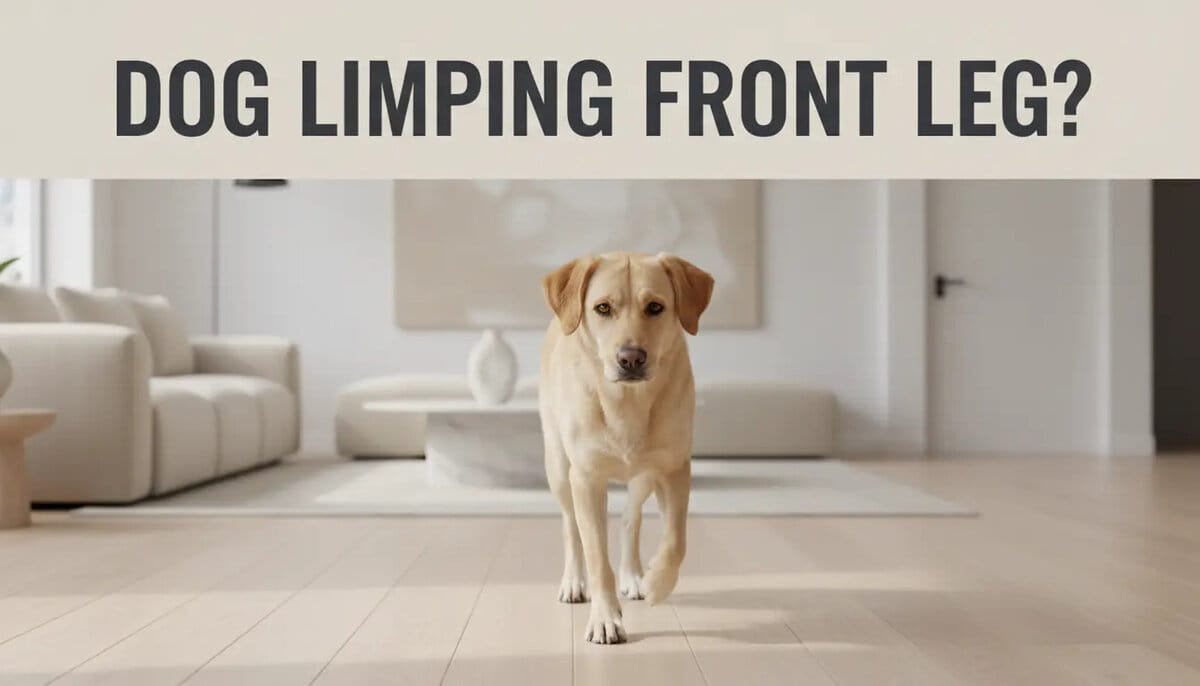
TL;DR
A dog limping on the front leg often means pain, injury, or weakness
Common causes include paw injury, muscle strain, joint problems, and ligament damage
Dogs may limp but not cry because they naturally hide pain
Sudden limping needs close attention
If limping lasts more than 24–48 hours — or your dog can’t bear any weight, shows severe pain, or has visible deformity — a veterinary check is important right away.
Quick Answer Box
Why is my dog limping front leg?
- injury → pain → limping
- paw issue → discomfort → paw lifting
- joint problem → stiffness → reduced movement
- ligament strain → instability → limping
Dogs limp to reduce pressure on the affected leg
For a full understanding of joint-related causes, see the Dog Joint Pain Relief Guide.
Table of Contents
Why Is My Dog Limping Front Leg
Front leg limping is usually linked to paw, elbow, or shoulder problems, rather than hip or knee issues seen in back leg limping.
When a dog is limping front leg, the body is usually trying to protect that leg from pain or injury.
The pattern often looks like this:
movement → discomfort → pressure avoidance → limping
As the pain starts, the dog shifts weight to the other legs. This helps reduce pressure on the sore area and makes walking feel easier.
In some cases, the dog may hold the front paw up for a few steps. In other cases, the dog is not putting weight on front leg at all. This often means the leg hurts more when it touches the ground. If the limping is not limited to one situation and keeps happening, see why is my dog limping.
A front leg limp can start from the paw, muscles, joints, ligaments, or bones. The next sections explain the most common causes and the signs owners may notice.
Why Front Legs Are Affected Differently Than Back Legs
A dog’s front legs carry more weight than the back legs. On average, the front legs support about 60% of a dog’s body weight, while the back legs support about 40%. This split can shift depending on the dog’s breed, speed, and the surface it walks on, but the front legs almost always carry the larger share.
This extra load is also why dogs with weak front legs need a different kind of help than dogs with weak back legs, as our guide to dog wheelchairs for front legs explains.
The front legs also do most of the braking. Every time a dog slows down, turns, or stops, the front legs absorb much of that force. The back legs, by contrast, do more of the pushing that moves the dog forward.
This is why a sore front leg can throw off a dog’s entire gait, not just the one leg. When a dog favors a painful front leg, the head often rises as that leg touches the ground and drops when the sound leg takes the weight. This head-bob pattern is one of the clearest signs a front leg is bothering a dog. The stride on the sore side is often shorter than the stride on the healthy side, too.
The picture looks different when both front legs hurt at once. Instead of a clear side-to-side limp, the dog may take short, careful steps with both front legs and shift more weight onto the back legs. There may be no obvious limp to see, just a dog that seems reluctant to keep moving or that tires faster than usual.
It helps to know that a severe problem in the back legs can sometimes cause a head bob that looks like a front-leg issue. A full picture of the dog’s movement, not just the head, gives the clearest sense of where the trouble really is.
Do dogs carry more weight on their front legs?
Yes. A dog’s front legs typically carry about 60% of its body weight, while the back legs support around 40%. This split shifts somewhat with breed, speed, and the surface the dog walks on, but the front legs almost always bear the larger share. Because of this, the front legs also absorb most of the braking force each time a dog slows down or stops.
Why does my dog’s head bob with a front-leg limp?
A head bob happens because the dog is shifting weight away from the painful leg. The head rises as the sore front foot touches the ground and drops when the sound leg bears the weight, and this pattern is one of the clearest outward signs of unilateral forelimb lameness. A shortened stride on the sore side often shows up alongside it.
Can pain in one front leg make the other legs look abnormal?
Yes. When one front leg hurts, a dog naturally shifts extra weight onto the other legs to avoid pressure, which can make the whole gait look uneven even though only one leg is actually injured. This compensation is a normal response to pain, not necessarily a sign that more than one leg is affected.
Common Causes of Dog Limping Front Leg
The table below shows the most common causes of dog limping front leg and what they mean.
Many of these causes are linked to joint problems. To understand the root causes of joint pain in dogs, explore the Dog Joint Pain Relief Guide.
| Cause of Limping | What Happens in the Body | What You May Notice |
| Paw injury or foreign object | irritation → pain → pressure avoidance | dog limping on front paw, licking paw, paw lifting |
| Muscle strain or overuse | muscle stress → inflammation → discomfort | dog limping after playing, mild limp |
| Ligament or soft tissue injury | ligament strain → instability → reduced support | dog won’t put weight on front leg |
| Joint problem (elbow or shoulder) | joint wear → inflammation → stiffness | older dog limping front leg, slow movement |
| Swelling or inflammation | fluid buildup → pressure → pain | dog front leg swollen and limping |
| Fracture or serious injury | bone damage → severe pain → no weight-bearing | strong limp, unable to walk normally |
Paw Injury or Foreign Object
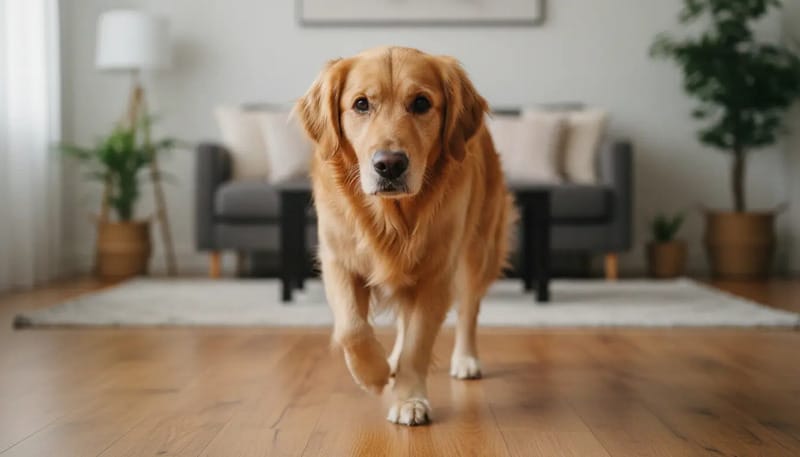
A small object in the paw can cause sudden discomfort. Cuts, thorns, or debris can irritate the skin or damage the paw pad.
foreign object → irritation → pain → paw lifting
This often leads to dog limping front paw or avoiding pressure. In some cases, the dog front paw swollen and limping may be visible.
This is often easier to notice when the dog lifts the paw while walking.
Muscle Strain or Overuse
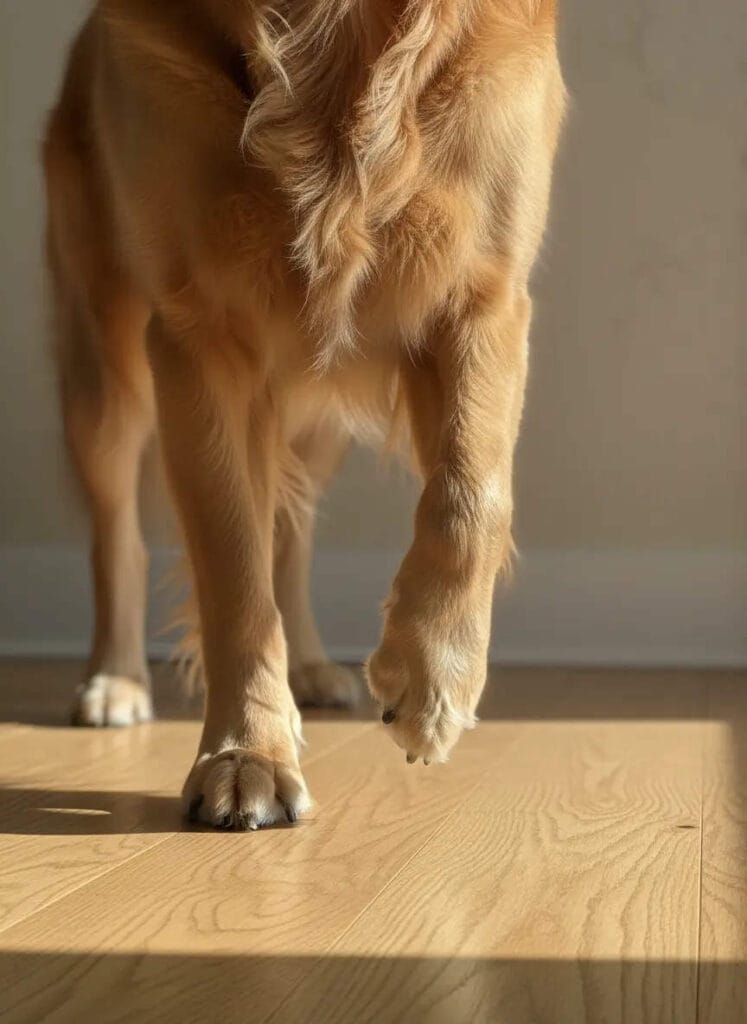
Active dogs may strain muscles during play or exercise. This is common after running, jumping, or rough activity.
activity → muscle strain → inflammation → limping
This type of limping can also happen after activity, such as why is my dog limping after playing
Ligament or Soft Tissue Injury
A sudden twist or awkward movement can strain or tear soft tissues. This can affect how smoothly the front leg moves during walking.
twist → ligament strain → instability → limping
Dogs may show stronger signs, such as when a dog won’t put weight on front leg at all. A sprain or strain usually causes pain, swelling, and limping, while a fracture is more likely when there is severe pain, no weight-bearing at all, fast swelling, instability, a grinding feeling, an odd angle, a shortened limb, or exposed bone. These signs can overlap, so it’s best not to move or press on an obviously painful or misshapen leg. A veterinarian can tell the difference, usually with imaging.
Joint Problems (Elbow or Shoulder Issues)
Joint conditions can affect how the leg moves. These may develop slowly over time.
joint wear → inflammation → stiffness → limping
This is more common in older dogs limping on the front leg and is often linked to joint disease.
Swelling or Inflammation
Inflammation can happen inside or outside the leg. Sometimes swelling is easy to see, but not always.
Dogs with visible swelling may show dog front leg swollen and limping, which can affect normal movement.
Fracture or Serious Injury
Strong impact or trauma can cause serious injury to the bone. This needs urgent attention.
impact → bone injury → severe pain → no weight-bearing
In these cases, the dog may completely avoid using the leg and show clear movement changes. Because fracture and sprain/strain signs can look similar at first, don’t assume a limp is ‘just a sprain’ if there’s severe pain, rapid swelling, or an obvious limb deformity — these point more toward a fracture, which a veterinarian can confirm with imaging. A dog showing any of these signs should not have the leg moved or pressed on.
Where a Front-Leg Limp Can Start — From Paw to Shoulder
A front-leg limp can start in the paw, wrist, elbow, or shoulder — or in the muscles, tendons, and ligaments connecting them. The problem does not always begin where it seems to.
Paw, Toes, and Nails
Paw-level problems are often the easiest to notice. A dog may lick at a toe, hold a paw off the ground, or limp after stepping on something sharp. These are usually the first places owners check, and often the first place a vet checks too.
Wrist, Forearm, and Elbow
The wrist, known as the carpus, is a common but easy-to-miss source of trouble. A dog with a wrist injury may show an unusual amount of swelling there, or its stance may look dropped or unstable when it stands still.
Problems higher up the leg can be harder to spot. Elbow issues can cause a shortened stride and discomfort during exercise, but the exact injury inside the joint is not always obvious just by looking. Ongoing elbow pain in an older dog may point to elbow dysplasia, a joint condition covered in more detail on why is my dog limping.
Shoulder
The shoulder can be trickier still, since swelling there is often hidden under muscle, and shoulder pain does not always show clear outward signs.
A clicking or popping sound from the shoulder during movement is worth mentioning to a vet; the main limping guide covers what this may indicate.
Why Posture Alone Doesn’t Confirm the Exact Structure
Because of this, the way a dog carries its leg can hint at how bad a limp is and which side it favors, but it usually cannot pinpoint the exact spot that hurts. A dog holding its whole leg off the ground could have a simple splinter in the paw or a more serious issue near the shoulder. It also helps to know that a dragging paw or unusual foot placement can point to something different: a problem with nerve signals rather than pain alone, which calls for its own kind of veterinary attention rather than a guess based on the leg’s position.
Can a shoulder problem make a dog hold up the paw?
Yes. A dog holding up a front paw can sometimes be favoring an injury much higher up the leg, since shoulder problems can be tricky to spot because swelling there is often hidden under muscle. The way a dog carries its leg can hint at how bad a limp is, but it usually can’t pinpoint whether the true source is the shoulder, elbow, or paw itself.
Why are elbow and shoulder lameness hard to tell apart?
Elbow and shoulder lameness can look similar because both can cause a shortened stride and discomfort during exercise without an obvious outward sign. Shoulder swelling is often hidden under muscle, and some elbow injuries don’t show clear signs on a simple visual check either, so telling them apart usually needs a hands-on veterinary exam.
Front-Leg Limping in Puppies
A puppy’s front-leg limp is not always something to wait out. One common cause in young, fast-growing dogs is panosteitis, sometimes called growing pains. This condition causes inflammation in the long bones of the leg, most often the upper bone between the shoulder and elbow. It tends to show up suddenly, without any fall or injury the owner remembers.
What Panosteitis Is and When It Happens
Panosteitis usually starts between 6 and 18 months of age, though it can begin as early as 2 months in some puppies. Any breed can develop it, but it shows up most often in German Shepherds, and it is also seen fairly often in Great Danes, Golden Retrievers, Labrador Retrievers, Rottweilers, Doberman Pinschers, and Basset Hounds. (Source: VCA Animal Hospitals, Panosteitis in Dogs). A key feature of panosteitis is that it can move. A puppy may limp on one leg for a few days, then seem fine, only for the limp to appear in a different leg later. Some puppies also seem tired, feverish, or less interested in food during a flare-up.
The good news about panosteitis is that it usually resolves on its own once the puppy finishes growing.
Other Growth-Related Causes to Know About
That is not true of every growth-related cause of puppy limping. Elbow dysplasia and shoulder osteochondrosis are two other conditions that affect young, growing dogs, and unlike panosteitis, they tend to get worse over time rather than fade away. Elbow dysplasia often starts showing signs around 5 months of age and tends to worsen with exercise. Shoulder osteochondrosis usually appears in large or giant breed puppies between 4 and 8 months old.
Because panosteitis and these other conditions can look similar at first, a puppy’s limp should not be assumed to be growing pains just because of age. A limp that keeps recurring, worsens with activity, or does not improve after a short rest is worth a veterinary visit. A puppy that refuses to put any weight on the leg, seems to be in severe pain, or shows signs of a fracture needs care right away.
At what age does panosteitis start?
Panosteitis, a common cause of puppy front leg problems, usually starts between 6 and 18 months of age, though it can begin as early as 2 months in some puppies. It tends to affect young, fast-growing dogs and typically resolves on its own once the puppy reaches skeletal maturity.
Can panosteitis move from one leg to another?
Yes. A key feature of panosteitis is shifting lameness — a puppy may limp on one leg for a few days, then seem fine, only for the limp to appear in a different leg later. This pattern, along with the puppy’s young age, is one of the clues that points toward panosteitis rather than a single injury.
How is panosteitis different from elbow dysplasia?
Panosteitis usually resolves on its own once a puppy finishes growing, while elbow dysplasia tends to worsen over time rather than fade away. Elbow dysplasia often starts showing signs around 5 months of age and tends to get worse with exercise, so a puppy limp that keeps recurring or worsening with activity is worth a veterinary visit rather than assuming it’s simply growing pains.
Can front leg limping in a puppy be growing pains?
Yes. Panosteitis, often called growing pains, can cause sudden, painful limping in a young, fast-growing dog’s front leg, and it shows up most often in large or giant breeds. Because elbow dysplasia, shoulder osteochondrosis, fractures, and simple paw injuries can all look similar at first, a puppy’s limp that keeps coming back or won’t go away should be checked by a vet rather than assumed to be normal growth. A puppy that won’t put any weight on the leg, seems to be in severe pain, has an obvious fracture or dislocation, or shows sudden weakness needs immediate veterinary care.
Signs to Watch in a Dog Limping Front Leg
Dogs show clear signs when the front leg is painful or injured. These signs help identify the problem early.
- dog not putting weight on front leg
- paw lifting while walking
- swelling in paw or leg
- stiffness or slow movement
- sudden limping after activity
- Owners may visually compare the legs and note deformity, swelling, or heat, but should not try to produce crepitus, test instability, or repeatedly bend a painful limb; an abnormal angle, severe pain, or suspected fracture calls for urgent veterinary care.
What to Record When a Dog Limps on a Front Leg
Before calling the vet, a few minutes of careful observation can make the visit far more useful.
What to Note Before Calling the Vet
Start with which leg looks affected, and pay attention to how much weight the dog puts on it. A dog might bear full weight, some weight, just the toes, or no weight at all, and each of these tells a slightly different story.
Timing matters too. Note when the limp started, whether it came on suddenly or built up slowly, and whether anything happened right before it, like a jump, a rough game, or a slip. It also helps to notice whether the limp changes with activity: does it look worse after exercise, or does it show up mostly after the dog has been resting?
A quick, gentle look at the paw can catch some causes right away, like a cracked nail or something stuck between the toes. This should only be done if the dog is comfortable with it. A dog in real pain may pull away, growl, or even snap, even if it is normally gentle, and that reaction is a signal to stop and let the vet handle the exam instead. (Source: VCA Animal Hospitals, First Aid for Limping Dogs).
When a Video Can Help
A short video can be surprisingly helpful, especially if the limp comes and goes. Dogs often move more normally once they arrive at the clinic, simply because the change in environment distracts them from the discomfort. A video taken during a calm moment at home, showing the dog walking naturally, gives the vet something to see that they might otherwise miss. The key word is natural: there is no need to make the dog walk further than it wants to, and forcing extra movement just to capture footage can make things worse.
When to Stop and Just Go to the Vet
Some situations call for skipping all of this and heading straight to the vet. A dog with an obviously broken bone, one that cannot stand at all, or one that is bleeding heavily needs help right away, not a few extra minutes of note-taking.
What angle should I use when filming my limping dog?
A side-on video that clearly shows the dog’s full stride is the most useful angle for a limping front leg, since it lets a vet see the stride length and weight-bearing pattern that might not show up at the clinic. Film only during natural movement the dog is already comfortable making — there’s no need to make the dog walk further than it wants to just to capture footage.
What does toe-touching weight bearing mean?
Toe-touching weight bearing means the dog is putting only light, partial pressure through the toes rather than bearing weight normally on the leg. It’s one of several weight-bearing levels worth noting — full weight, partial weight, toe-touching, or no weight at all — since each tells a slightly different story about how serious the problem might be.
Which details about recent exercise should I tell the vet?
Mention whether the limp appeared during or after exercise, whether it looks worse after activity or after rest, and whether anything specific happened right before it started, like a jump, a rough game, or a slip. This timing information helps narrow down whether the cause is more likely a recent strain or a longer-developing issue.
Dog Limping but Not Crying or Showing Pain
Dogs often hide pain due to natural survival instincts. In the wild, showing weakness can make an animal vulnerable, so dogs learn to stay
quiet even when they feel discomfort.
This is why a dog limping but not crying is common. The absence of sound does not mean the leg is fine.
Many cases of dog limping but not in pain may still involve internal issues. The dog may continue walking, playing, or acting normal while
avoiding pressure on the affected leg.
Pain can still be present but not visible. Subtle signs like slower movement, slight weight shifting, or lifting the paw can indicate a problem.
Dog Not Putting Weight on Front Leg
When a dog avoids placing weight on the front leg, it usually means the problem is more serious than a mild limp.
This can happen due to pain, injury, or deeper joint or tissue problems.
If your dog is not using the leg at all or holding it up, it is important to monitor closely and limit activity.
This may indicate a more serious issue and should be checked by a veterinarian.
Sudden vs Gradual Limping in Dogs
Sudden Limping
Sudden limping often starts without warning. It usually happens after an injury during running, jumping, or play.
activity → injury → pain → limping
A dog suddenly limping front leg may avoid putting weight on it or hold the paw up. This type of limping needs close attention, especially if it appears quickly. For a full breakdown of sudden limping causes and what to do in the first 24 hours, see why is my dog suddenly limping.
Gradual Limping
Gradual limping develops over time, often relating to joint disease or long-term wear rather than a sudden event. This is more common in older dogs, and the full range of gradual causes is covered separately on why is my dog limping.
Why There Is No Swelling or Visible Injury
A dog may limp even when there is no clear swelling or visible injury. This often happens when the problem is inside the leg and not easy to see.
Internal injuries can affect muscles, ligaments, or joints without showing changes on the surface. Small damage can still cause discomfort during movement.
minor injury → internal irritation → discomfort → limping
In early-stage joint issues, the body may not show visible signs yet. The dog may still move differently to avoid pressure on the affected area.
This is why cases like dog limping front leg no pain or swelling can still need attention. If limping continues or changes, a veterinary check
helps find the cause safely.
Why a Normal-Looking Paw Doesn’t Rule Out a Front-Leg Problem
Shoulder problems are a good example of how hidden an injury can be. The shoulder is covered by muscle, so swelling there often stays out of sight even when something is genuinely wrong. The same can be true for some elbow injuries, which may not show obvious signs during a simple visual check.
When there is nothing to see but the limp continues, a vet usually starts with a broader look at the whole dog. This means reviewing when the limp started, watching how the dog walks, and doing a hands-on exam of the joints, muscles, and bones. If that exam points toward a likely area, more specific testing follows. X-rays are useful for looking at bones and joints, while ultrasound, CT, or MRI scans can pick up problems in soft tissue that an X-ray alone would miss.
Can a dog have a sprain without swelling?
Yes. A soft-tissue injury like a sprain can cause pain and a subtle limp without any visible swelling, since the damage sits under intact skin and isn’t something a quick glance can catch. This is part of why a dog limping front leg with no sign of injury still deserves a proper look rather than being assumed to be nothing.
Will an X-ray show a tendon or ligament injury?
Not always. X-rays are mainly useful for looking at bones and joints, while soft-tissue problems like tendon or ligament injuries are often better picked up with ultrasound, CT, or MRI scans. A normal X-ray doesn’t rule out a soft-tissue cause behind a front-leg limp.
Why does my dog limp only after exercise?
A limp that shows up mainly after exercise often points to a problem that’s aggravated by activity, such as a joint issue or soft-tissue strain, rather than a single obvious injury. Because a normal-looking paw doesn’t rule out pain higher up the leg, this pattern is worth a veterinary exam if it keeps happening.
What if the paw looks normal but the front leg still hurts?
A normal-looking paw does not rule out pain higher up the leg, in a tendon, muscle, joint, bone, or even a nerve. A limp that keeps happening, comes back, or gets worse over time should be checked with a proper gait and orthopedic exam, followed by imaging if needed to find the source.
When to Worry About Dog Limping
Some limping can be mild, but certain signs need more attention. These signs may point to a deeper problem.
Watch for the following:
- dog can’t put weight on front leg
- limping lasts more than 48 hours
- swelling appears in the leg or paw
- dog holding front leg up constantly
- sudden lameness in dogs
- A limp paired with fever or unusual tiredness is worth a prompt call to the vet. This combination can point to a wider illness or infection, not just a minor paw injury.
- A wound that looks infected — increasing redness, heat, swelling, pus or colored discharge, a bad smell, a worsening limp, fever, or tiredness — needs prompt veterinary attention, since the infection could be spreading deeper or into a nearby joint.
- A firm swelling that stays in one spot and doesn’t shrink — especially if it comes with pain or limping — needs a prompt veterinary exam and imaging, since it can point to a problem in the bone or soft tissue.
- A front paw that drags, scrapes, folds under, or lands oddly is worth reporting to a vet right away, especially if it started suddenly or is getting worse.
- Weakness or collapse in a front leg differs from an ordinary pain-based limp, since the leg may fail to hold the dog up at all rather than just being favored. Sudden, worsening, or widespread weakness needs prompt veterinary attention, and a dog that can’t stand or walk needs emergency care.
A front leg that cannot support weight at all, or both front legs affected together, is a different pattern from ordinary single-leg limping — a related weakness-versus-limping distinction is covered for back legs in What Causes Sudden Hind Leg Weakness in Dogs?, and a vet visit is the safest next step if this is what you’re seeing.
These signs suggest the issue may not be minor. If any of these are present, a veterinary check is important to understand the cause safely. For a fuller breakdown of urgency levels — including when a limp needs same-day care versus safe home monitoring — see dog suddenly limping: when to take your dog to the vet.
What to Do If Dog Is Limping on Front Leg
When a dog is limping on the front leg, simple steps can help prevent the problem from getting worse.
- limit activity to reduce stress on the leg
- avoid jumping or running
- check the paw gently for cuts, debris, or swelling
- A small, shallow cut can be cleaned, but only with a wound cleanser or diluted antiseptic approved by a veterinarian. Products like rubbing alcohol, hydrogen peroxide, and tea tree oil can damage tissue, slow healing, or be harmful if licked. Warm water or saline is usually the safer choice for rinsing away dirt or debris.
- monitor behavior for changes in movement or comfort
- A cold compress applied for 10 to 15 minutes can help ease swelling after a minor front-leg injury; for a fuller breakdown of when this applies and what else to try, see this guide on urgent versus safe home care.
These steps support recovery while keeping the dog safe.
If there is any doubt or the limping continues, a veterinary visit is important to understand the cause properly.
Preventing Front-Leg and Paw Injuries
A few simple habits go a long way toward keeping a dog’s front legs and paws healthy.
Nail and Paw Care
Most dogs need their nails trimmed about once a month, though some need it more often depending on how fast their nails grow and how much walking they do on hard surfaces. A good rule of thumb is that nails should not touch the ground or click when the dog stands still. Overgrown nails can curve into the paw pad and change how the dog walks, which adds extra strain to the leg.
Regular paw checks are worth building into a routine. Looking over the pads and the spaces between the toes can catch small cracks, cuts, or debris before they turn into a bigger problem.
Protecting the Paw Outdoors
Walking surfaces matter too. Hot pavement, ice, sharp debris, and de-icing chemicals can all irritate or injure a paw, so it is worth scanning the ground before letting a dog loose to run.
Protective booties can help on rough or extreme terrain, but they need to fit well and the dog needs time to get used to wearing them. A poorly fitted bootie can rub, twist, or fall off, which causes its own problems.
Weight and Activity
Weight plays a role in joint health as well. Carrying extra weight puts more strain on the joints over time, so keeping a dog at a lean, healthy weight helps protect the front legs along with the rest of the body. Exercise should be matched to the dog’s age, condition, and health. A sudden jump in activity, like an unusually long hike or an intense play session after weeks of little movement, can be enough to strain muscles or soft tissue that were not ready for it.
None of these steps can prevent every injury. Accidents happen, and some conditions develop regardless of how careful an owner is. But steady nail care, paw checks, safe terrain choices, a healthy weight, and reasonable activity levels all reduce the risk of the kind of front-leg problems that are easiest to avoid.
Matching exercise intensity to a dog’s age and condition also helps protect the joints over the long term; see how long to walk a dog with arthritis for more guidance on safe activity levels.
How do I know when my dog’s nails are too long?
A good sign is if the nails touch the ground or click on hard floors when the dog stands still — that usually means a trim is due. Most dogs need their nails trimmed about once a month, though the exact frequency depends on how fast the nails grow and how much walking the dog does on hard surfaces.
How should dog booties fit?
Booties should fit snugly without rubbing, twisting, or falling off during normal movement, since a poorly fitted bootie can cause its own problems. Dogs also need time to get used to wearing them before relying on booties for protection on rough or extreme terrain.
Should dogs wear boots on hot pavement or rocky trails?
Booties can help protect the paws on rough or extreme terrain like hot pavement or rocky trails, since these surfaces can irritate or injure a paw. They work best when they fit well and the dog has had time to get comfortable wearing them beforehand.
Frequently Asked Questions
What is a home remedy for a dog limping the front leg?
There is no single home remedy that works for every case, since a limping front leg is a sign of a problem, not a diagnosis on its own. The safest first step is to stop strenuous activity and let the dog rest quietly. A gentle visual check of the paw and nail is reasonable if the dog allows it. Because limping can come from a nail, soft tissue, a joint, a bone, or even nerve trouble, no single treatment covers every cause. If the dog is in obvious pain, avoid examining or handling the leg further. Human pain medication should never be given in place of a proper veterinary check, since it does not address the underlying cause and can carry real risks.
What to do if dog is limping on front leg?
Limit activity and prevent jumping or running. Check the paw gently for cuts or debris. Monitor how the dog walks and behaves. If limping continues or worsens, a veterinary visit is important.
What causes a dog to limp on front leg?
Common causes include paw injury, muscle strain, ligament issues, joint problems, or inflammation. These affect movement and lead to limping.
Why is my dog limping all of a sudden?
Sudden limping often happens after injury during play, running, or jumping. It can involve soft tissue strain or paw injury. A limp that starts right after a dog jumps off a bed or piece of furniture may point to a specific trigger; see dog limping after jumping for more on this pattern.
Why is my dog limping on his front paw?
This may happen due to paw pad injury, small cuts, swelling, or a foreign object stuck in the paw. These cause discomfort when walking.
When should I take my dog to the vet for limping?
A vet visit is important if the dog cannot put weight on the leg, limping lasts more than 48 hours, swelling appears, or the limp gets worse.
How to tell if a dog’s limp is serious?
Signs include no weight-bearing, constant leg lifting, visible swelling, or sudden severe limping. These may indicate a deeper problem.
How long will a dog limp with a muscle strain?
Mild strains may improve within a few days with rest. If limping continues beyond a few days or worsens, a veterinary check is recommended. How long a limp takes to heal depends on the cause, and general recovery-time expectations are covered on why is my dog limping.
Why is my dog limping but not crying?
Dogs often hide pain due to natural instincts. A dog may limp without crying even when discomfort is present. Limping still signals that something is not normal.
Why is my dog limping on the front leg but still putting some weight on it?
Putting some weight on the leg usually means the dog can still use it but is avoiding full pressure because of pain, weakness, or some kind of impaired function. This does not point to a specific cause, and it does not mean the injury is minor. Broken nails, soft-tissue injuries, joint problems, and even certain fractures can all still allow partial weight-bearing, so a limp that continues or gets worse still deserves a veterinary visit.
Why should you never give a dog human pain medication?
Human pain relievers can be toxic to dogs or unsafe alongside a dog’s existing health conditions and medications. Ibuprofen and similar NSAIDs can cause stomach ulcers and kidney damage in dogs, while acetaminophen can harm the liver and interfere with how red blood cells carry oxygen. Human and veterinary versions of these drugs are not interchangeable, and combining medications, or pairing an NSAID with a steroid, raises the risk further. Dogs with kidney, liver, heart, or digestive issues face even greater risk from these drugs. (Source: U.S. FDA, Controlling Pain and Inflammation in Your Dog with NSAIDs). If a dog may have swallowed a human pain medication, contact a veterinarian or an animal poison-control service right away.
Could a broken nail or debris between the toes cause this limp?
Yes. A broken nail, an infected nail bed, a thorn, a splinter, a grass awn, or a cut between the toes can all make it painful for a dog to put weight on the paw, leading to a sudden front-leg limp. If the dog seems very painful or resists a paw check, it’s best to stop, since pain can cause even a gentle dog to snap. Ongoing bleeding, an object stuck deep in the skin, noticeable swelling, discharge, or a limp that doesn’t improve are all reasons to have a vet take a look. (Source: VCA Animal Hospitals, First Aid for Limping Dogs).
Sources & References
- VCA Animal Hospitals
https://vcahospitals.com/know-your-pet/lameness-in-dogs - Merck Veterinary Manual
https://www.merckvetmanual.com/musculoskeletal-system/lameness-in-dogs/overview-of-lameness-in-dogs - American Kennel Club (AKC)
https://www.akc.org/expert-advice/health/why-is-my-dog-limping/ - Peer-reviewed veterinary studies
https://www.ncbi.nlm.nih.gov/pmc/articles/PMC7198754/ - U.S. FDA — Controlling Pain and Inflammation in Your Dog with NSAIDs
https://www.fda.gov/animal-veterinary/animal-health-literacy/controlling-pain-and-inflammation-your-dog-nonsteroidal-anti-inflammatory-drugs - VCA Animal Hospitals — Panosteitis in Dogs
https://vcahospitals.com/know-your-pet/panosteitis-in-dogs - VCA Animal Hospitals — First Aid for Limping Dogs
https://vcahospitals.com/know-your-pet/first-aid-for-limping-dogs
If a dog is limping on the front leg, it is important to watch symptoms closely. Mild limping may improve, but changes in movement or behavior should not be ignored.
If limping continues, worsens, or the dog avoids putting weight on the leg, a veterinary check is the safest step.
Update Note
This article was updated in September 2026 to add new sections on why front legs bear more weight than back legs, front-leg limping in puppies, and a full paw-to-shoulder location guide, along with expanded prevention guidance and additional FAQs covering panosteitis, weight-bearing patterns, and diagnostic testing. New claims throughout the article — including panosteitis age and breed patterns, human pain medication safety, and paw-handling precautions — were connected to supporting veterinary sources, including VCA Animal Hospitals and the FDA, placed directly alongside the relevant guidance.