
This guide explains why a dog may limp on one back leg without showing pain, what causes it, and when to worry.
TL;DR
- A dog can limp without showing pain due to hidden discomfort, weakness, or nerve-related issues
- Common causes include muscle strain, early arthritis, ligament stress, and joint instability
- Some dogs hide pain, especially in early stages
- Limping that comes and goes is an important early warning sign
- If limping lasts more than 24–48 hours or worsens, a veterinary check is recommended
Even when a dog shows no clear pain, limping can still signal a problem inside the leg. If your dog refuses to put weight on the leg, it may indicate a more serious issue that needs veterinary attention.
For a full understanding of joint-related causes, see Dog Joint Pain Relief Guide. It may come from mild strain, early joint changes, or reduced nerve control. Watching small changes early can help prevent bigger issues later.
Quick Answer Box
If my dog is limping on his back leg but not in pain, it may be linked to a mild injury, joint instability, or a nerve-related issue. Dogs often hide discomfort, so a small limp can still mean something is wrong.
In many cases, the problem starts small:
minor strain → joint stress → uneven movement → limping
Even without crying or obvious pain, the body may be adjusting to protect the leg.
What this means for owners:
- A mild limp can still signal an early issue
- Limping that comes and goes should not be ignored
- Changes in movement or balance are important signs
Watching the dog closely and acting early can help avoid further problems. If the limp continues or gets worse, a veterinary check is important.
This article focuses specifically on dogs that limp on a back leg without obvious signs of pain. Unlike articles about refusing to bear weight, sudden hind leg weakness, or limping after exercise, this page focuses on situations where a dog appears comfortable but still shows an abnormal gait.
What You’ll Learn in This Guide
My Dog Is Limping on His Back Leg But Not in Pain: Why It Happens
Limping Does Not Always Mean Pain
Limping, also called lameness, does not always come from pain. It can also come from weakness or joint instability. A dog may move differently even when there is no clear sign of discomfort.
In simple terms:
weak joint or muscle → poor support → uneven steps → limping
This is why a dog limping on back leg may still act normal.
Dogs Naturally Hide Pain
Dogs often hide pain as a natural survival behavior. This makes early problems look mild or harmless. A dog may keep walking, playing, or eating as usual.
Because of this, a small limp can be the first visible sign. It may appear before any clear pain is noticed.
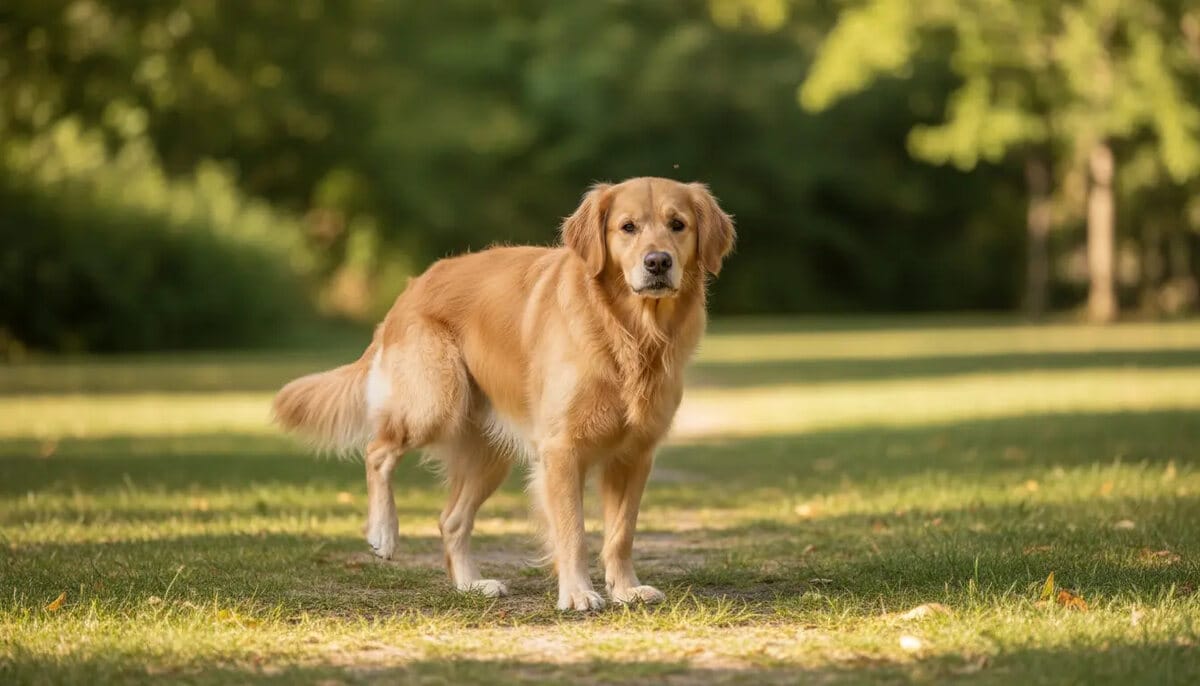
Some dogs show only a slight limp in one back leg while still acting normal, as shown below.
Neurological Issues Can Cause Limping Without Pain
Some limping comes from the nervous system, not the joint itself. When nerve signals are affected, the leg may not move correctly.
This can look like:
nerve signal problem → poor leg control → weak movement → limping
In these cases, the dog may not show pain but may seem unstable or uneven.
Early-Stage Conditions Often Feel Mild
Many joint problems start slowly. Early arthritis or minor strain may cause only slight stiffness. These subtle changes are often among the early signs of arthritis in dogs. The dog may limp after rest and then move better.
If limping appears after rest or sleep, it is often linked to stiffness or early joint changes.
For example:
early joint change → mild inflammation → stiffness → improves with movement
This is common in dogs that feel stiff after lying down, especially in early-stage joint conditions.
What Causes a Dog to Limp on a Back Leg Without Pain?
Back leg limping is often linked to hip, knee, or ligament (CCL) problems, which affect stability and weight support.
These problems often reduce stability in the back leg, making it harder for the dog to support weight evenly.
Muscle Strain or Overuse
A dog can develop a mild strain after running, jumping, or playing. This creates small stress in the muscles.
activity → micro-injury → temporary limp
This type of limping can also happen after activity, such as why is my dog limping after running.
This is common in active dogs or young dogs. The limp may improve with rest. For situations where the limp appears suddenly rather than gradually, see why is my dog suddenly limping.
Ligament Stress or Partial Tears (CCL)
The cranial cruciate ligament helps support the knee. When it becomes weak or slightly damaged, the joint becomes unstable.
instability → uneven weight → limping
A dog may still walk but avoid full pressure on the leg. Pain may not be obvious at first.
Early Arthritis or Joint Wear
Joint changes can begin slowly over time. Early arthritis causes mild inflammation and stiffness.
cartilage wear → inflammation → stiffness → limping
The limp is often worse after rest and improves after movement.
Luxating Patella (Knee Cap Movement)
In some dogs, the knee cap moves out of place briefly. This causes sudden limping that quickly resolves.
knee shifts → sudden limp → returns to normal
This creates an “on and off” limping pattern, especially in small breeds.
Neurological Conditions
Some limping comes from nerve or spine problems. The leg may not move properly due to weak signals.
nerve issue → poor control → unstable movement → limping
This type of limp may look like weakness rather than pain.
What Happens Inside the Body (Simple Cause Chain)
A limp often starts with a small change inside the body. This can come from activity, aging, or a minor injury. The change may not feel painful at first, but it affects how the leg works.
Here is a simple breakdown:
activity / aging / minor injury
- joint stress or nerve disruption
- inflammation OR instability OR weakness
- uneven weight bearing
- limping without obvious pain
At this stage, the dog may still walk, run, or play. But the body starts to shift weight to protect the affected leg.
Over time, this pattern can place extra strain on other joints and muscles. That is why early changes in movement should not be ignored.
Signs That Matter Along With Limping
Movement Changes
Changes in movement are often the first clue. A dog may feel stiff after rest or move slowly at first.
- stiffness after rest
- dog stiff after lying down
- slow first steps
These signs often improve after a few minutes of walking.
Weight-Bearing Changes
A dog may try to protect the affected leg. This changes how weight is placed on the body.
- dog not putting weight on back leg
- shifting weight to other legs
This can make the dog’s walk look uneven.
Intermittent Limping Pattern
Some limps come and go. Some limps come and go. This pattern is easy to ignore but can signal an early problem — see why is my dog limping on and off for a closer look at tracking and understanding a recurring limp.
- limp appears and disappears
- often seen in early-stage issues
Tracking when the limp happens can help spot patterns.
Behavior Changes
Small behavior changes can show discomfort even without visible pain.
- less activity than usual
- hesitation to jump or run
A dog may still act normal but avoid certain movements.
When to Worry About a Limping Dog
Warning Signs
Some signs show that a limp may not be minor. These signs need closer attention.
- limp lasts more than 24–48 hours
- dog won’t put weight on back leg
- worsening limp over time
- swelling or visible injury
If these signs appear, the issue may not resolve on its own. A veterinary check is important to understand the cause.
Serious Red Flags
Some changes are more urgent and should not be ignored. These may point to deeper problems affecting movement or nerves.
- dog lost use of back legs suddenly
- dragging back legs
- back leg weakness in dogs
- sudden collapse
These signs suggest the body is not controlling movement properly. Prompt veterinary evaluation is strongly recommended. For a fuller breakdown of urgency levels — including when a limp calls for same-day care versus safe home monitoring — see dog suddenly limping: when to take your dog to the vet.
How to Understand Your Dog’s Limp (Quick Guide)
| Situation | Possible Cause | What You Should Do |
| Limp comes and goes | Early-stage issue or mild strain | Monitor closely for changes |
| Dog walks but favors one leg | Joint stress or instability | Limit activity and observe |
| Dog avoids putting weight | Possible ligament or joint problem | Consult a veterinarian |
| Limp lasts more than 24–48 hours | Underlying issue may be worsening | Seek veterinary check |
| Sudden weakness or dragging leg | Possible neurological problem | Urgent veterinary care needed |
What Owners Can Safely Do at Home
Limit Activity
Reducing movement helps protect the affected leg. Too much activity can make a small problem worse.
- reduce running and jumping
- keep walks short and controlled
less strain → better recovery support → reduced limping
Check the Leg and Paw
A quick check can help spot simple issues. Some causes are easy to miss at first.
- look for cuts, swelling, or stuck objects
- check between toes and under the paw
Small problems in the paw can change how a dog walks.
Provide Supportive Rest
Comfort helps the body recover. A stable resting area reduces stress on joints.
- use soft bedding
- avoid slippery floors
Better support → less pressure on joints → improved movement
Monitor Changes
Tracking changes helps understand the pattern. This is important for early detection.
- note if the limp improves or worsens
- watch for new signs like stiffness or weakness
Intermittent limping or worsening signs should not be ignored.
When to Contact a Veterinarian
Some situations need professional evaluation. Early advice can prevent further problems.
- unclear cause of limping
- persistent limp beyond a couple of days
- sudden changes in movement
If unsure, it is always safer to consult a veterinarian.
Conditions Related to Back Leg Limping in Dogs
Back Leg Weakness in Dogs
Back leg weakness in dogs can develop slowly over time. The muscles or nerves may not support the leg properly.
weakness → reduced strength → unstable steps → limping
This may look like the dog is unsure when walking or standing.
Hind Leg Instability
Hind leg instability often comes from joint or ligament problems. The leg may not stay steady during movement.
joint support loss → instability → uneven weight → limping
The dog may shift weight or avoid using the leg fully.
Age-Related Mobility Issues
Older dogs often show gradual changes in movement. This includes stiffness and slower activity.
aging joints → wear and stiffness → reduced mobility → limping
Signs may include:
- old dog having trouble getting up
- slower walking
- less interest in activity
These changes can appear mild at first but may progress over time.
FAQ Section
Why is my dog not putting weight on his back leg?
A dog may avoid putting weight on a back leg due to discomfort, joint stress, or instability. This behavior helps protect the leg from further strain and should be checked if it continues.
Why is my dog limping on back leg but not crying?
A dog may limp without crying because dogs often hide pain. Limping can also result from mild injury, joint instability, or nerve-related issues that do not cause obvious pain.
Why is my dog limping with no sign of injury?
Limping without visible injury can be caused by internal issues such as joint changes, ligament stress, or nerve problems. These conditions may not show external signs.
What to do if your dog is limping but not crying?
Limit activity, check the paw and leg for visible issues, and monitor the dog closely. If the limping continues for more than 24–48 hours or worsens, consult a veterinarian.
When should a limping dog see a vet?
A dog should see a vet if limping lasts more than 24–48 hours, the dog cannot put weight on the leg, the limp worsens, or sudden changes occur.
What causes sudden hind leg weakness in dogs?
Sudden hind leg weakness in dogs can be linked to joint problems, nerve issues, or injury. It affects how the leg supports weight and may lead to limping or instability. A veterinary evaluation is recommended if it appears suddenly.
How to tell if a dog’s back leg is sprained?
A sprain may cause mild limping, stiffness, or reduced activity. However, it is difficult to confirm at home, so a veterinary check is recommended for proper evaluation.
Sources & References
This article is based on trusted veterinary resources and educational materials. These sources explain limping, joint health, and movement issues in dogs.
- VCA Animal Hospitals – Lameness in Dogs: https://vcahospitals.com/know-your-pet/lameness-in-dogs
- SEV Neurology – Lameness in Dogs: https://sevneurology.com/blog/lameness-in-dogs
- Buffalo Grove Animal Hospital – Lameness in Dogs: https://buffalogroveanimalhospital.com/blog/lameness-in-dogs/
- Star of Texas Veterinary – Causes of Limping in Dogs: https://staroftexasvet.com/what-a-lame-pet-causes-of-limping-in-dogs/
- Walkerville Veterinary – Why Is My Dog Limping?: https://www.walkervillevet.com.au/blog/why-dog-limping/
These references support accurate, evidence-based information about canine mobility, lameness, and related conditions.
For any concerns about a dog’s health, a licensed veterinarian should always be consulted.
What to Do Next
If a dog is limping on the back leg but not showing pain, it is important to watch how the movement changes over time. Mild cases may improve, but repeated or worsening limping should not be ignored.
To understand the full picture, see why is my dog limping.
If the limp continues, worsens, or affects normal walking, a veterinarian should evaluate the dog.
Update Note
This article is based on current veterinary insights into canine lameness, joint health, and neurological factors that affect movement.
Last updated: June 2026
The information is for educational purposes only and does not replace professional veterinary advice. For any ongoing or worsening symptoms, a licensed veterinarian should be consulted.