
TL;DR
If a dog has a mild limp but still walks normally, owners can monitor it for a short time and limit activity.
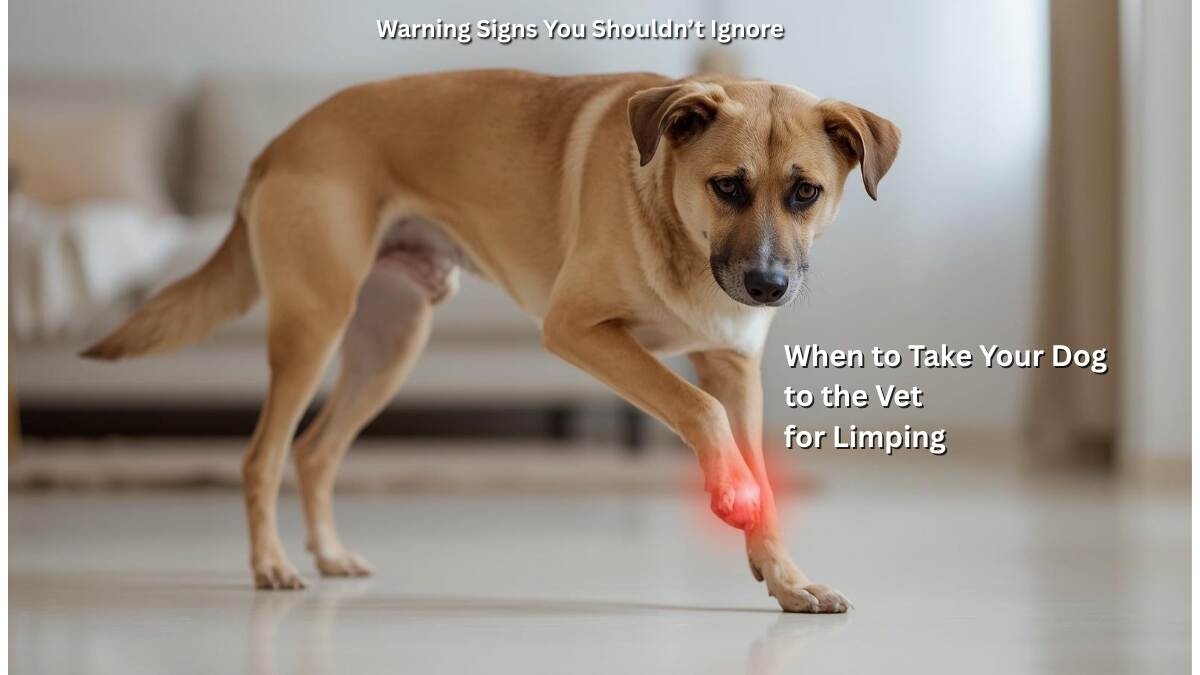
A vet should be contacted when the limp lasts more than 24–48 hours, keeps coming back, or starts getting worse. This is the safest rule for when to take dog to vet for limping.
Seek urgent veterinary care if the dog cannot bear weight, shows severe pain, has severe swelling, or the leg looks bent, dangling, or abnormal.
Simple decision guide:
- Mild limp + still walking normally → monitor briefly
- Limp lasts 24–48 hours or keeps returning → call a vet
- No weight, severe pain, swelling, or deformity → emergency care
Quick Answer
Most limps can be watched briefly if the dog still walks normally, seems comfortable, and has no swelling, wound, or obvious injury.
The safest rule for dog limping when to see vet is simple: if the limp does not improve within 24–48 hours, keeps coming back, or starts getting worse, a vet visit is needed.
Seek immediate veterinary attention if the dog cannot bear weight, shows severe pain, has severe swelling, or the leg looks bent, dangling, or abnormal.
Jump to a section:
Table of Contents
When to Worry About Dog Limping: Monitor vs Vet vs Emergency
A limp can be mild, but some signs need faster care. The key is to look at how long the limp lasts, whether the dog can bear weight, and whether there are warning signs like swelling, shaking, or low energy.
Quick decision guide:
| Situation | Action |
| Mild limp, still walking normally | Monitor briefly |
| Limp lasts 24–48 hours or returns | Contact a vet |
| Severe signs (no weight, pain, swelling, deformity) | Emergency care |
This simple guide helps decide when to monitor at home and when to seek veterinary care.
Mild cases (monitor briefly)
A mild limp can sometimes be watched for a short time if the dog still walks normally and seems comfortable.
Monitor briefly when:
- the limp is slight
- the dog still puts weight on the leg
- there is no swelling, wound, or obvious injury
- the limp improves with rest
During this time, owners should limit exercise and avoid running, jumping, or rough play.
When to take dog to vet for limping
The safest rule for dog limping when to take to vet is this: if the limp lasts more than 24–48 hours, keeps coming back, or starts getting worse, a vet visit is needed.
A vet should also check the dog if:
- the limp does not improve with rest
- the dog limping but not crying still continues
- the dog has swelling, stiffness, or reduced movement
- the dog seems less active than usual
- the dog is limping when to take to vet becomes unclear
A dog can hide pain, so lack of crying does not always mean the limp is mild.
Emergency signs (act immediately)
Seek emergency veterinary care if the dog cannot bear weight or looks seriously painful.
Urgent signs include:
- dog not putting weight on a leg (see why this happens in dog not putting weight on back leg)
- severe swelling
- visible wound or bleeding
- leg looks bent, dangling, or abnormal
- dog is limping and shaking
- dog limping and not eating
- dog limp getting worse
- dragging toes, wobbling, or collapse
These signs may point to a serious injury, infection, or neurological problem. The dog should be kept still and seen by a veterinarian as soon as possible.
Common Signs That Come With Limping
Limping can appear with small behavior changes or clear physical signs. These signs help owners understand when the problem may be mild and when veterinary attention may be needed.
Movement and behavior signs
A dog may move differently when one limb feels sore, weak, or unstable.
Common signs include:
- limping or uneven walking
- stiffness after rest
- slower movement or hesitation
- refusing stairs or jumping
- restlessness or trouble getting comfortable
- yelping or reacting when touched
Physical signs to look for
Some signs are easier to see during a gentle check of the paw, leg, or joint.
Look for:
- swelling or heat
- licking the paw or leg
- visible wound or bleeding
- broken or bleeding nail
- limb at an odd angle
- wobbly walking or dragging toes
Whole-body warning signs
Whole-body signs can mean the limp is more serious.
Watch for:
- low energy
- loss of appetite
- shaking or discomfort
- fever-like warmth
- collapse or weakness
If these signs appear with limping, a vet visit is the safest next step.
Causes — When to Take Dog to Vet for Limping
Knowing the cause can help owners decide when to take dog to vet for limping. Some causes are mild, but others need faster veterinary care.
Minor causes (often improve with rest)
Some limps start after normal activity. A sprain, strain, or soft-tissue bruise may happen after running, jumping, or rough play.
Paw problems can also cause sudden limping. A cut paw pad, torn nail, insect sting, or small object stuck in the paw can make the dog avoid pressure on that leg.
Simple pattern:
sprain or paw injury → soreness → limping → improves with rest
Joint and structural problems
Joint problems can make limping last longer or come back. Arthritis can cause stiffness and pain, especially after rest (learn how vets confirm this in how do vets diagnose arthritis in dogs).
Hip or elbow dysplasia can make joints move poorly. A cruciate ligament injury can make the knee unstable and may cause sudden lameness.
These problems often need a vet exam if the limp continues, returns often, or affects how the dog walks.
Serious or urgent causes
Some causes need quick veterinary attention. A fracture, dislocation, infection, or severe swelling should not be monitored at home.
Neurological problems can also cause limping. Warning signs may include dragging toes, wobbling, weakness, or trouble using the leg normally.
If the dog cannot bear weight, has a dangling limb, shows severe pain, or the limp gets worse, veterinary care is needed right away.
What Limping Can Mean (Simple Explanation)
Limping means the dog is changing how it walks to protect a sore, weak, or unstable area. The cause may be mild, but some patterns can point to a problem that needs veterinary care.
Everyday patterns
A mild strain or paw problem may cause short-term limping after activity. This can happen after running, jumping, rough play, or stepping on something sharp.
Simple pattern:
strain or paw pain → soreness → limping → improves with rest
Joint-related patterns
Joint problems can cause stiffness, slower movement, or limping that returns. Arthritis, hip dysplasia, elbow dysplasia, or ligament injury may make movement uncomfortable.
Simple pattern:
joint irritation → inflammation → stiffness → limping
Serious patterns
A more serious injury may cause sudden pain, severe swelling, or trouble using the leg. If the dog cannot bear weight, the leg looks abnormal, or the limp is getting worse, it should be treated as urgent.
Simple pattern:
injury → pain → cannot bear weight → emergency care
What to Do If Your Dog Is Limping
First steps at home
If a dog starts limping, simple care can help in mild cases. The goal is to reduce strain and check for obvious problems.
- Restrict movement and limit exercise
- Use short leash walks for bathroom breaks only
- Allow proper rest on a soft surface
- Check the paw and leg for cuts, swelling, or objects
These steps can help if the cause is minor, like a soft tissue injury or paw irritation.
What to avoid
Some actions can make the problem worse or unsafe.
- Do not allow running, jumping, or stairs
- Do not give human medications (can be toxic to dogs)
- Do not force movement if the dog shows pain
Avoiding these mistakes helps prevent further damage.
When to take limping dog to vet
Owners often ask, if my dog is limping should I take him to the vet. The answer depends on how the limp behaves.
Veterinary care is needed when:
- The limp is not improving after 24–48 hours
- The dog is limping when to take to vet becomes unclear due to repeated limping
- The condition is getting worse over time
- The dog is limping but not crying and still not improving
- The dog limping but no visible injury is present and cause is unclear
These signs may point to an underlying cause that needs a proper check.
What the vet may do
A veterinarian will try to find the exact reason for limping.
- Perform a physical examination of the affected limb
- Check joints, movement, and pain response
- Look for swelling, instability, or injury
- Use X-rays or other tests if needed
This helps reach an accurate diagnosis and decide the right next steps.
FAQs
How long should I wait to go to the vet if my dog is limping?
If the limp is mild and the dog still walks normally, owners can monitor for a short time.
A vet visit is needed if the limp lasts more than 24–48 hours, keeps returning, or starts getting worse.
How can I tell if my dog’s limp is serious?
A limp may be serious if the dog cannot bear weight, has swelling, shows severe pain, or the leg looks bent or dangling.
Whole-body signs also matter. Limping with low energy, fever, shaking, or appetite loss needs veterinary attention.
When is limping an emergency?
Limping is an emergency if the dog cannot use the leg, has severe swelling, has an open wound, or shows a visible deformity.
Dragging toes, wobbling, collapse, or severe pain also need same-day veterinary care.
What should I do if my dog is limping but not crying?
A dog limping but not crying can still be uncomfortable. Dogs may hide pain and still protect the affected limb.
Owners should rest the dog, limit activity, and watch closely. If the limp does not improve, a vet should check the dog.
Should I still walk my dog if he’s limping?
Avoid normal walks, running, jumping, and rough play.
Short leash walks for bathroom breaks are safer until the limp improves or a vet gives guidance.
What will a vet do for a limping dog?
The vet will look for the cause of the limp and decide the safest next steps.
Care may involve rest, pain-control guidance, diagnostic tests, rehabilitation support, or other treatment based on the cause.
Can a dog’s limp heal on its own?
Some mild limps from small strains or paw irritation may improve with rest.
A limp should not be ignored if it lasts more than 24–48 hours, keeps coming back, or appears with swelling, pain, or weakness.
What are signs of a serious leg injury in dogs?
Serious signs include no weight on the leg, severe swelling, visible wounds, bleeding, or a limb at an irregular angle.
A dangling limb, collapse, or sudden weakness may also need urgent veterinary care.
How do vets diagnose the cause of a limp?
A vet may begin with a physical examination. They may check the paw, affected limb, joints, swelling, and movement.
If needed, the vet may recommend X-rays, lab tests, or other checks to find the underlying cause.
Should I massage a limping dog’s leg?
Do not massage or stretch the leg without vet advice.
If the limp comes from a fracture, ligament injury, swelling, or severe pain, handling the leg the wrong way may make discomfort worse.
Sources & References
High-quality veterinary and medically reviewed sources used:
- Cornell University Riney Canine Health Center — what to expect when taking your limping dog to the veterinarian
- VCA Animal Hospitals — first aid for limping dogs and when to see a vet
- PetMD — causes of dog limping and when to see a vet
- BluePearl Pet Hospital — emergency signs for limping dogs
- Texas A&M College of Veterinary Medicine — recognizing a pet emergency and when limping needs urgent veterinary care
- MSD Veterinary Manual — diagnostic approach to lameness in animals
Soft CTA
Limping can have many causes, from a mild paw issue to a more serious joint or injury problem. If the limp continues, gets worse, or comes with warning signs, a vet visit is the safest next step.
For more help, readers can explore the complete guide on why is my dog limping and related topics like joint pain signs, stiffness, and safe mobility support.
Update Note
This article was updated to improve clarity on when dog limping may need veterinary care, including monitor, vet soon, and emergency signs.
It is for educational purposes only and does not replace a veterinarian’s advice if a dog has severe pain, swelling, trouble walking, or worsening symptoms.