
TL;DR
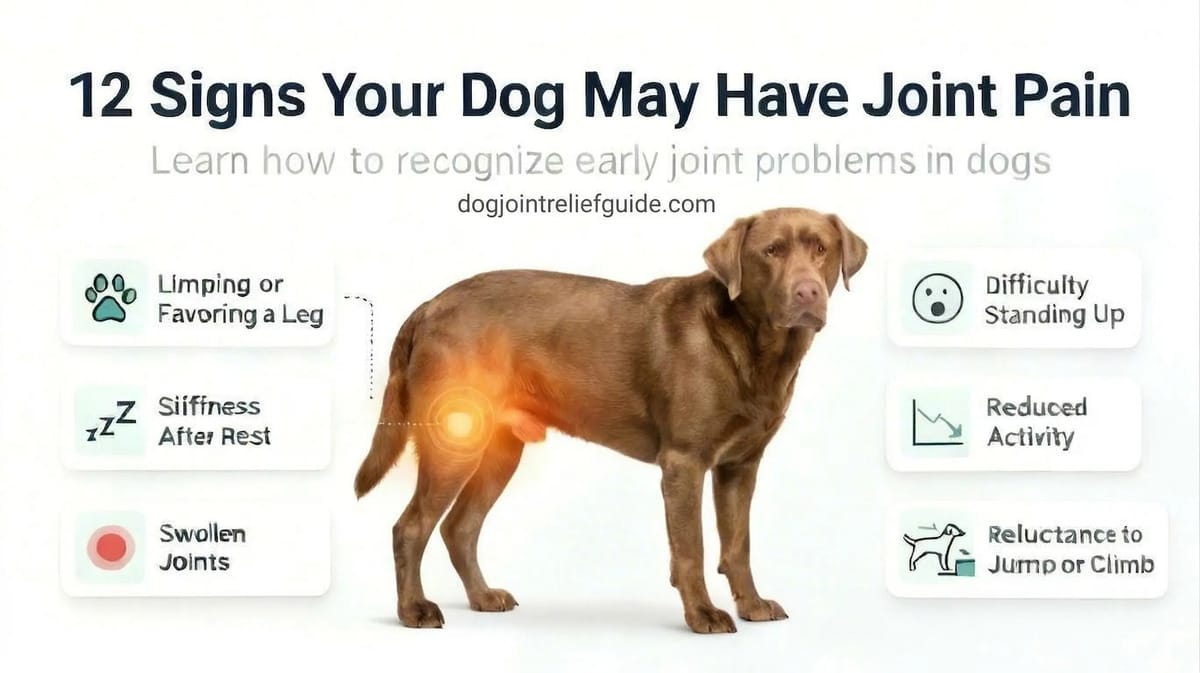
A dog may have joint pain if it shows signs such as limping, stiffness after rest, reduced activity, difficulty standing, or swollen joints.
Many dog owners want to understand how to tell if your dog has joint pain, especially when movement changes appear slowly.
Common dog joint pain symptoms may include:
- limping while walking
- stiffness after rest
- reduced activity or exercise
- difficulty standing up or lying down
- swollen joints or warm joints
These signs of joint pain in dogs may develop slowly. In many cases, joint problems follow a simple process:
joint stress → inflammation → pain → movement changes
Early detection helps protect a dog’s joints and overall mobility. If these signs continue or worsen, veterinary evaluation can help identify the underlying cause.
Table of Contents
- How to Tell If Your Dog Has Joint Pain
- 12 Signs of Joint Pain in Dogs
- Common Causes of Joint Pain in Dogs
- Dog Breeds More Prone to Joint Problems
- FAQ
This guide explains how to tell if your dog has joint pain, common symptoms, causes, and when veterinary evaluation may be needed.
Quick Answer Box
How do I know if my dog has joint pain?
A dog may have joint pain if movement or behavior starts to change. Many dog owners notice small mobility problems first.
Common dog joint pain symptoms may include:
- limping or favoring one leg
- stiffness after resting
- reduced activity or slower movement
- swollen joints
- reluctance to jump or climb stairs
These signs of joint pain in dogs often develop slowly and may worsen over time.
What are early signs of joint pain in dogs?
Early joint pain in dogs symptoms may appear as small movement changes.
Examples include:
- stiffness when getting up
- slower walking
- reduced interest in exercise
- changes in walking pattern
These early signs of arthritis in dogs may appear before severe joint problems develop.
When should a vet check joint pain?
Veterinary evaluation may be helpful if joint problems continue or become worse.
A veterinarian should examine the dog if:
- limping lasts more than a day
- the dog shows severe discomfort
- movement becomes difficult
- a joint becomes swollen
Early veterinary care helps identify the underlying cause of joint pain in dogs and protect long-term joint health.
How to Tell If Your Dog Has Joint Pain
Joint pain in dogs often shows through changes in movement or behavior. These may include limping, stiffness after rest, reduced activity, or difficulty standing. These signs of joint pain in dogs often develop gradually and may worsen over time.
Many dog owners wonder how to tell if your dog has joint pain, especially when movement changes appear slowly. Joint pain in dogs often starts with small signs that may seem easy to miss.
A dog with joint pain may move differently, avoid certain activities, or show changes in behavior. These early changes may appear before more noticeable mobility problems develop.
Recognizing early changes helps protect a dog’s joints and overall mobility.
Joint pain is a symptom, not a diagnosis
Joint pain in dogs is not a condition by itself. It is a sign that something may be affecting the joints or surrounding tissues.
Several conditions can lead to dog joint pain symptoms, including:
- arthritis
- ligament injuries
- elbow dysplasia
- cruciate ligament problems
- developmental joint issues
Joint pain often develops through a simple process:
joint stress → inflammation → pain → mobility changes
This chain explains why dogs with joint problems may start limping after running or begin moving more slowly.
Why Dogs Often Hide Pain (Even When Limping)
Dogs do not always show discomfort clearly. Many animals hide pain as a natural survival behavior.
Because of this, signs of dog pain may appear as small behavior changes instead of obvious distress.
Examples may include:
- acting differently than usual
- pacing or restlessness
- trouble getting comfortable
These subtle changes can help dog owners notice when a dog may be experiencing joint discomfort.
Why joint problems can develop gradually
Many joint problems in dogs develop slowly over time. Degenerative joint disease in dogs can affect joint tissues little by little.
Repeated movement and stress on the joints may lead to gradual changes inside the joint.
This process often follows a pattern:
repeated joint use → cartilage wear → inflammation → joint stiffness
Because the process is gradual, early symptoms may appear mild. Over time, however, stiffness and reduced movement may become easier to notice.
If these changes continue or worsen, veterinary evaluation can help identify the underlying cause.
12 Signs of Joint Pain in Dogs: How to Tell If Your Dog Has Joint Pain
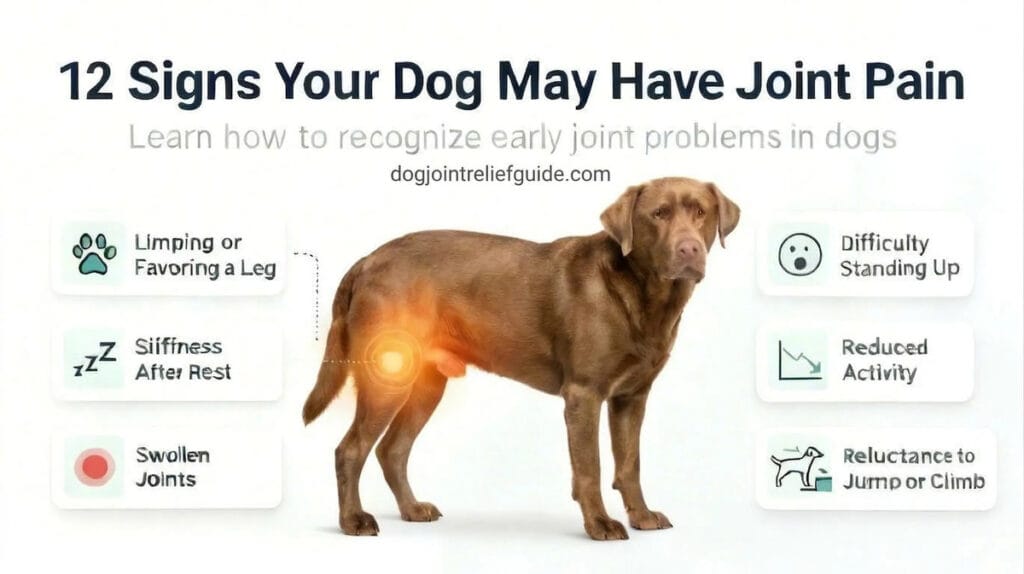
The image above highlights some common warning signs. The table below shows the full list of 12 signs dog owners may notice.
| Sign of Joint Pain | What Dog Owners May Notice |
| Limping or stiffness | Dog favors one leg or walks slowly |
| Difficulty standing up | Dog struggles when getting up or lying down |
| Stiff joints after rest | Dog walks stiffly after sleeping |
| Reduced activity | Dog avoids running or long walks |
| Reluctance to jump | Dog hesitates before jumping or climbing stairs |
| Changes in walking | Uneven steps or altered posture |
| Swollen joints | Joint looks larger or feels warm |
| Licking joints | Dog repeatedly licks a painful area |
| Behavior changes | Irritability or reduced playfulness |
| Shaking or panting | Stress behaviors linked to pain |
| Muscle loss | Reduced muscle around the joint |
| Pain when touched | Dog pulls away when the joint is touched |
Common signs of joint pain in dogs include limping, stiffness, reduced activity, swollen joints, and difficulty standing or walking.
Joint pain in dogs often appears through movement or behavior changes. Many dog owners notice these signs slowly over time.
Common dog joint pain symptoms may include the following changes.
Limping or stiffness
Limping is one of the most common signs of joint pain in dogs. In some cases, this may appear as favoring one leg, especially after exercise or strain. A dog may avoid putting weight on one leg or walk more slowly. Stiff movement may also appear, especially after exercise or long walks.
Difficulty standing up or lying down
Dogs with joint pain may struggle when standing up or lowering their body to the floor.
These movements place pressure on dog joints, which may cause discomfort if the joint is irritated.
Stiff joints after rest
Joint stiffness after resting is a common sign of joint pain in dogs symptoms.
Some dogs move slowly at first, then walk more normally after a few steps.
This pattern may follow a simple chain:
rest → reduced joint movement → stiffness → slow walking
Reduced activity or exercise
Dogs with joint problems in dogs may become less active than usual.
An active dog may stop running, playing, or walking long distances.
Reduced activity can sometimes be an early sign that a dog is experiencing joint discomfort.
Reluctance to jump or climb stairs
Jumping and climbing stairs place extra stress on joints.
A dog with joint pain may avoid these movements or hesitate before attempting them.
This behavior may suggest joint issues in dogs affecting mobility.
Changes in walking or posture
Dogs experiencing joint pain may walk differently.
Owners may notice:
- shorter steps
- uneven movement
- a hunched posture
These changes can occur when the dog tries to protect a painful joint.
Swollen or warm joints
In some cases, a joint may appear swollen or feel warm.
For example, a a swollen or warm joint may indicate irritation around the joint.
Swelling can happen when inflammation develops in the joint tissues.
Licking or chewing painful joints
Dogs sometimes lick or chew areas that feel uncomfortable.
Frequent licking near a joint may signal irritation or discomfort.
This behavior may occur when a dog with joint pain tries to relieve pressure in the area.
Behavior changes or irritability
Pain can affect mood and behavior.
A dog experiencing joint discomfort may show:
- irritability
- restlessness
- reduced interest in play
These changes can appear when dogs with joint pain try to avoid movements that cause discomfort.
Shaking, panting, or restlessness
Some dogs show stress signs when they feel pain.
Possible signs include:
- shaking or trembling
- heavy panting
- pacing or restlessness
These behaviors may appear when a dog feels pain in dogs signs related to joint problems.
Muscle loss around joints
Long-term joint pain may reduce activity.
When movement decreases, muscles around the joint may slowly become weaker.
This can make dog joint problems more noticeable over time.
Visible discomfort when touched
Dogs may react when a painful joint is touched.
Possible reactions include pulling the leg away, moving suddenly, or avoiding contact.
These reactions may suggest the dog is experiencing discomfort in the joint.
These changes are common signs of joint pain in dogs and often appear before severe mobility problems develop.
Common Causes of Joint Pain in Dogs
| Cause | What Happens in the Joint |
| Arthritis / Degenerative joint disease | Cartilage wears down and inflammation develops |
| Hip dysplasia | Hip joint does not fit properly |
| Elbow dysplasia | Abnormal elbow joint structure causes irritation |
| Ligament injuries | Joint becomes unstable after ligament damage |
| Stress injuries | Repeated movement causes joint irritation |
| Excess body weight | Extra pressure increases joint strain |
Joint pain in dogs can develop for several reasons. Some problems appear slowly over time, while others start after injury or repeated strain.
Understanding possible reasons behind joint discomfort can help dog owners recognize when a dog may need veterinary evaluation.
Arthritis and degenerative joint disease
Arthritis is one of the most common causes of joint pain in dogs. It happens when the protective cartilage inside the joint slowly wears down.
As the joint tissues degenerate, inflammation may develop inside the joint.
This process often follows a simple chain:
cartilage wear → inflammation → pain → reduced movement
Degenerative joint disease in dogs can lead to stiff joints in dogs, slower walking, and reduced activity.
Hip dysplasia and elbow dysplasia
Some joint problems in dogs develop because of abnormal joint structure.
Two common examples are:
- hip dysplasia
- elbow dysplasia
These conditions affect how the joint fits together. When the joint does not move smoothly, irritation and pressure can develop.
Over time, this may lead to joint stiffness in dogs and long-term joint discomfort.
Ligament injuries and knee joint problems
Ligaments help stabilize the joints. When a ligament becomes injured, the joint may become unstable.
Examples include:
- cruciate ligament injuries
- developing knee joint problems
These injuries can cause sudden dog joint pain symptoms and difficulty placing weight on the affected leg.
Stress fractures or joint injuries
Active dogs may sometimes develop injuries from repeated movement or heavy activity.
Running, jumping, or sudden turns can place pressure on dog joints.
Repeated strain may lead to:
- small stress injuries
- joint irritation
- inflammation around the joint
These injuries may result in sudden joint pain in dogs symptoms.
Weight and joint stress
Body weight plays an important role in joint health. Extra weight places more pressure on joints with every step.
This can create a chain of stress inside the joint:
excess weight → extra strain on joints → increased joint damage
Over time, this pressure may contribute to joint problems in dogs, especially in larger dogs or older pets.
Dog Breeds More Prone to Joint Problems
Some dog breeds may develop joint problems in dogs more often than others. Breed size, body weight, and joint structure can affect how much stress the joints carry during movement.
Larger dogs often place more pressure on their joints with every step. Over time, this pressure may increase the risk of joint pain in dogs or other mobility problems.
Breeds that may experience joint issues more frequently include:
- Bernese Mountain Dogs
- large breeds such as Labrador Retrievers, German Shepherds, and similar active dogs
- active working breeds that perform high physical activity
The relationship between body weight and joint structure is important. When a dog’s weight places more stress on the joints than the joint structure can comfortably support, irritation may develop.
This process can follow a simple pattern:
body weight stress → joint strain → inflammation → joint pain
Because of this, many veterinarians encourage dog owners to monitor joint health closely, especially in larger breeds or highly active dogs.
How Veterinarians Diagnose Joint Pain
When a dog shows signs of joint pain in dogs, veterinarians use several steps to understand what may be affecting the joints. The goal is to examine movement, identify the source of discomfort, and help identify the possible cause of the problem.
A careful evaluation helps guide the next steps for managing joint problems in dogs.
Physical examination and mobility check
The first step usually involves a physical examination. The veterinarian observes how the dog walks and moves.
During this check, the vet may examine:
- the dog’s joints
- swelling around joints
- range of movement in each joint
This evaluation helps detect joint stiffness in dogs or areas where the dog may feel discomfort.
Review of symptoms and medical history
The veterinarian also asks questions about the dog’s recent activity and behavior.
Important details may include:
- changes in activity level
- behavior changes linked to signs of dog pain
- how long the symptoms have been present
Understanding when symptoms started helps the vet evaluate how the joint pain in dogs symptoms may be progressing.
Diagnostic imaging and tests
If the cause of pain is not clear, additional tests may be recommended.
- Common diagnostic tools include:
- X-rays to examine bones and joint structure
- imaging of joints to detect joint damage or structural changes
These tests can help identify conditions such as degenerative joint disease in dogs, joint injuries, or developmental joint problems.
Identifying the underlying cause
After gathering information from the exam and tests, the veterinarian works to identify the underlying cause of joint pain in dogs.
An accurate diagnosis is important because different joint problems may require different management approaches. Veterinary evaluation helps guide appropriate care and protect long-term joint health.
What Dog Owners Can Do If They Suspect Joint Pain
When dog owners notice possible signs of joint pain in dogs, simple steps can help protect the dog’s joints while waiting for veterinary advice. Early care and observation may prevent further strain on already sensitive joints.
Reduce intense physical activity
Dogs showing dog joint pain symptoms may struggle with high-impact activity. Running, jumping, or rough play can place extra stress on painful joints.
Reducing intense activity helps limit further irritation. Gentle movement and calm walks may help avoid additional strain on the affected joint.
Monitor signs of joint pain
Careful observation helps owners understand whether joint pain in dogs may be getting worse.
Watch for signs such as:
- limping
- stiffness
- reduced activity
Other changes may include slower walking, difficulty rising, or reluctance to move. These signs of dog pain may indicate developing joint problems.
Maintain a healthy weight
A healthy body weight helps protect the dog’s joints. Excess weight can place extra pressure on bones and joints during movement.
The process may develop like this:
extra body weight → increased joint pressure → cartilage stress → joint pain
Managing body weight can reduce stress on dog joints and support overall mobility.
Consult a veterinarian
If joint pain in dogs symptoms continue or worsen, veterinary evaluation is important. A veterinarian can examine the dog and help identify the possible cause of the problem.
Professional guidance helps determine the most appropriate care plan and protects the dog’s long-term joint health.
When Joint Pain May Become Serious
| Warning Sign | Why It Matters |
| Dog cannot stand | Possible severe joint injury |
| Severe swelling Strong | inflammation in the joint |
| Sudden joint pain | May indicate ligament injury |
| Increasing mobility problems | Joint damage may be progressing |
Some cases of joint pain in dogs may become more serious over time. If symptoms worsen or movement becomes difficult, the dog may need prompt veterinary evaluation.
Certain warning signs may indicate more severe joint problems in dogs.
These signs may include:
- inability to stand
- severe swelling around a joint
- sudden joint pain
- increasing mobility problems
These changes may suggest that joint damage, ligament injury, or another underlying condition is affecting the dog’s movement.
For example, joint problems may develop like this:
joint damage → inflammation → pain → reduced movement → mobility problems
When these warning signs appear, veterinary care is important. A veterinarian can examine the dog and help determine the cause of the worsening symptoms.
Frequently Asked Questions
How do I know if my dog has joint pain?
Dogs with joint pain often show changes in how they move or behave, such as limping, stiffness after resting, reduced activity, or sensitivity in certain joints. These signs of joint pain in dogs often appear gradually and may worsen over time.
What are the early signs of arthritis in dogs?
Early signs of arthritis in dogs often start with mild stiffness after rest, slower movement, or reduced interest in activity. These symptoms may appear before severe joint problems develop.
How do dogs show pain or discomfort?
Dogs often show pain through behavior changes rather than crying. Common signs of dog pain include limping, panting, restlessness, licking painful areas, or changes in posture and walking.
How do vets check for arthritis in dogs?
Veterinarians check for arthritis in dogs through physical examination, evaluation of joint movement, review of symptoms, and diagnostic imaging such as X-rays when needed.
At what age do dogs get joint pain?
Joint pain in dogs can develop at different ages. It is more common in older dogs due to natural joint wear, but some dogs may develop joint problems earlier because of genetics, injuries, or joint structure.
Do dogs limp when they have arthritis?
Yes. Limping is a common sign of arthritis in dogs. Joint damage can lead to inflammation and pain, which may cause a dog to limp or move more slowly.
What should I do if I suspect my dog has joint pain?
If a dog shows signs such as limping, stiffness, or reduced activity, the owner should monitor the symptoms and seek veterinary evaluation if they continue or worsen.
Which dog breeds are prone to arthritis?
Certain breeds may face a higher risk of joint issues because of body size or genetic factors.
Breeds often associated with joint problems include:
- Bernese Mountain Dogs
- large breed dogs such as Labrador Retrievers
- German Shepherds
- other large or active working breeds
These breeds may experience joint problems in dogs related to joint structure or long-term joint stress.
How common is joint pain in dogs?
Joint pain is one of the most common mobility problems affecting dogs. Many dogs develop joint discomfort as they age.
Studies show that degenerative joint disease in dogs affects a significant number of adult and senior dogs. Early recognition of dog joint pain symptoms can help protect joint health.
How can I help my older dog with joint pain?
Older dogs with joint pain in dogs may benefit from supportive care that protects the joints.
Helpful steps may include:
- maintaining a healthy body weight
- avoiding intense activity
- providing comfortable resting areas
- seeking veterinary advice for joint evaluation
Veterinary guidance helps determine safe and appropriate care for dogs with joint pain.
Sources & References
The following veterinary resources provide educational information about joint pain in dogs, arthritis, and canine mobility problems.
- Merck Veterinary Manual
https://www.merckvetmanual.com - American College of Veterinary Surgeons
https://www.acvs.org/small-animal/arthritis - Cornell University College of Veterinary Medicine
https://www.vet.cornell.edu/departments-centers-and-institutes/cornell-feline-health-center/health-information/arthritis - VCA Animal Hospitals
https://vcahospitals.com/know-your-pet/arthritis-in-dogs
What to Do Next
If a dog shows signs of joint pain, early observation can help detect problems before they become more serious.
To understand the full picture, see why is my dog limping. For a complete overview of joint health and support, see the dog joint pain relief guide.
If symptoms continue, worsen, or affect normal movement, a veterinary check is the safest next step.
Update Note
This article was updated in April 2026 to improve clarity, accuracy, and alignment with current veterinary guidance on joint pain and mobility issues in dogs.