TL;DR
- Dog limping after playing often happens due to muscle strain, overuse, or a minor paw injury. If the limp started after longer activity like running, see why is my dog limping after running. If it happened after a jump or landing, see dog limping after jumping.
- Some dogs show a temporary limp that improves with rest within a few days
- A limp that keeps returning after activity may point to joint issues or ligament stress
- Watch for swelling, trouble bearing weight, or changes in movement
- If the limp lasts more than a few days, returns often, or gets worse, veterinary care is important
Cause chain:
play → strain or minor injury → inflammation → discomfort → limping
Quick Answer Box
Dog limping after playing happens due to muscle strain, overuse, or a minor paw injury.
Active play can stress muscles and joints, leading to temporary soreness and limping.
Common causes include:
- muscle strain or overexertion
- minor paw injury (cuts, thorns, irritation)
- joint stress or early joint issues such as arthritis in dogs (a common cause of joint pain)
- ligament strain from sudden movement
Some dogs may still act normal despite discomfort.
If the limp does not improve within a few days, keeps returning after activity, or gets worse, veterinary evaluation is important.
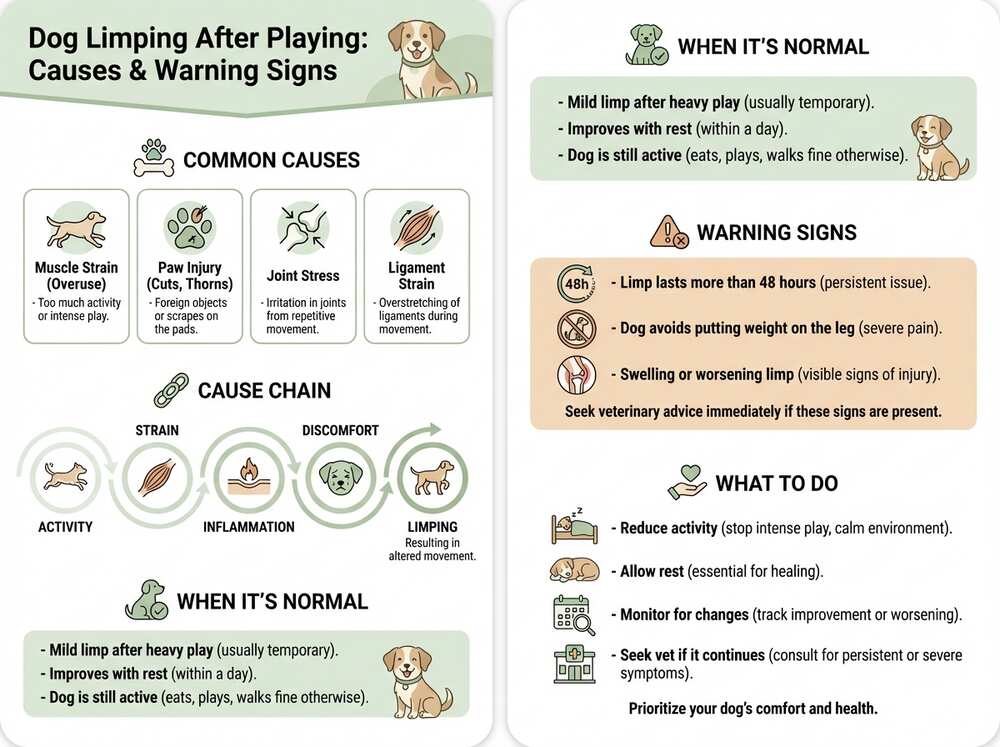
Table of Contents
Dog Limping After Playing: Common Causes
Many dog owners wonder why their dog is limping after playing. This usually happens due to muscle strain, minor injury, or joint stress.
Common causes of limping after play can vary in severity:
| Cause | Common After Playing | Severity |
| Muscle strain | Yes | Mild |
| Paw injury | Yes | Mild–Moderate |
| Ligament injury | Sometimes | Moderate–Severe |
| Joint issue | Sometimes | Moderate–Chronic |
Muscle Strain or Overuse
Rough play with sudden movement, quick turns, or chasing can put stress on muscles and soft tissues.
Cause chain:
rough play → muscle strain → soreness → limping
This type of dog limping after playing often improves with rest over a few days.
Minor Paw Injuries
Small cuts, thorns, or irritated paw pads can cause limping. These injuries are easy to miss at first.
A dog may limp but show no clear pain. This is why a dog limping but not in pain can still have a hidden paw issue.
Joint Stress or Early Joint Issues
Play and exercise can put pressure on joints, especially in active or older dogs.
Cause chain:
joint stress → inflammation → discomfort → limping
This may be more common in large breeds or dogs with early joint changes.
Ligament Strain or Partial Injury
Sudden movements like jumping or quick turns can stress ligaments. This includes areas like the knee joint. In many cases, this type of strain is similar to what happens when a dog develops limping after jumping due to impact stress on the joints.
Cause chain:
jumping → ligament strain → instability → limping
A dog may show this pattern, especially in the back leg
Hidden Trauma During Play
Dogs can slip, twist, or land badly during play without it being noticed.
Cause chain:
impact or twist → tissue stress → delayed pain → limping
This is why some dogs start limping out of nowhere after play ends. While play-related injuries are common, llimping can also happen due to other possible causes of limping in dogs
Is It Normal for a Dog to Limp After Playing?
When It Can Be Normal
A mild limp after playing can happen after heavy activity or exercise. Dogs may feel sore after running, jumping, or long activity.
Cause chain:
activity → muscle fatigue → reduced stability → uneven movement
This is often seen in puppy limping after playing or very active dogs. The limp is usually short-term and improves with rest.
When It Is Not Normal
A limp is not normal if it keeps coming back or does not improve. This may suggest an underlying issue that needs veterinary evaluation.
Warning signs include:
- limp keeps returning after activity
- dog limping for a week or more
- limp gets worse instead of better
If these signs appear, it is important to seek veterinary evaluation to check the cause early.
Signs Your Dog’s Limp May Be Serious
Quick warning signs to watch:
- limp lasts more than 48 hours
- dog avoids putting weight on the leg
- swelling or pain increases
Physical Warning Signs
Some physical signs suggest the limp after playing may not be minor. These signs should not be ignored.
- not putting weight on the leg
- visible swelling or deformity
- limping back leg or front leg getting worse
These changes may point to a deeper issue affecting the affected limb.
Behavioral Changes
Dogs often show changes in behavior when discomfort increases. These signs can appear even if the dog is not crying.
- reduced activity or energy
- reluctance to walk, run, or play
- signs of discomfort without obvious pain sounds
A dog limping but not in pain can still be dealing with hidden discomfort.
Cause Chain Insight
A serious limp often follows a clear biological pattern:
injury → inflammation → pain → altered movement → limping
If these signs are present or worsen over time, it is important to seek veterinary evaluation.
Dog Limping But Still Running — What It Means
Some dogs hide pain naturally. This is a survival behavior, so they may not show clear signs even when something feels wrong.
A mild injury may not stop a dog from playing right away. A dog may keep playing, running, and jumping even after strain or minor trauma.
Cause chain:
activity → adrenaline release → reduced pain response → continued movement → limping later
This explains why a dog limping but not in pain can still have a real problem. The discomfort may appear after activity ends or when the body cools down.
If the limp keeps returning, gets worse, or affects movement, it is important to seek veterinary evaluation.
How to Check Your Dog at Home for Limping
Check the Paw
Start by looking at the dog’s paws. Small issues here are a common cause of limping.
Check for:
- cuts or small wounds
- thorns or foreign objects
- swelling or redness on the pads
Even a small paw injury can lead to noticeable limping after activity.
Observe Movement
Watch how the dog walks and stands. This helps identify the affected leg.
Look for:
- uneven walking pattern
- limping on one leg
- trouble bearing weight on the affected limb
This step helps determine if the limp is mild or more serious.
Gently Feel the Leg
Carefully feel along the leg to check for changes. Use light pressure and move slowly.
Check for:
- tenderness or pain response
- warmth or swelling
- stiffness in joints or muscles
Stop immediately if the dog shows discomfort. If anything seems unusual, it is best to seek veterinary evaluation.
What to Do If Your Dog Is Limping After Playing
Immediate Steps
Start by reducing activity right away. This helps prevent the limp from getting worse.
- limit movement and keep the dog calm
- avoid running, jumping, or rough play
- allow proper rest for the affected leg
Rest can help mild cases of dog limping after playing improve naturally.
Monitor at Home
Observe the dog closely over the next few days. This helps track changes in the limp.
- track how often the dog limps
- watch if the limp improves or stays the same
- note any swelling or change in movement
Monitoring helps identify if the issue is temporary or ongoing.
When to See a Veterinarian
Some signs suggest the limp may be more serious and needs professional attention.
- limp lasts more than a few days
- limp keeps returning after activity
- new symptoms appear, such as swelling or reduced movement
If these signs are present, it is important to seek veterinary evaluation.
Can a Dog Limp From Too Much Exercise?
Yes, a dog can limp from too much exercise or activity. This is common in active dogs and puppies that play or run for long periods.
Cause chain:
overexertion → muscle fatigue → soreness → limping
This type of limping often appears after activity ends, not during it.
Signs of Overexertion
Some signs suggest the dog may have done too much:
- limping after running or long play, especially when repeated movement puts stress on muscles and joints
- stiffness when getting up
- slower movement than usual
- mild soreness in one leg
These signs often improve with rest if the strain is mild.
Prevention Basics
Simple steps can help reduce the risk of limping from overuse:
- avoid very long or intense play sessions
- give breaks during activity
- adjust exercise based on age and energy level
- watch for early signs of fatigue
If limping keeps returning or gets worse, it is important to seek veterinary evaluation.
Will a Dog Limp Heal on Its Own?
When It May Improve
Some cases of dog limping after playing may improve on their own. This usually happens when the issue is mild.
Common examples include:
- mild muscle strain from activity
- minor paw irritation, such as a small cut or rough surface
Cause chain:
minor strain → slight inflammation → mild discomfort → temporary limping
These cases often improve within a few days with rest and reduced activity.
When It Will Not
A limp is less likely to improve on its own if an underlying issue is present.
Examples include:
- ligament injuries that affect stability
- joint problems that cause ongoing stress
- chronic conditions that worsen over time
Cause chain:
underlying issue → ongoing inflammation → repeated discomfort → persistent limping
If the limp does not improve, keeps returning, or worsens, it is important to seek veterinary evaluation.
FAQ Section
What to do if my dog is limping after playing?
A dog should rest and reduce activity. Watch the dog closely for a few days. If the limp does not improve or gets worse, seek veterinary evaluation.
Why is my dog limping but acting normal?
Dogs often hide pain as a natural behavior. A mild injury may not stop activity right away. This is why a dog limping but not in pain can still have an underlying issue.
Is it normal for a dog to limp after playing?
A mild limp can be normal after heavy activity. It often improves with rest. If it keeps returning or worsens, it may not be normal.
Can a dog limp from too much exercise?
Yes. Overexertion can lead to muscle fatigue and soreness. This can cause limping after play or running, especially in active dogs.
How to tell if a dog’s limp is serious?
A limp may be serious if the dog avoids putting weight on the leg, shows swelling, or the limp worsens over time. Sudden severe limping should also be checked by a veterinarian.
How long should a dog limp before going to the vet?
If the limp lasts more than a few days or keeps returning, it is best to seek veterinary advice.
Will a dog limping heal by itself?
Some mild cases improve on their own. These include minor strains or paw irritation. Ongoing or worsening limping may need veterinary evaluation.
Why does my dog limp after running?
Running can put stress on muscles and joints. This can lead to strain, soreness, or minor injury, which may cause limping after activity.
Sources & References
- Merck Veterinary Manual
https://www.merckvetmanual.com/dog-owners/bone,-joint,-and-muscle-disorders-of-dogs/lameness-in-dogs - VCA Animal Hospitals
https://vcahospitals.com/know-your-pet/lameness-in-dogs - American Kennel Club (AKC)
https://www.akc.org/expert-advice/health/why-is-my-dog-limping/ - PetMD
https://www.petmd.com/dog/general-health/why-my-dog-limping
These sources provide trusted veterinary guidance on dog limping, its causes, and when to seek care.
A dog limping after playing may improve with rest, but it should not be ignored if it continues. Monitoring small changes can help catch problems early. To understand the bigger picture, see why is my dog limping.
If the limp lasts more than a few days, keeps returning, or gets worse, it is important to seek veterinary advice. Early evaluation helps prevent further complications and supports the dog’s long-term mobility.
Update Note
This article was updated in April 2026 to improve clarity, structure, and overall readability, based on current veterinary guidance.