
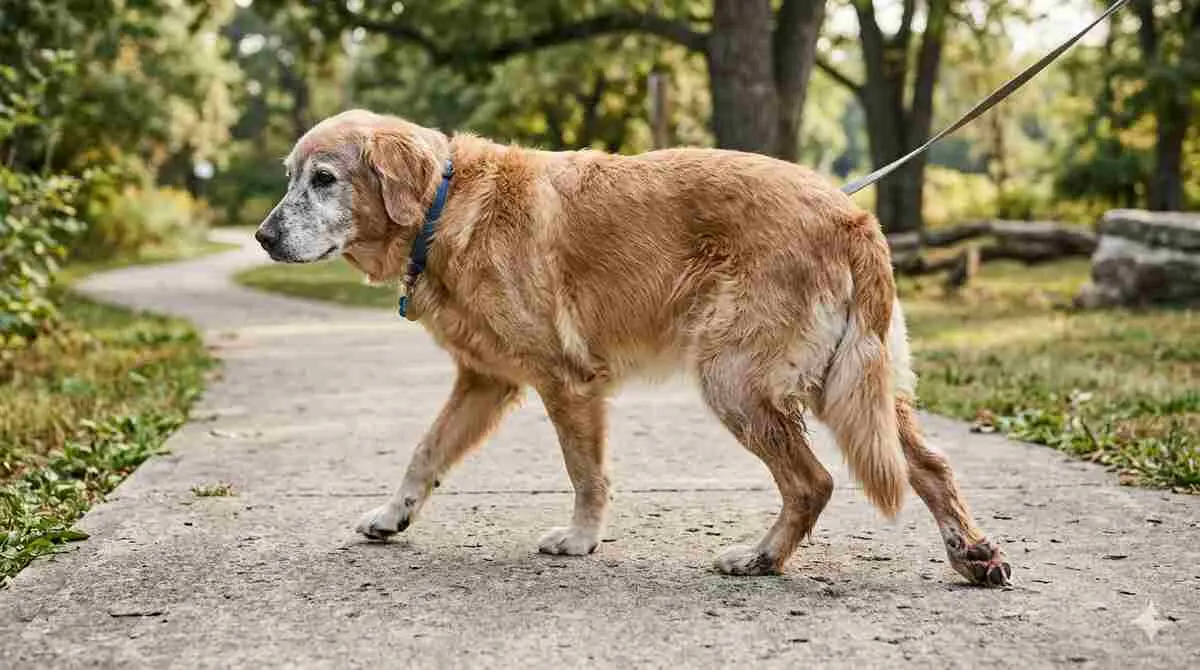
TL;DR
Dog dragging back legs is a symptom that can range from relatively common joint problems to more serious nerve or spinal conditions — pain, weakness, poor coordination, or nerve dysfunction affecting normal movement in one or both legs.
Common causes include arthritis, hip dysplasia, cruciate ligament injuries, intervertebral disc disease (IVDD), degenerative myelopathy, trauma, tick paralysis, and age-related mobility decline. Some dogs may drag their back feet, scuff their nails, or show subtle signs such as hesitation on stairs before more obvious mobility problems develop.
Signs such as knuckling, toe scuffing, wobbling, crossing the back legs, or walking on the top of the paw often suggest a neurologic problem affecting the spinal cord or nerves rather than a simple joint issue.
Sudden back-leg dragging, severe pain, paralysis, loss of bladder or bowel control, rapid worsening weakness, or collapse should be treated as an emergency and evaluated by a veterinarian immediately.
Quick Answer
Why is my dog dragging his back legs?
Dogs may drag their back legs when a problem affects the joints, muscles, nerves, or spinal cord. Common causes include arthritis, hip dysplasia, cruciate ligament injuries, intervertebral disc disease (IVDD), degenerative myelopathy, trauma, tick paralysis, and age-related weakness.
Learn more about common mobility-related conditions in this Dog Joint Pain Relief Guide.
In some dogs, the first signs are subtle. An owner may notice a dog dragging its back feet, scuffing its nails on hard floors, walking with shorter steps, or hesitating on stairs. Other dogs may develop more obvious signs such as knuckling, wobbling, crossing the back legs, or difficulty controlling foot placement.
A dog dragging one back leg may have a joint injury, hip problem, or nerve-related issue affecting one side of the body. When both back legs are involved, spinal cord problems, neurologic conditions, degenerative diseases, or severe weakness become more likely.
If a dog suddenly starts dragging its back legs, develops severe pain, loses bladder control, or seems unable to use its hind legs normally, prompt veterinary attention is important because some causes can worsen quickly.
Table of Contents
When to Worry About Dog Dragging Back Legs
Not every case of back-leg dragging is an emergency, but the symptom should never be ignored. The level of concern often depends on how suddenly the problem appeared, whether it is getting worse, and whether other signs such as weakness, pain, or loss of coordination are present.
Monitor vs Vet Soon vs Emergency
| Monitor | Vet Soon | Emergency |
| Mild toe scuffing after heavy exercise | Dragging lasting more than 24–48 hours | Sudden inability to walk |
| Mild stiffness that improves with rest | Recurring knuckling | Sudden paralysis |
| Occasional slipping on smooth floors | Difficulty standing up | Loss of bladder control |
| No worsening symptoms | Increasing weakness | Loss of bowel control |
| Normal appetite and behavior | Crossing back legs when walking | Severe back or neck pain |
| Mild age-related slowing | Visible muscle loss | Rapidly worsening weakness |
Mild Signs That Can Be Monitored
Some dogs show mild signs that may improve with rest or closer observation.
These can include:
- Occasional toe scuffing during walks
- Mild dragging after heavy exercise or unusual activity
- Slight stiffness in older dogs when first getting up
- Temporary dragging that improves after rest
- Brief episodes that do not seem to worsen
Even mild signs should be monitored carefully. If a dog begins dragging its back feet more often or develops additional mobility changes, a veterinary evaluation becomes more important.
Signs That Need a Vet Visit Soon
A dog should be seen by a veterinarian if dragging continues or gradually worsens.
Signs that should not be ignored include:
- Dragging lasting longer than 24–48 hours
- Recurring knuckling or walking on the top of the paw
- Difficulty standing up from lying down
- Worsening weakness in the hind legs
- Crossing the back legs while walking
- Frequent stumbling or loss of coordination
- Noticeable muscle loss in the rear legs
- Becoming increasingly reluctant to walk
Dogs that struggle to rise may show additional mobility changes. Owners who notice this change may also find it helpful to learn more about why is my dog struggling to stand up.
These signs may indicate an underlying joint, nerve, or spinal problem that requires proper diagnosis.
Emergency Signs That Need Same-Day Care
Some situations require immediate veterinary attention because they may be associated with serious spinal cord injuries, severe nerve dysfunction, or rapidly progressing disease.
Seek same-day veterinary care if a dog develops:
- A sudden inability to walk
- Sudden paralysis of one or both back legs
- Severe back or neck pain
- Loss of bladder control
- Loss of bowel control
- Rapidly worsening weakness
- Collapse or inability to stand
- Back-leg dragging after a fall, accident, or other trauma
For a fuller breakdown of urgency levels across sudden limping and mobility situations, see dog suddenly limping: when to take your dog to the vet.
Sudden weakness can have several causes, including neurologic disorders, spinal cord disease, injuries, and other medical conditions. Readers who want to learn more can read what causes sudden hind leg weakness in dogs.
A simple progression can sometimes occur:
spinal injury → nerve compression → weakness → loss of coordination → paralysis
The sooner these emergency signs are evaluated, the better the chance of identifying the underlying cause and preventing further damage.
Signs a Dog Is Dragging Its Back Legs
Dogs do not always drag their back legs in the same way. Some show obvious mobility problems, while others develop subtle changes that become easier to notice over time. Watching for changes in the paws, walking patterns, coordination, and daily activities can help owners recognize when something is affecting normal movement.
Checklist: Signs Owners Often Notice First
✓ Toe scuffing while walking
✓ Worn back toenails
✓ Knuckling or walking on top of the paw
✓ Dragging back paws
✓ Wobbling or swaying
✓ Crossing the back legs
✓ Difficulty standing up
✓ Reluctance to jump
✓ Hesitation on stairs
✓ Shorter walks than usual
✓ Increased slipping on smooth floors
✓ Gradually worsening rear-leg weakness
Changes in the Feet and Paws
One of the earliest signs is often a change in how the back feet move during walking.
Owners may notice:
- Dog dragging back feet while walking
- Dog dragging back paws when walking
- Dog dragging back nails on pavement or hard floors
- Scuffed or worn toenails
- Scrape marks on the tops of the toes
- Small sores or skin irritation caused by repeated dragging
Instead of lifting the feet normally, the dog may lightly scrape the ground with each step. Over time, this can wear down the nails and create visible marks on the paws.
Knuckling and Paw Position Problems
Knuckling is an important sign that should not be ignored.
What is knuckling in dogs?
Knuckling occurs when a dog places the top of the paw on the ground instead of the paw pad. This can happen when the dog loses awareness of foot position or has difficulty controlling normal paw movement.
Signs may include:
- Walking on the top of the paw
- A paw curling under while standing or walking
- Toes curling under
- Stepping on top of the foot
- Difficulty correcting paw position after a step
Unlike simple stiffness, knuckling often suggests a problem involving the nerves or spinal cord rather than the joints alone.
Changes in Walking and Coordination
Back-leg dragging is frequently accompanied by changes in gait and balance.
Owners may observe:
- Wobbling while walking
- Swaying from side to side
- Staggering or appearing unsteady
- Bunny hopping with the back legs
- Toe touching before placing weight on the foot
- A shuffling gait with reduced foot lift
Some dogs also seem less aware of where their back legs are positioned. This can make turning, climbing obstacles, or walking on uneven surfaces more difficult.
Mobility and Behavior Changes
As movement becomes harder, many dogs begin changing their daily habits.
Common behavior changes include:
- Hesitation before climbing stairs
- Reluctance to jump onto furniture or into vehicles
- Difficulty standing after resting
- Choosing shorter walks
- Avoiding play sessions
- Becoming less active than usual
A simple pattern may develop:
weakness or poor coordination → dragging feet → reduced confidence → avoiding movement
These behavior changes are often easy to spot because they affect everyday activities the dog previously handled without difficulty.
Why Is My Dog Dragging His Back Legs? Common Causes
If an owner is wondering, “why is my dog dragging his back legs,” the answer can involve several different conditions. Some affect the joints and muscles, while others affect the nerves or spinal cord. Understanding the possible causes can help explain why a dog may drag one or both back legs during movement.
Owners looking for practical home-support strategies can also learn more about how to help a dog with weak hind legs at home.
Common Causes of Back-Leg Dragging
| Cause | Typical Pattern | Urgency |
| Arthritis | Stiffness, short steps, toe scuffing | Vet visit if persistent |
| Hip Dysplasia | Bunny hopping, weight shifting, weakness | Vet visit |
| Cruciate Ligament Injury | Sudden limping, dragging one leg | Vet visit soon |
| IVDD | Knuckling, wobbling, dragging one or both legs | Urgent to emergency |
| Degenerative Myelopathy | Gradual nail scraping and worsening weakness | Vet evaluation |
| Tick Paralysis | Rapid weakness and loss of coordination | Emergency |
| Injury or Trauma | Sudden dragging after an accident or fall | Urgent to emergency |
| Slippery Floors and Mild Weakness | Dragging during turns or standing | Monitor and discuss with vet if ongoing |
Arthritis and Joint Pain
Osteoarthritis is one of the most common causes of mobility problems in older dogs. As joints become painful and stiff, normal movement becomes harder.
Dogs with arthritis may develop:
- Stiffness after resting
- Reduced range of motion
- Shorter steps
- Difficulty lifting the feet fully
- Mild toe scuffing during walks
A common progression is:
arthritis → stiffness → shorter steps → toe scuffing → dragging
In some dogs, the dragging is subtle and may first appear after exercise or long periods of inactivity.
Hip Dysplasia
Hip dysplasia affects the normal fit of the hip joint. Over time, instability can change the way a dog walks and carries weight.
Common signs include:
- Unstable movement from the rear
- Bunny hopping while running
- Weight shifting to reduce discomfort
- Muscle loss around the hind legs
- Difficulty with longer walks
A typical progression is:
hip dysplasia → instability → altered gait → dragging
Many dogs gradually adjust their movement, making the problem easy to overlook in the early stages.
Cruciate Ligament Injuries
Injuries to the cruciate ligament can affect stability in the knee joint. Some dogs develop signs suddenly after running, jumping, or playing.
Possible signs include:
- Sudden limping
- Knee instability
- Toe touching instead of full weight-bearing
- Dragging one back leg
- Difficulty turning or rising
Unlike many chronic conditions, cruciate injuries often have a more noticeable and sudden onset.
IVDD and Other Spinal Cord Problems
Intervertebral disc disease (IVDD), sometimes called a slipped disc, can place pressure on the spinal cord and interfere with normal nerve function.
Dogs may show:
- Knuckling
- Wobbling
- Weakness in the hind legs
- Dragging one or both back legs
- Difficulty knowing where the feet are positioned
A common progression is:
IVDD → spinal cord compression → nerve dysfunction → knuckling → dragging
Because spinal cord problems can worsen quickly, sudden changes in mobility should be taken seriously.
Degenerative Myelopathy
Degenerative myelopathy is a progressive neurologic disease that often affects older dogs.
Early signs may include:
- Nail scraping
- Toe scuffing
- Crossing the back legs
- Mild stumbling
- Gradually worsening coordination
A typical progression is:
degenerative myelopathy → nerve degeneration → stumbling → dragging → paralysis
The condition usually develops slowly, which can make the earliest changes difficult to recognize.
Tick Paralysis and Tick-Borne Diseases
Certain tick-related conditions can affect the nervous system and lead to weakness in the hind legs.
Signs may include:
- Sudden dragging
- Rapidly developing weakness
- Difficulty walking
- Loss of coordination
- Progression over a short period of time
Dogs with recent outdoor exposure and rapidly worsening symptoms should be evaluated promptly.
Injuries and Trauma
Falls, accidents, rough play, or spinal injuries can damage muscles, joints, nerves, or the spinal cord.
Depending on the severity, a dog may develop:
- Sudden back-leg dragging
- Pain when moving
- Weakness
- Limping
- Difficulty standing
Mobility changes that occur immediately after trauma should never be ignored.
Slippery Floors and Mild Weakness
Not every case of dragging is caused by a major medical condition. In some dogs, especially seniors with mild weakness, poor traction can contribute to dragging behaviors.
Owners may notice:
- Slipping on smooth floors
- Difficulty turning
- Feet sliding outward
- Hesitation when standing
- Dragging during slow movement
A simple pattern may occur:
mild weakness → traction loss → reduced confidence → dragging
Although slippery surfaces may worsen the problem, they often reveal an underlying mobility issue rather than causing it by themselves.
Slippery surfaces can make weakness more noticeable. Learn more in Why Is My Dog Slipping on the Floor?
What Does Back-Leg Dragging Usually Indicate?
Back-leg dragging is not a condition by itself. It is a symptom that suggests something is affecting the dog’s ability to move the hind legs normally. Similar mobility changes may also appear in dogs that develop a limp. The underlying issue may involve the joints, muscles, nerves, spinal cord, or a combination of several factors. Owners who notice limping along with weakness or dragging may also find it helpful to read Why Is My Dog Limping? Common Causes and When to Call a Vet.
Understanding the pattern behind the dragging can provide useful clues about what may be happening.
Joint Problems vs Nerve Problems
One of the most important distinctions is whether the problem appears to involve the joints or the nervous system.
| Joint Problems | Nerve Problems |
| Arthritis | IVDD (Intervertebral Disc Disease) |
| Hip Dysplasia | Degenerative Myelopathy |
| Usually painful movement | May or may not be painful |
| Stiffness after rest | Knuckling of the paw |
| Shorter steps | Toe dragging |
| Reduced range of motion | Crossing the back legs |
| Usually coordinated movement | Poor coordination and balance |
| Limping may be present | Wobbling or stumbling may be present |
Joint conditions such as arthritis and hip dysplasia often make movement uncomfortable, leading to shorter steps and stiffness. In contrast, nerve and spinal cord problems are more likely to cause unusual paw placement, knuckling, toe dragging, and loss of coordination.
Acute Injury vs Chronic Disease
The speed at which symptoms appear can also provide useful information.
Acute problems usually:
- Appear suddenly
- Follow a fall, jump, accident, or other event
- Cause a rapid change in mobility
- May involve pain or immediate weakness
Chronic conditions usually:
- Develop gradually
- Worsen over weeks or months
- Cause progressive mobility decline
- Become more noticeable over time
For example, a cruciate ligament injury may appear suddenly after activity, while degenerative myelopathy often progresses slowly and becomes more obvious as coordination continues to decline. For a broader look at what typically causes sudden-onset limping in general — separate from back-leg dragging specifically — see why is my dog suddenly limping.
Normal Aging vs a Medical Problem
Many owners assume dragging is simply part of getting older, but true back-leg dragging should not be dismissed as normal aging.
Normal aging may cause:
- Slower movement
- Longer recovery after activity
- Mild stiffness after resting
A medical problem is more likely when a dog develops:
- Dragging of the feet or toes
- Back-leg collapsing
- Repeated stumbling
- Crossing the hind legs
- Difficulty standing
- Gradually worsening symptoms
A helpful way to think about it is:
normal aging → slower movement
medical problem → mobility changes → dragging → worsening function
When dragging becomes persistent, progressive, or is accompanied by weakness, poor coordination, or frequent falls, a veterinary evaluation is warranted to determine the underlying cause.
What to Do If a Dog Is Dragging Its Back Legs
If a dog is dragging its back legs, the safest approach is to identify the underlying cause as early as possible while making movement safer and reducing the risk of further injury.
Schedule a Veterinary Evaluation
Back-leg dragging can be linked to joint disease, nerve problems, spinal cord disorders, injuries, or age-related mobility decline. Because the causes vary widely, an accurate diagnosis is important.
Early evaluation may help identify problems before weakness, coordination issues, or mobility loss become more severe.
Reduce Unsafe Activity
Until the cause is known, it is best to avoid activities that may place extra stress on the back legs or spine.
This includes:
- Jumping on and off furniture
- Rough play with other dogs
- Sharp turns during running
- High-impact activities
- Uncontrolled stair use
Reducing strain may help prevent worsening discomfort or additional injury.
Make Walking Safer
Most dogs benefit from gentle, controlled movement rather than complete inactivity.
Helpful guidelines include:
- Short, calm walks
- Flat and predictable walking routes
- Frequent rest breaks
- Avoiding overexertion
- Stopping if weakness or dragging worsens
The goal is to encourage safe movement without placing excessive demands on already affected legs.
Improve Traction at Home
A dog that is already weak or unsteady may struggle even more on slippery floors. Hardwood, tile, and laminate surfaces can make it difficult for the back feet to gain proper traction.
Simple changes around the home may help improve stability, including:
- Area rugs
- Hallway runners
- Non-slip mats
- Better traction in frequently used areas
- Clear walking paths
Improved footing can reduce slips, increase confidence, and make daily movement easier.
Help With Standing and Movement
Some dogs benefit from extra support when standing, walking, or using stairs.
Helpful mobility aids may include:
- Rear-support harnesses
- Support slings
- Mobility assistance straps
When helping a dog stand, support should be provided under the rear end rather than pulling on the legs. Gentle assistance can reduce strain and help prevent falls. For dogs with more advanced or long-term dragging, a wheelchair can offer additional support to keep the rear end moving safely during walks.
Keep Weight Under Control
Excess body weight places additional stress on the hips, knees, joints, and supporting muscles.
Maintaining a healthy weight may help:
- Reduce pressure on painful joints
- Improve overall mobility
- Make walking easier
- Reduce fatigue during activity
- Support long-term comfort
Even modest weight reduction can make a meaningful difference for dogs with mobility challenges.
What Not to Do
Certain actions can make mobility problems worse or delay proper diagnosis.
Avoid:
- Forcing a dog to continue walking when weakness is obvious
- Ignoring worsening dragging or coordination problems
- Assuming the issue is simply old age
- Delaying veterinary evaluation when symptoms progress
- Giving human pain medications unless specifically instructed by a veterinarian
Many human medications can be dangerous for dogs and should never be given without veterinary guidance.
FAQ
Why is my dog suddenly dragging his back legs?
Sudden back-leg dragging can occur because of spinal cord problems, IVDD, injuries, trauma, tick paralysis, nerve damage, or other serious medical conditions. Sudden weakness or loss of normal movement should be treated as a potentially urgent situation, especially if symptoms are worsening.
My dog is dragging one back leg but does not seem in pain. Should I worry?
Yes. A dog does not need to show obvious pain for a problem to be serious. Nerve-related conditions such as degenerative myelopathy or spinal cord disorders can cause dragging, knuckling, or weakness without significant pain. A veterinary examination is recommended if the dragging continues.
What causes knuckling in dogs?
Knuckling occurs when a dog places the top of the paw on the ground instead of the paw pads. It is often associated with nerve dysfunction, spinal cord disease, neurologic injury, or conditions that affect the dog’s awareness of foot position.
Is my dog just getting old, or is something wrong?
Normal aging may cause slower movement and mild stiffness, but dragging the feet, repeated stumbling, knuckling, collapsing, or worsening weakness are not considered normal age-related changes. These signs often indicate an underlying medical issue that should be evaluated.
Can a dog recover from dragging its back legs?
Recovery depends on the underlying cause. Some conditions improve with appropriate treatment and management, while others may be progressive. Early diagnosis generally provides the best opportunity to address mobility problems and improve quality of life.
How long can I wait before going to the vet?
Mild signs that improve quickly may be monitored for a short period. However, dragging that lasts longer than 24 to 48 hours, recurring knuckling, worsening weakness, or difficulty standing should be evaluated by a veterinarian. Emergency signs require immediate care.
Why can’t my dog use his back legs?
Loss of normal back-leg function can result from spinal cord disease, severe arthritis, hip problems, nerve damage, injuries, degenerative conditions, infections, or other medical disorders. The severity can range from mild weakness to complete paralysis.
What does it mean when a dog walks on the top of its paw?
Walking on the top of the paw is known as knuckling. It often suggests a neurologic problem affecting the nerves, spinal cord, or the dog’s ability to sense paw position. Veterinary evaluation is recommended whenever knuckling is observed.
Why do my dog’s back legs slide out on the floor?
Back legs may slide out because of poor traction, muscle weakness, joint pain, neurologic disease, or reduced stability. Slippery flooring often makes existing mobility problems more noticeable, particularly in older dogs.
Sources & References
- Balance Veterinary Clinic — Dog Back Legs Not Working: Causes, Urgency and Help
- Garden State Veterinary Specialists — Sudden Hind-Leg Paralysis in Dogs: Critical First Steps
- Stoney Creek Veterinary Hospital — What Causes Sudden Hind Leg Weakness in Dogs
- Walkin’ Pets — 7 Causes of Sudden Hind Leg Weakness in Dogs
- Mountain View Veterinary Health Center — Back Leg Weakness in Senior Pets
- PetMD — Ataxia in Dogs: Symptoms, Causes and Treatment
- Veterinary Healthcare Associates — Understanding Neurological Problems in Dogs: Causes of Back Leg Weakness
- Compass Veterinary Neurology & Imaging — 8 Reasons a Dog Could Be Limping on Their Back Legs
- PetMD — Arthritis Pet Care: How to Help With Mobility and Comfort
- Tamar Vets — Mobility Issues in Pets
Soft CTA
Mobility changes often start with small signs such as toe scuffing, worn nails, hesitation on stairs, or occasional dragging of the back feet. Paying attention to these early changes can help owners recognize problems before they become more serious.
If a dog is dragging its back legs, developing weakness, or showing changes in coordination, an early veterinary evaluation can help identify the underlying cause and guide appropriate management.
If dragging progresses to a dog no longer bearing weight on the leg at all, see dog not putting weight on back leg for the next steps to take
Update Note
Last medically reviewed and updated: July 2026