
TL;DR
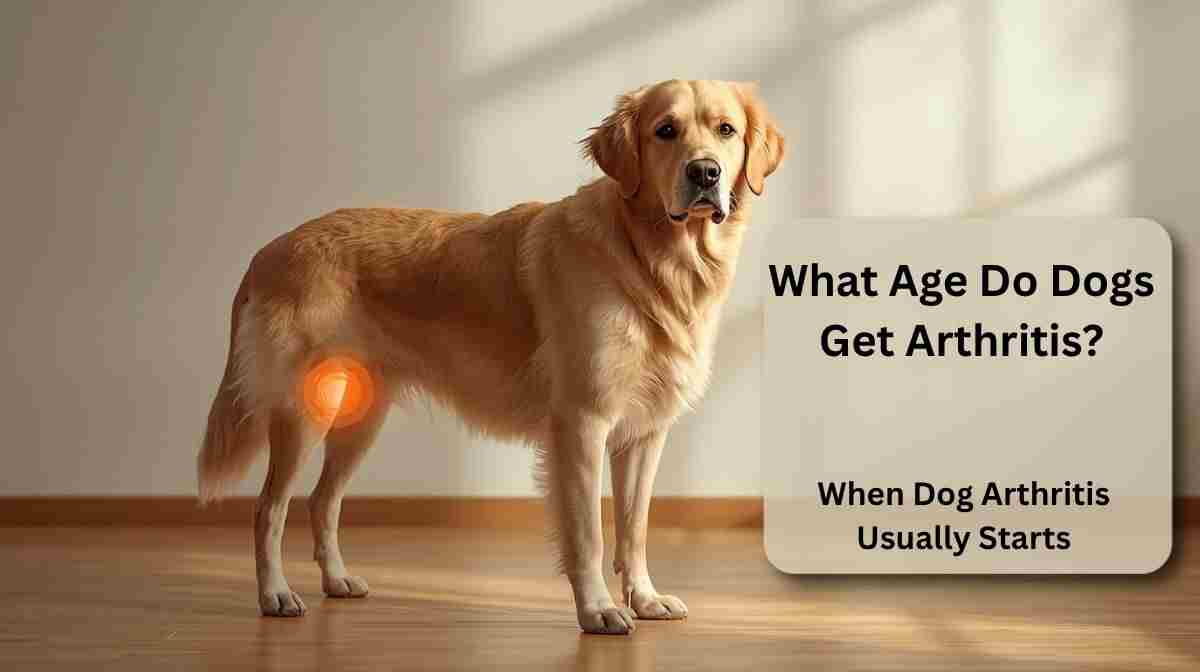
Arthritis in dogs usually develops as they get older. Most dogs begin showing joint problems during middle age or senior years. This happens because joints slowly change over time.
However, arthritis can sometimes appear earlier in younger dogs. This may occur when a dog has joint conditions such as hip dysplasia, previous injuries, or abnormal joint development.
In many dogs, the disease develops gradually through a process like this:
aging joints → cartilage damage → joint inflammation → arthritis
Cartilage normally cushions the ends of the bones inside the dog’s joints. Over time, this protective layer can slowly break down. As a result, the joint may become inflamed and less flexible.
The most important point is that age increases the risk of arthritis, but the condition is not limited to old dogs. Some younger dogs can also develop arthritis when joint stress or structural problems affect the joint early in life.
Table of Contents
Quick Answer Box
What age do dogs get arthritis?
Most dogs develop arthritis between 6 and 10 years of age. However, the exact age can vary. Some dogs develop joint problems earlier, while others may show signs later in life.
Several factors influence when arthritis in dogs begins. These include:
- breed
- joint health
- body weight
- previous injuries
- genetics
Large breeds such as Labrador Retrievers or German Shepherds may develop arthritis earlier because their joints carry more weight. In contrast, some smaller dogs may show joint changes later in life.
Veterinary research also shows that arthritis can begin silently inside the joint before clear symptoms appear. Because of this, some dogs may already have early joint changes even when they still appear active.
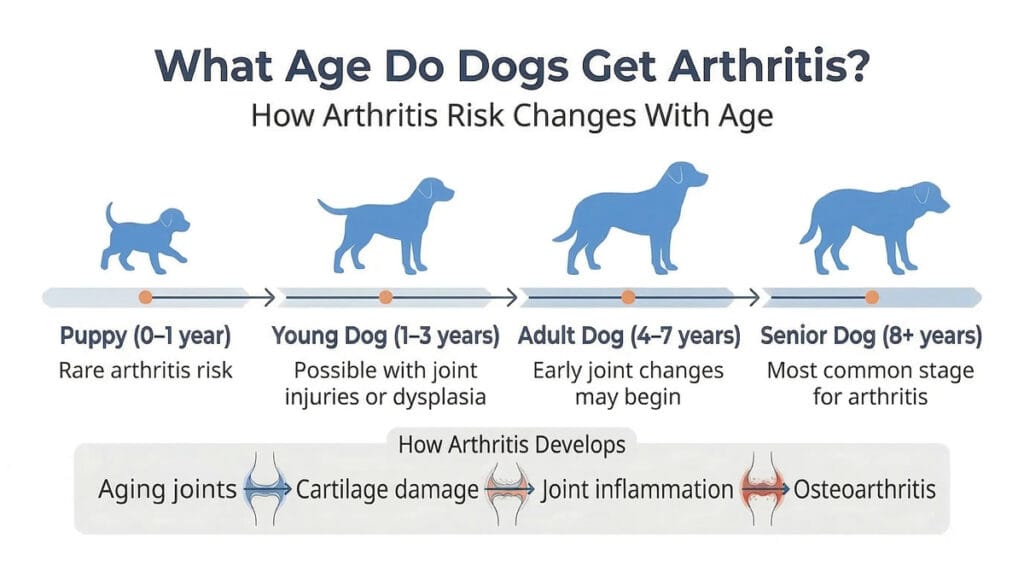
Arthritis Risk by Dog Age
| Dog Life Stage | Arthritis Risk |
| Puppies | Rare but possible |
| Young dogs | Possible if joint disease or injury exists |
| Adult dogs | Risk gradually increases |
| Senior dogs | Most common stage |
In many dogs, arthritis develops through a gradual biological process:
aging joints → cartilage damage → joint inflammation → arthritis
This process explains why arthritis becomes more common as dogs grow older.
When Do Dogs Usually Start Developing Arthritis?
Many dog owners wonder at what age do dogs get arthritis. In many cases, arthritis develops later in life as the dog’s joints slowly change over time.
Veterinary research suggests that many diagnosed cases appear in dogs between 8 and 13 years of age. This is why arthritis in dogs is often linked with aging and senior dogs.
However, the condition usually begins long before symptoms become obvious, which is why it is important for owners to recognize early joint changes. Small changes can start inside the joint years earlier, while the dog may still appear active and healthy. In many cases, these changes appear as early joint discomfort.
Inside the joint, cartilage slowly becomes thinner and less protective. The joint may also develop mild inflammation. At first, these changes may not affect how the dog walks or moves.
Over time, the damage can gradually increase. As a result, movement may become stiffer or less comfortable.
This process often follows a pattern like this:
joint degeneration begins early → symptoms appear later
Because arthritis develops slowly, many dogs are only diagnosed after noticeable mobility changes appear. Early joint changes may remain hidden for years before pet owners see clear signs.
Why Arthritis Risk Increases With Age
Arthritis becomes more common as dogs grow older because their joints experience many years of movement and pressure. Over time, these repeated stresses can slowly change the structures inside the joint.
Healthy joints rely on smooth cartilage, joint fluid, and supporting tissues to move comfortably. As dogs age, these protective systems may gradually weaken. This makes the joints more vulnerable to damage.
Because of this process, arthritis in dogs often develops slowly over many years rather than appearing suddenly.
Cartilage Slowly Wears Down
Cartilage is a smooth, flexible tissue that covers the ends of bones inside a joint. It acts like a cushion and allows bones to glide smoothly when the dog walks, runs, or climbs stairs.
However, every movement places small amounts of pressure on the joint. Over many years, this repeated stress can create tiny areas of wear in the cartilage.
At first, the damage may be very small. But over time, the protective surface may become thinner and less effective.
This process often follows a simple chain:
movement stress → cartilage breakdown → inflammation
As cartilage begins to weaken, the joint becomes more sensitive to irritation.
Joint Inflammation Begins
When cartilage becomes damaged, the body responds with inflammation. This is part of the immune system’s natural
reaction to joint injury.
Inside the joint, a thin lining called the synovial membrane produces fluid that helps lubricate movement. When inflammation develops, this lining may become irritated.
As a result, the joint can experience:
- synovial inflammation
- increased fluid inside the joint
- swelling of surrounding soft tissues
These changes can make the joint feel stiff and less flexible.
Degenerative Joint Disease Develops
Over time, continuing joint damage can lead to degenerative joint disease (DJD), which is another term used in veterinary medicine to describe osteoarthritis.
In this stage, cartilage may become very thin or partially lost. Without enough cushioning, the bones inside the joint may begin rubbing against each other.
This process often develops through the following pattern:
cartilage loss → bone friction → stiffness → chronic arthritis
As these changes progress, the joint may lose flexibility and movement can become more difficult for the dog. These changes often develop gradually over time.
Can Young Dogs Get Arthritis?
Many people associate arthritis with older dogs. However, arthritis in dogs is not limited to senior pets. Some younger dogs can also develop joint degeneration.
Research and veterinary observations show that early joint changes can appear in dogs well before old age. In some cases, structural joint problems or injuries place abnormal stress on the joint. These issues are often related to underlying joint problems. Over time, this stress can damage cartilage and lead to arthritis.
Because of this, arthritis may develop earlier in life in certain dogs, especially those with joint disease or previous injuries.
Joint Injuries
Joint injuries are one reason a younger dog may develop arthritis. Damage to the joint can change how the bones move against each other.
Common injuries that may affect joint health include:
- ligament tears
- bone fractures near the joint
- direct joint trauma
When a joint is injured, its normal stability can be affected. The joint may no longer move evenly, which increases pressure on the cartilage.
This process may develop through a chain like this:
injury → joint instability → cartilage damage → arthritis
Over time, repeated stress on the damaged joint can lead to degenerative joint changes.
Developmental Joint Disorders
Some dogs are born with or develop structural joint problems as they grow. These conditions are called developmental joint disorders.
Common examples include:
- hip dysplasia
- elbow dysplasia
- abnormal joint growth
In these conditions, the joint does not form perfectly during development. As a result, the bones may not fit together smoothly.
When the joint moves unevenly, it creates abnormal pressure on cartilage and surrounding tissues. Over time, this can lead to cartilage wear and arthritis.
For example, hip dysplasia is a well-known cause of early arthritis in dogs. The hip joint becomes loose or unstable, which increases friction inside the joint. As the dog grows and moves, the cartilage may gradually break down.
Because of these joint abnormalities, some dogs may develop arthritis earlier than expected, even during young adulthood.
Can Puppies Develop Arthritis?
Arthritis is usually associated with older dogs. However, in rare cases, puppies can also develop arthritis. This typically happens when a young dog has joint problems that affect how the joint forms or functions.
In puppies, arthritis is often linked to underlying structural issues rather than age-related wear. These problems may place unusual stress on the joint while the dog is still growing.
Several conditions can increase the risk of arthritis in very young dogs.
Congenital Joint Conditions
Some puppies are born with joint abnormalities. These conditions are called congenital joint diseases because they are present from birth.
Examples include joint malformations or developmental problems affecting the hip, elbow, or other joints. When a joint does not form correctly, the bones may not fit together smoothly.
As a result, the joint may move unevenly during walking or running.
Severe Joint Injuries
In rare situations, puppies can develop arthritis after a serious joint injury. Trauma such as a fracture near the joint or damage to joint structures may affect how the joint heals.
If the joint does not recover perfectly, the surfaces inside the joint may no longer align properly. Over time, this can increase pressure on the cartilage.
Abnormal Cartilage Development
Cartilage plays a key role in protecting the ends of bones. In some young dogs, cartilage may develop abnormally during growth.
When cartilage is not strong or smooth enough, the joint may become more vulnerable to damage during normal movement.
This process can occur through a chain such as:
abnormal joint structure → uneven pressure → early joint wear
When this type of stress continues as the puppy grows, it may lead to early arthritis changes inside the joint. Although arthritis in puppies is uncommon, these situations show how joint health during early development can influence long-term mobility.
Arthritis in Adult Dogs
Arthritis in dogs often begins quietly during the adult years. At this stage, many dogs still appear active and healthy. However, small changes may already be developing inside the joints.
Because these changes are gradual, the early stages of arthritis can be difficult for pet owners to notice. The joint may slowly lose some of its protective structures while the dog continues normal daily activity.
Over time, these small changes can progress and eventually lead to more noticeable arthritis symptoms.
Early Cartilage Damage
Inside a healthy joint, cartilage provides a smooth surface that allows bones to move comfortably. It also helps distribute pressure when the dog walks, runs, or climbs stairs.
During the early development of arthritis, the cartilage may begin to experience microscopic damage. These tiny changes are often too small to cause immediate symptoms.
At the same time, the joint fluid that normally lubricates the joint may become less effective. This lubrication helps the bones glide smoothly during movement.
When lubrication decreases and cartilage begins to weaken, the joint may become more vulnerable to stress.
First Subtle Mobility Changes
As these internal changes develop, some dogs may begin showing very mild movement differences. These signs are often easy to overlook because they appear slowly.
Possible early mobility changes may include:
- stiffness after lying down or resting
- slightly slower walking
- mild limping during activity
In many dogs, these signs appear gradually rather than suddenly. Because of this slow progression, arthritis in adult dogs may develop for a long time before the condition becomes clearly noticeable. For a closer look at these early warning signs, see early signs of arthritis in dogs.
Arthritis in Senior Dogs
Arthritis is most commonly seen in senior dogs. As dogs grow older, their joints experience many years of movement and wear. Over time, these changes can gradually affect the structures that keep joints working smoothly.
Veterinary research shows that the prevalence of arthritis increases significantly with age. This is why many cases are diagnosed in older dogs.
Several biological changes occur inside aging joints over time.
First, the cartilage that cushions the ends of the bones may become thinner. Cartilage normally protects the joint by absorbing pressure during movement. When it becomes thinner, the joint may lose some of its natural cushioning.
Second, many older dogs experience muscle loss around the joints. Muscles help support and stabilize the joint. When muscle strength decreases, the joint becomes less stable during movement.
Third, the joint may lose some of its structural stability. Ligaments and soft tissues surrounding the joint may weaken with age. As a result, the joint may not move as smoothly as it once did.
These combined changes increase the likelihood of arthritis in senior dogs.
Common Symptoms in Senior Dog Arthritis
As arthritis progresses in older dogs, mobility changes may become easier to notice. The dog may begin showing signs related to joint stiffness and reduced flexibility.
Common symptoms may include:
- difficulty standing after resting
- slower walking or shorter steps
- reluctance to climb stairs
- reduced interest in exercise or play
These signs often appear gradually. Many dogs adapt to the discomfort and continue daily activities, which is why arthritis in senior dogs may sometimes go unnoticed during the early stages.
Which Dogs Develop Arthritis Earlier?
Not all dogs develop arthritis at the same age. Some dogs may experience joint problems earlier because of specific risk factors. These factors can influence how much stress the joints experience during a dog’s life.
Certain physical traits, lifestyle factors, and inherited joint conditions can increase the likelihood of earlier arthritis development. When these factors affect the joint, they may accelerate cartilage damage and joint inflammation.
Large Dog Breeds
Large and giant dog breeds often carry more body weight on their joints. Because their joints support greater pressure during movement, they may experience joint stress earlier in life.
Examples of breeds that may develop arthritis earlier include:
- Labrador Retrievers
- German Shepherds
- Golden Retrievers
These dogs tend to have weight-bearing joints that handle more mechanical load during activities such as running, jumping, and climbing stairs. Over time, this increased pressure can contribute to earlier cartilage wear.
Body Weight
Body weight also plays an important role in joint health. When a dog carries excess weight, the joints must support additional pressure during movement.
This process can affect joint structures through a pattern such as:
excess weight → increased joint pressure → faster cartilage damage
As a result, overweight dogs may experience joint wear more quickly than dogs that maintain a healthy weight.
Genetics and Joint Structure
Genetics can also influence when arthritis develops. Some dogs inherit joint conditions that affect how their joints form or function.
Examples of hereditary joint disorders include:
- hip dysplasia
- elbow dysplasia
- abnormal joint structure
When these conditions affect the joint, the bones may not align perfectly during movement. This uneven pressure can gradually damage cartilage and increase the risk of early arthritis.
Because of these factors, some dogs may develop arthritis earlier than others even if they are still relatively young.
What Does Arthritis Look Like in Dogs?
Arthritis in dogs often affects how a dog moves and behaves during everyday activities. Because the condition develops gradually, the first changes may be subtle.
Many pet owners begin to notice small differences in mobility before they realize arthritis may be affecting the joints. These changes usually appear as movement difficulties or changes in daily behavior.
Understanding what arthritis looks like in dogs can help pet owners recognize early warning signs.
Movement Changes
One of the most noticeable effects of dog arthritis involves movement. As joints become stiff or inflamed, a dog may begin moving differently.
Common movement changes may include:
- a stiff gait while walking
- limping during activity
- slower rising after resting
Some owners first notice limping without an obvious injury, which can be an early sign of joint problems. These mobility changes occur because the joints may not move as smoothly as they once did. The dog may also try to shift weight away from painful joints.
In some dogs, arthritis in the back legs or hips may make standing up more difficult.
Behavior Changes
Arthritis can also influence a dog’s behavior and activity level. Because movement may become uncomfortable, the dog may begin avoiding activities that place stress on the joints.
Some dogs may show changes such as:
- less interest in exercise or play
- avoiding stairs or jumping
- reduced daily activity
These behavior changes often develop gradually. Over time, an arthritic dog may appear less active or less eager to move compared to earlier stages of life.
How Veterinarians Identify Arthritis in Dogs
Veterinarians use several methods to determine whether a dog may have arthritis. Because arthritis in dogs develops gradually, diagnosis usually involves observing the dog’s movement and examining the joints.
The goal is to understand how the joint structures are functioning and whether degenerative joint disease may be present. Veterinarians often combine a physical examination with diagnostic imaging to evaluate joint health.
Physical Examination
The first step usually involves a physical examination. During this process, the veterinarian carefully evaluates the dog’s joints and overall mobility.
The examination may include checking:
- joint flexibility during movement
- swelling around the joint
- pain response when the joint is gently manipulated
The veterinarian may also observe how the dog walks, stands, and rises from a resting position. These observations help identify mobility changes that may be linked to arthritis.
Diagnostic Imaging
In many cases, veterinarians use diagnostic imaging to examine the joint more closely. X-rays are commonly used to evaluate structural changes inside the joint.
X-rays can help reveal several signs associated with arthritis, including:
- narrowing of the joint space
- bone changes around the joint
- loss or thinning of cartilage
These findings help veterinarians understand how much joint degeneration may be present. Combining physical examination results with imaging allows veterinary professionals to evaluate the dog’s joint condition more accurately.
Frequently Asked Questions
What age do most dogs get arthritis?
Many dogs develop arthritis during middle age or senior years. In many cases, signs begin appearing between 6 and 10 years of age, although the exact timing varies. Large breeds may develop joint problems earlier because their joints carry more weight over time.
Can young dogs get arthritis?
Yes. Young dogs can develop arthritis, although it is less common than in older dogs. Early arthritis may occur when a dog has joint injuries or developmental joint conditions such as hip dysplasia.
Do all dogs eventually develop arthritis?
No. Not all dogs develop arthritis, but the condition becomes more common as dogs age. Factors such as genetics, body weight, breed, injuries, and joint health can influence risk.
Does cold weather worsen dog arthritis?
Cold or damp weather may make arthritis symptoms feel more noticeable in some dogs. Changes in temperature can sometimes increase joint stiffness or reduce flexibility.
Which dog breeds are most prone to arthritis?
Some breeds have a higher risk of arthritis because of body size or inherited joint conditions. Larger breeds such as Labrador Retrievers, German Shepherds, and Golden Retrievers are often at higher risk, although arthritis can affect dogs of any breed.
How common is arthritis in dogs?
Arthritis is one of the most common joint diseases affecting dogs. It becomes more common with age, and many dogs may have early joint changes before obvious symptoms appear.
Can arthritis appear suddenly in dogs?
Arthritis itself usually develops slowly over time. However, symptoms may appear suddenly if joint inflammation increases or if the dog experiences a flare-up.
In some cases, sudden limping may also be caused by injuries or other joint problems. A veterinarian can evaluate the dog to determine the cause.
Sources & References
The information presented in this article is based on veterinary educational resources and peer-reviewed research related to canine osteoarthritis, degenerative joint disease, and joint health in dogs. These sources help explain how arthritis develops, why it becomes more common with age, and how joint changes affect a dog’s mobility.
Key references include studies and materials from veterinary journals, veterinary universities, and clinical research organizations.
Examples of sources include:
VetCompass Programme — Canine Osteoarthritis Research
Large epidemiological studies examining the prevalence and risk factors of osteoarthritis in dogs.
Peer-Reviewed Veterinary Research (PubMed Central / PMC)
Scientific studies exploring joint degeneration, osteoarthritis development, and mobility disorders in dogs.
Veterinary Epidemiology Studies
Research analyzing arthritis risk factors such as age, breed, body weight, and joint disease.
University Veterinary Research and Educational Resources
Veterinary institutions that publish clinical guidance on degenerative joint disease and canine joint health.
Examples of research referenced in this article include:
- PMC Research on Canine Osteoarthritis Epidemiology
https://pmc.ncbi.nlm.nih.gov/articles/PMC8355611/ - Veterinary Study on Osteoarthritis Risk Factors in Dogs
https://pmc.ncbi.nlm.nih.gov/articles/PMC5884849/ - Clinical Research on Degenerative Joint Disease in Dogs
https://pmc.ncbi.nlm.nih.gov/articles/PMC5532765/ - Research on Osteoarthritis Pathophysiology and Joint Degeneration
https://pmc.ncbi.nlm.nih.gov/articles/PMC7233575/
Additional educational resources used for general veterinary explanations include:
- BondVet Veterinary Education — Arthritis Symptoms in Dogs
https://bondvet.com/blog/dog-arthritis-symptoms - University of Pennsylvania Veterinary Research News
https://penntoday.upenn.edu/news/scientists-identify-key-risk-factor-canine-arthritis-method-may-eventually-give-humans-similar-
These sources provide scientific insight into canine arthritis development, joint degeneration, risk factors, and mobility changes across different life stages of dogs.
What to Do Next
Understanding what age dogs get arthritis helps pet owners notice small mobility changes earlier. Arthritis often develops slowly, and the first signs may appear as subtle stiffness, slower movement, or reduced activity.
Recognizing these early changes allows dog owners to better understand how joint health may be affecting their pet. For a broader look at limping causes generally, see why is my dog limping. Observing gradual changes in walking, rising, or daily activity can help identify possible joint problems as dogs age.
For readers who want a deeper explanation of dog joint pain, arthritis, joint pain, and mobility changes, the complete Dog Joint Pain Relief Guide on this site provides a broader educational overview of canine joint health.
This guide explains how arthritis develops, how joint problems affect mobility, and what signs pet owners may notice as their dog grows older.
Update Note
This article was updated in April 2026 to improve clarity and accuracy based on current veterinary research on canine osteoarthritis and joint health.
The information is based on veterinary educational sources and peer-reviewed research on arthritis in dogs and degenerative joint disease.
This article may be updated as new veterinary research becomes available.
If a dog shows ongoing stiffness, limping, or changes in mobility, a veterinarian should evaluate the condition.