

Understanding Dog Joint Pain
This dog joint pain relief guide explains how joint pain affects a dog’s comfort, mobility, and daily life. It also explains why joint pain often develops gradually due to aging, wear, injury, or underlying joint conditions.
It covers common causes, early warning signs, and supportive care options that may help improve movement and overall quality of life.
This guide is designed to help dog owners understand mobility changes clearly and responsibly, while emphasizing that diagnosis and treatment decisions should always involve a qualified veterinarian. This guide also explains common joint conditions such as arthritis, hip dysplasia, and ACL-related injuries.
Use the table of contents below to jump to any section:
For a complete list of related resources, explore more articles on dog joint pain, where we regularly publish detailed guides on arthritis symptoms, mobility issues, supportive care, and prevention strategies.
Table of Contents
This dog joint pain relief guide is meant as an educational overview to help owners understand mobility changes and joint health in dogs.
What Joint Pain Means for Dogs
Joint pain in dogs refers to discomfort that affects how smoothly a dog can move, stand, or rest. It often shows up as small, gradual changes rather than sudden problems. Dogs may move more slowly, hesitate before jumping, or appear stiff after resting. These signs can vary day to day, which makes them easy to miss.
At a basic level, joints allow bones to move together with ease. When joints become irritated, inflamed, or worn over time, movement may feel uncomfortable. This discomfort can subtly change how a dog uses its body, even when the dog still seems alert and active. Joint problems like arthritis often worsen gradually. Understanding what age dogs get arthritis and the stages of arthritis in dogs can help owners see how joint damage progresses over time.
Why Early Understanding Matters
Early understanding helps dog owners notice patterns instead of isolated moments. Early differences in movement patterns can help reveal joint problems before they become obvious. This awareness supports calm observation rather than rushed assumptions.
Recognizing joint-related changes early also helps owners ask clearer questions and stay informed as situations evolve. The goal is not to diagnose or predict outcomes, but to build understanding that supports thoughtful attention and responsible next steps when needed.
How Dog Joints Work
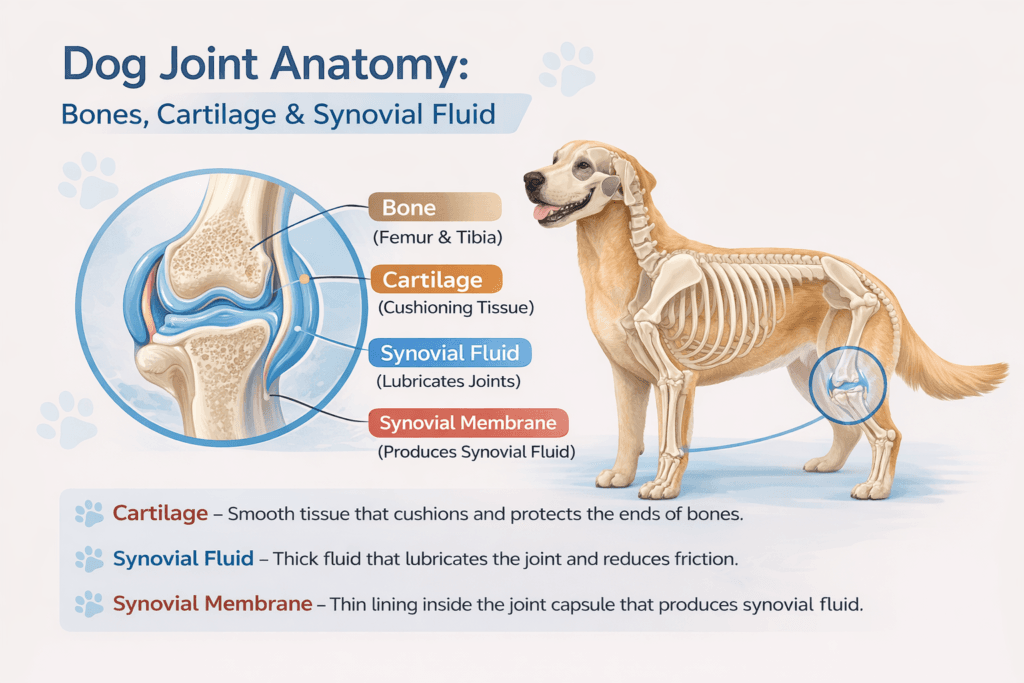
Basic Joint Anatomy (Bones, Cartilage, Synovial Fluid)
Dog joints are where two or more bones meet to allow movement. Each joint is shaped so the bones fit together in a way that supports motion while carrying body weight. The ends of these bones are covered with cartilage, a smooth tissue that helps reduce friction during movement.
Inside the joint is synovial fluid, a thick liquid that helps lubricate the joint. This fluid supports smooth motion and helps cushion normal impact from daily activities like walking, sitting, and standing. Together, bones, cartilage, and synovial fluid allow joints to move with control and stability.
What Happens When Joints Wear Down or Become Inflamed
Over time, normal use, body weight, and activity can place stress on joints. When cartilage becomes thinner or less smooth, movement may no longer feel as easy. Joints may lose some of their natural cushioning, which can affect how comfortably a dog moves.
Inflammation can also develop within a joint, changing how it responds to movement and pressure. When this happens, dogs may adjust how they walk or shift weight to avoid discomfort. These changes often happen gradually, making it important to understand how joint structure and wear influence everyday movement.
Early Signs of Dog Joint Pain and Mobility Changes
Behavioral Signs Dog Owners Notice First
Reluctance to Move or Jump
Dogs with early joint discomfort may hesitate before jumping onto furniture, climbing stairs, or getting into a car. Activities that were once easy can start to feel less inviting, even if the dog still seems interested.
If you want a detailed breakdown with real-life examples, read our guide on the early signs of arthritis in dogs.
Stiffness After Rest
Stiffness is often most noticeable after sleeping or long periods of rest. A dog may take a few moments to loosen up before walking normally, especially in the morning or after naps.
Some dogs may also show limping that comes and goes or appears after rest. Learn more in our guides on dog limping on and off and dog limping after sleeping.
Changes in Posture or Activity
Some dogs adjust how they sit, stand, or lie down to stay comfortable. Others may reduce playtime, take shorter walks, or move more cautiously during daily routines.
Physical Signs Linked to Joint Discomfort
Limping or Uneven Movement
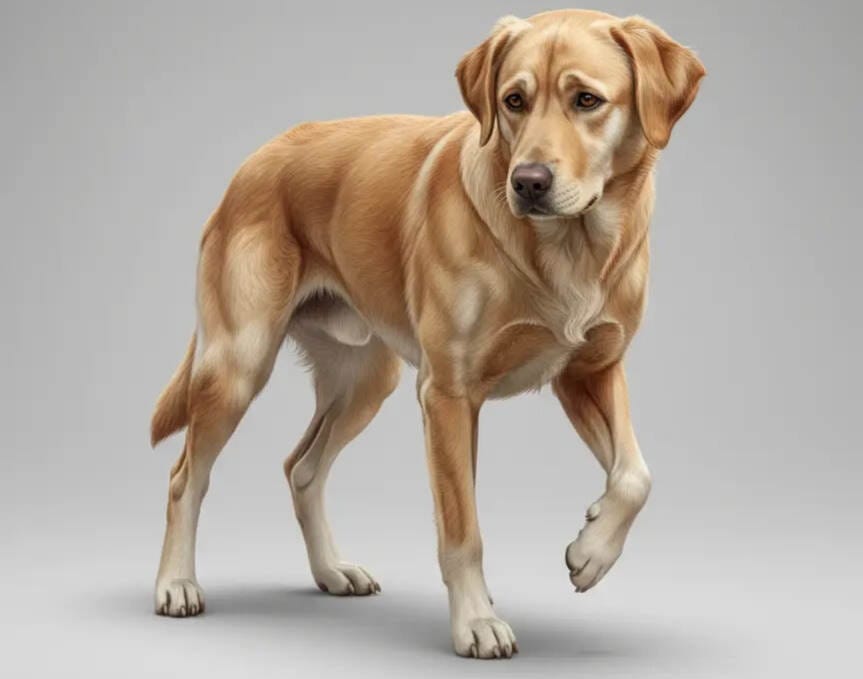
why your dog may be limping or favoring one leg can appear on and off, especially after activity. Owners sometimes notice this change before realizing a joint problem may be developing. The movement may look uneven rather than consistently painful, which can make it harder to recognize at first. In some cases, this may progress to a dog not putting weight on back leg, which can signal a more serious underlying issue.
Difficulty Rising or Lying Down
Dogs may struggle when standing up from a resting position or lowering themselves to the ground. These moments often reveal joint discomfort before more obvious signs appear. If the difficulty is combined with limping in the front leg, see our detailed guide on why a dog may limp on the front leg.
Joint pain can develop for different reasons, ranging from gradual wear to specific injuries.
What Causes Joint Pain in Dogs
Several factors can contribute to joint pain in dogs. For a deeper explanation of the most common underlying reasons, see our guide on causes of arthritis in dogs.
Normal Aging and Wear Over Time
As dogs age, their joints go through regular wear from daily movement and activity. Over time, cartilage can become thinner, and joints may not move as smoothly as they once did. These gradual changes are a common reason older dogs may show signs of joint discomfort.
Inflammation and Joint Degeneration
Inflammation can develop within joints due to ongoing stress or reduced joint cushioning. When inflammation persists, it may contribute to gradual joint degeneration. This process can affect how comfortably a dog moves and how joints respond to everyday use.
Previous Injuries and Mechanical Stress
Past injuries, such as strains or ligament damage, can place extra stress on joints long after the initial issue has passed. Repetitive impact, uneven movement, or high physical demands may also increase mechanical stress on certain joints over time.
Genetic and Breed-Related Factors
Some dogs are more likely to experience joint issues due to inherited traits or body structure. Breed-related factors, joint alignment, and growth patterns can influence how joints develop and handle long-term movement demands.
Common Joint Conditions in Dogs
Osteoarthritis and Degenerative Joint Disease
Osteoarthritis in dogs is a common joint condition linked to gradual wear within the joint. Over time, cartilage can lose its ability to cushion movement, which may affect comfort and mobility. Degenerative joint disease is a broader term often used to describe these long-term structural changes in joints.
Hip Dysplasia and Joint Instability
Hip dysplasia in dogs involves abnormal development or fit of the hip joint. When the joint does not align smoothly, movement can place extra stress on surrounding structures. This instability may influence how a dog sits, stands, or moves, especially during weight-bearing activity.
ACL and Ligament-Related Injuries
Ligaments help stabilize joints during movement. Injuries to ligaments, such as those affecting the knee, can disrupt normal joint mechanics. Even after the initial injury, altered movement patterns may place additional strain on nearby joints.
Polyarthritis and Immune-Related Joint Conditions
Polyarthritis in dogs refers to inflammation affecting multiple joints at the same time. In some cases, immune system activity plays a role in joint inflammation. These conditions can influence movement and comfort across more than one area of the body.
How Joint Pain Progresses Over Time
Acute vs Chronic Joint Pain
Joint pain in dogs can develop in different ways. Acute joint pain often appears suddenly, sometimes linked to strain or injury, and may change quickly over days or weeks. Chronic joint pain develops more gradually and tends to persist over time, often becoming part of a dog’s daily movement patterns.
Understanding this difference helps dog owners tell if their dog has joint pain and recognize whether changes seem temporary or ongoing. Gradual patterns are easier to miss, which is why consistent observation matters.
Sudden limping can appear without warning. Learn more in our guide on why is my dog suddenly limping.
Cartilage Breakdown and Inflammation
As joints experience ongoing stress, cartilage may lose its smooth surface and cushioning ability. When this happens, joints may not move as efficiently as before. Inflammation can develop within the joint, further affecting comfort and movement.
These changes tend to build step by step, becoming easier to notice over time. Dogs may adjust their movement without obvious signs at first, making joint changes appear subtle rather than sudden.
Compensatory Movement and Muscle Changes
When one joint feels uncomfortable, dogs often shift weight to other parts of the body. This compensatory movement can place extra strain on surrounding joints and muscles. Over time, these adjustments may influence posture, balance, and overall mobility.
Muscle use can also change as dogs rely more on certain areas for support. These patterns highlight how joint discomfort in one area can affect movement across the body.
How Joint Problems Affect Daily Life
Mobility, Comfort, and Activity Level
Joint problems can influence how easily a dog moves through daily routines. Activities such as walking, climbing stairs, or getting comfortable on the floor may take more effort. Some dogs adjust their pace or limit movement to stay comfortable, which can change their usual activity level over time.
Impact on Behavior and Mood
When movement feels uncomfortable, behavior can shift in small but noticeable ways. Dogs may seem less playful, more cautious, or prefer resting in familiar spots. These changes often reflect physical comfort rather than temperament, highlighting how joint discomfort can influence daily behavior.
Quality-of-Life Considerations
Joint-related changes can affect how a dog experiences everyday life, from movement to rest. Understanding these effects helps dog owners view mobility changes in context and focus on overall comfort and well-being, rather than isolated signs.
How Joint Issues Are Evaluated
Veterinary Physical Examination
When joint or mobility changes are assessed, a veterinary physical examination is often the first step. This typically involves observing how a dog stands, walks, and responds to gentle movement of the limbs. These observations help identify areas of discomfort, stiffness, or limited range of motion.
Gait and Mobility Assessment
Gait and mobility assessments focus on how a dog moves during normal activity. Subtle changes, such as uneven steps or shifts in weight, can provide useful information about joint function. These assessments help place movement changes into context rather than relying on a single moment or behavior.
Imaging and Diagnostic Tools (High-Level)
In some cases, imaging tools such as X-rays may be used to look at joint structure. These tools help provide a clearer view of bones and joint alignment at a high level. Diagnostic approaches are used to support understanding of joint changes and are guided by veterinary judgment based on the dog’s overall condition.
Risk Factors That Influence Joint Health
Body Weight and Body Condition
Body weight plays a major role in joint health. Extra weight increases pressure on joints during everyday movement, which can place added strain on bones, cartilage, and supporting tissues. Maintaining a healthy body condition helps joints handle normal activity more comfortably over time.
Activity Type and Surface Impact
The type of activity a dog does, and the surfaces they move on, can influence joint stress. Repetitive high-impact activities or hard, slippery surfaces may increase strain on joints. In contrast, balanced movement on stable surfaces supports more controlled joint use.
Growth Patterns in Puppies
Joint health can also be influenced during growth, especially in puppies. Rapid growth, uneven development, or excess strain during early life may affect how joints form and function. Awareness during this stage helps owners observe movement changes as dogs mature.
Environmental Factors
A dog’s environment can shape daily joint stress. Flooring, access to stairs, sleeping areas, and weather conditions may all affect comfort and movement. Small environmental factors, when experienced every day, can have a meaningful impact on joint use over time.
Can Joint Problems In Dogs Be Prevented or Slowed?
Early Support and Awareness
While not all joint problems can be avoided, early awareness can play an important role in how joint changes are handled over time. Noticing small shifts in movement, posture, or comfort allows dog owners to stay attentive as patterns develop. This kind of observation supports informed awareness rather than reactive decisions.
Early support is about understanding what is normal for an individual dog and recognizing when movement or behavior begins to change. This perspective helps owners stay engaged and thoughtful as joint-related concerns evolve.
Weight, Activity Balance, and Environment
Joint health is influenced by how daily movement, body weight, and surroundings interact. Balanced activity that matches a dog’s size, age, and energy level helps avoid unnecessary strain. An environment that supports safe movement, such as stable footing and accessible resting areas, also contributes to joint comfort.
These factors work together over time. Small, consistent choices around movement and environment can help reduce ongoing stress on joints and support more comfortable daily activity without relying on quick fixes or assumptions.
Supportive Care and Daily Management
Weight Management and Balanced Nutrition
Body weight directly affects how much stress joints handle during everyday movement. Keeping weight within a healthy range supports joint comfort and reduces unnecessary strain. Balanced nutrition helps maintain steady energy levels and supports overall body function, which can influence how comfortably a dog moves through daily routines.
Low-Impact Activity and Movement Balance
Regular movement is important, but the type and intensity of activity matter. Low-impact activities allow dogs to stay active without placing excessive stress on joints. A balanced approach to movement helps support mobility while avoiding overuse or prolonged strain.
If your dog starts limping after exercise, see our guide on dog limping after running.
Environmental Adjustments at Home
The home environment can either support or challenge joint comfort. Simple adjustments can make everyday movement easier and more controlled. Reducing slippery surfaces and improving access to commonly used areas helps dogs move with more confidence.
Flooring, Ramps, and Resting Areas
Stable flooring reduces the risk of slipping, which can strain joints during movement. Ramps can support safer transitions on stairs or elevated surfaces, while well-placed resting areas give dogs comfortable spaces to relax. These adjustments help create a more joint-friendly living space without disrupting daily life.
Nutrition Considerations for Joint Health
Diet Quality and Consistency
Diet quality plays a role in overall joint health by supporting normal body function and stable energy levels. Consistent feeding routines and balanced meals help maintain body weight, which influences how much stress joints experience during daily movement. Sudden changes in diet or inconsistent feeding can affect digestion, weight, and activity patterns, all of which may indirectly impact joint comfort.
Joint-Supportive Nutrients (High-Level, Non-Product)
Certain nutrients are commonly discussed in relation to joint structure and movement. These include nutrients involved in supporting cartilage, connective tissue, and normal inflammatory balance. At a high level, these nutrients are part of broader nutritional patterns rather than quick solutions. Their role is to support the body’s normal processes over time, not to act as standalone fixes or treatments.
Therapy and Support Options (High-Level Overview)
Physical Rehabilitation and Mobility Support
Some dogs may benefit from structured movement support aimed at maintaining mobility and comfort. Physical rehabilitation focuses on guided movement and controlled activity to support joint function and overall balance. These approaches are typically tailored to a dog’s individual needs and are used to support movement patterns rather than replace professional care.
Exercise Modification and Range-of-Motion Work
Adjusting how and how much a dog moves can influence joint comfort over time. Exercise modification focuses on maintaining activity while reducing unnecessary strain. Gentle range-of-motion work supports joint flexibility and helps dogs move through their natural patterns without forcing movement beyond comfort.
Alternative and Adjunct Support Approaches
In some cases, additional supportive approaches are discussed alongside conventional care. These may focus on comfort, circulation, or relaxation rather than direct joint intervention. Such approaches are generally considered complementary and are approached cautiously, with attention to a dog’s overall well-being and response.
Medication Categories Used in Joint Pain Management
Anti-Inflammatory Medications (Category-Level)
Anti-inflammatory medications are commonly discussed in relation to joint discomfort because inflammation can affect how joints move and respond to stress. At a high level, these medications are intended to help manage inflammatory processes within the body. They are discussed as broad categories rather than specific drugs, as individual use depends on professional evaluation.
Pain Management Approaches
Pain management approaches may involve different strategies aimed at supporting comfort and mobility. These approaches are considered as part of a wider picture that includes activity level, body condition, and overall health. Pain management is not a one-size-fits-all concept and varies based on individual circumstances.
Emphasis on Veterinary Oversight
Decisions involving medications require veterinary guidance. A veterinarian considers a dog’s health history, current condition, and other factors before determining whether medication is appropriate. This guide presents information for awareness only and emphasizes that professional oversight is essential when medication is part of joint care discussions.
Lifestyle Adjustments That Support Joint Comfort
Routine Changes and Pacing
Daily routines can influence how comfortably a dog moves through the day. Simple adjustments, such as allowing more time for transitions or breaking activities into shorter sessions, can reduce unnecessary strain on joints. Consistent pacing helps dogs stay engaged without pushing beyond comfortable limits.
Rest vs. Movement Balance
Both rest and movement play a role in joint comfort. Too much inactivity can lead to stiffness, while too much activity can increase strain. Finding a balance that fits a dog’s age, size, and activity level supports smoother movement and more predictable daily comfort.
Monitoring Changes Over Time
Joint-related changes often happen gradually. Paying attention to small shifts in movement, energy, or posture over time helps dog owners understand patterns rather than isolated moments. Ongoing observation supports informed awareness and thoughtful responses as needs evolve.
When Joint or Mobility Changes Need Immediate Veterinary Attention
Some joint or mobility changes should not be observed over time and need prompt veterinary evaluation. Sudden inability to bear weight, intense or worsening limping, visible swelling, signs of significant pain, or rapid changes in movement can indicate an underlying issue that needs professional assessment. Sharp declines in mobility, especially after injury or without a clear cause, are also important signals to act quickly. Early veterinary input in these situations helps clarify what is happening and supports safe, appropriate next steps.
Key Differences Between Joint Conditions in Dogs
Different joint conditions can affect dogs in different ways. The table below outlines common patterns to help with general understanding.
| Condition | Common Signs | Typical Cause | Notes / What Owners Notice |
| Osteoarthritis (OA) | Stiffness, slow walking, difficulty rising | Age-related wear, cartilage breakdown | Worse after rest, improves after warming up |
| Hip Dysplasia | Bunny hopping, trouble standing, reduced activity | Genetic + joint instability | Often starts young, worsens with age |
| ACL / CCL Injury | Sudden limping, avoids weight on leg | Ligament tear, twisting injury | May happen suddenly during running/jumping |
| Luxating Patella | Skipping gait, sudden hop, leg lifts briefly | Kneecap instability | Common in small breeds |
| Polyarthritis | Stiffness in multiple joints, fever sometimes | Immune-related inflammation | Can affect many joints at once |
Frequently Asked Questions
How can dog owners tell if joint pain is serious?
Joint pain may require closer attention when signs are persistent, worsening, or clearly interfering with daily movement. Ongoing limping, difficulty rising, reluctance to climb stairs, visible discomfort during normal activity, or sudden behavioral changes can signal more than mild stiffness. Patterns over time matter more than a single episode. If mobility changes last more than a few days or seem to progress, a veterinary evaluation is recommended.
At what age do joint problems commonly begin?
Joint issues can develop at different life stages. While arthritis is more common in senior dogs, some breeds may experience joint concerns earlier due to genetics, rapid growth, injury, or structural conditions like hip or elbow dysplasia. There is no single “correct” age when joint problems begin, but larger breeds and dogs with prior joint stress may show signs sooner.
What is the difference between arthritis and hip dysplasia?
Arthritis refers to long-term joint inflammation and cartilage wear that develops over time. Hip dysplasia is a structural condition where the hip joint forms abnormally, leading to instability and increased wear. While hip dysplasia can lead to arthritis later in life, the two conditions are not the same. Both can affect mobility, but their underlying causes differ.
When should mobility changes be checked by a veterinarian?
Mobility changes should be evaluated when they are sudden, persistent, worsening, or interfering with daily activities such as walking, rising, or resting comfortably. Early evaluation helps determine whether symptoms are related to arthritis, injury, infection, or another orthopedic condition. Prompt assessment is especially important if your dog refuses to bear weight or shows signs of pain.
Can joint pain appear suddenly in dogs?
Yes, joint discomfort can sometimes appear suddenly, especially after injury, strain, or infection. In other cases, joint degeneration develops gradually and becomes noticeable only over time. Sudden limping, swelling, or refusal to move should always be taken seriously and evaluated promptly.
What are the early signs of arthritis in dogs?
Early signs often include stiffness after rest, limping that comes and goes, slower walking, difficulty rising, reluctance to jump, and reduced interest in activity. These changes may appear gradually and are sometimes mistaken for normal aging. Monitoring subtle mobility shifts can help owners recognize joint concerns earlier.
Can a dog limp without pain?
Yes, a dog can limp without obvious pain. Mild discomfort, stiffness, early arthritis, or minor injuries can affect movement even if the dog seems comfortable. Persistent or worsening limping should be checked by a veterinarian.
For a detailed breakdown with examples, read our full guide on the 9 early signs of arthritis in dogs.
Experience-Based Perspective
This dog joint pain relief guide is shaped by long-term observation of joint and mobility challenges in a dog, which prompted careful attention to everyday movement, comfort, and gradual changes over time. That experience led to many questions and a need to better understand what those changes might indicate.
Along the way, information was gathered through discussions with veterinary professionals, reviewing veterinary resources, and comparing reputable research materials. These conversations and sources helped provide context and clarity, while reinforcing the importance of professional guidance for individual dogs.
The purpose of sharing this perspective is not to offer medical direction, but to reflect a learning-focused approach built on observation, research, and responsible understanding. The goal is to help other dog owners feel more informed as they notice and think through similar concerns.
Sources & References
- Merck Veterinary Manual — Osteoarthritis in Dogs & Cats
https://www.merckvetmanual.com/management-and-nutrition/orthopedic-disorders/osteoarthritis-in-dogs-and-cats - American College of Veterinary Surgeons (ACVS) — Canine Orthopedics
https://www.acvs.org/small-animal/canine-orthopedics - VCA Hospitals — Cruciate Ligament Injuries in Dogs (ACL/CCL)
https://vcahospitals.com/know-your-pet/cruciate-ligament-injuries-in-dogs - VCA Hospitals — Patellar Luxation in Dogs
https://vcahospitals.com/know-your-pet/patellar-luxation-in-dogs - Orthopedic Foundation for Animals (OFA) — Canine Hip Dysplasia
https://www.ofa.org/diseases/hip-dysplasia - VCA Hospitals — Arthritis and Nutrition for Dogs
https://vcahospitals.com/know-your-pet/arthritis-and-nutrition-for-dogs - VCA Hospitals — Lameness in Dogs
https://vcahospitals.com/know-your-pet/lameness-in-dogs - Cornell University College of Veterinary Medicine — Limping Dog Veterinary Exam Guide
https://www.vet.cornell.edu/departments-centers-and-institutes/riney-canine-health-center/canine-health-information/what-to-expect-when-taking-your-limping-dog-to-the-veterinarian - American Animal Hospital Association (AAHA) — Pain Management Guidelines (PDF)
https://www.aaha.org/globalassets/02-guidelines/pain-management/2015_aaha_aafp_pain_management_guidelines_for_dogs_and_cats.pdf - Canine Arthritis Resources & Education (CARE) — What Is Arthritis?
https://caninearthritis.org/articles/what-is-arthritis/ - Cornell University College of Veterinary Medicine — Osteoarthritis in Dogs
https://www.vet.cornell.edu/departments-centers-and-institutes/riney-canine-health-center/canine-health-topics/osteoarthritis
Soft Call to Action
If you found this guide helpful, explore our related articles on dog limping, arthritis symptoms, and mobility changes to better understand how joint issues develop and progress.
For a focused explanation of movement problems, read our guide on why your dog may be limping and what different types of limping can mean.
To learn more about how this site is created, visit our About page.
For questions or feedback, you can contact us directly through our Contact page.
For transparency, please review our Medical Policy and Privacy Policy.
Update Note
This article was updated in April 2026 to improve clarity, structure, and overall readability, based on current veterinary guidance.